National park in Zimbabwe
Hwange does not make sense until somebody explains the pumps. This is a park of close to 15,000 square kilometres sitting on deep Kalahari sand in the northwest corner of Zimbabwe, with no perennial river anywhere inside its boundaries and a soil that drinks rain almost as fast as it falls. Left entirely alone, most of it would empty of large animals for half of every year. Instead, from about May onwards, elephant walk in from the surrounding country in their thousands and stand shoulder to shoulder at waterholes that exist only because a diesel engine or a solar array is pushing borehole water up into a clay pan. Almost everything you will see here is standing at water that people put there, and that has been true since the 1930s.
The first warden, Ted Davison, worked out early that the land could hold far more game than it did if the limiting factor was fixed, and started sinking boreholes at natural depressions across the park. Nearly a century later the descendants of those pumps, now a mix of diesel, solar and windmill, keep several dozen pans alive through the dry months. Some are maintained by the parks authority, many by conservation trusts and by the safari camps themselves, which is why you will occasionally pass a fuel bowser on a game drive and see it as part of the scenery rather than an intrusion. It is worth knowing this before you arrive, because it changes what you are looking at. Hwange is not a wilderness that happens to have animals in it. It is a working piece of conservation engineering with an extraordinary amount of wildlife attached.
The country itself changes a great deal from end to end and people who only see one sector come away with a partial view. The south is Kalahari proper: deep white sand, mile after mile of Zambezi teak woodland, quiet and thick and hard on tyres, opening now and then into grassland plains such as Ngamo. The north and northeast are more generous to a visitor, with mopane woodland, open grassy depressions called vleis, and the great scatter of pans that the northern circuits are built around. In the northwest the ground rises to a low escarpment around Sinamatella, one of the only places in Hwange where you get a long view over a valley rather than a wall of trees.
A day here settles into a rhythm quite unlike the plains parks. You still leave camp before it is properly light, but a good deal of the day is spent stationary. Hwange rewards sitting: at a pan, at a hide, on a viewing platform, engine off, for an hour or two at a time while the traffic comes to you. In September a single pan can turn over hundreds of elephant in an afternoon, arriving in family groups down long established paths, drinking, bathing, arguing, moving off. Buffalo push in behind them, then zebra and kudu wait their turn at the edges, and eventually a lion pride walks out of the treeline having done the same arithmetic you did about where the animals will be.
The last thing to know is what Hwange is and is not in the market. It is quieter and less expensive than Kruger, the Serengeti or the Okavango, and that is genuinely its appeal rather than a consolation. You can spend a morning in the public game viewing areas and pass three other vehicles. The trade is that the infrastructure shows its age in places, some roads are poor, fuel and supplies need planning, and the wet season disperses everything you came for. For a certain kind of traveller, one who would rather sit at a waterhole for two hours than tick off a list, that is a very good deal.
Best time to visit
Hwange has the sharpest seasonal swing of any of the big southern African parks, and the reason is the same reason the park exists in its current form. In the dry months there is water in perhaps a few dozen places and nowhere else, so the animals have no choice about where to be. In the wet months there is water in every depression and hollow across thousands of square kilometres, and they have every choice, so they scatter.
July through October is the season the park is famous for. By August the natural pans have gone, the grass is down, the teak has dropped much of its leaf and the whole population of the ecosystem is orbiting a small number of pumped waterholes. Elephant numbers at individual pans in September and October are the thing people come back talking about, and it is not unusual to have several hundred animals in view at once from a single hide. October is the hardest month physically. It is the hottest of the year in this part of Zimbabwe, regularly punishing in the middle of the day, and the bush looks grey and skeletal. It is also, without much argument, the best month for game viewing. If you can tolerate real heat, October buys you sightings that no other month in Hwange will match.
May and June are the quiet, comfortable start of the dry season. Water is already thinning out and the concentrations are building, the bush is still reasonably green and pleasant to look at, and the crowds and the prices have not arrived. What surprises people is the cold. Hwange sits at altitude and midwinter nights drop close to freezing, so a dawn game drive in an open vehicle in June or July is a genuinely cold experience. Bring more than you think you need, because visitors arriving with only warm weather clothing is the single most common packing mistake here.
November to April is the green season and it deserves a fair hearing rather than a blanket dismissal. The rains transform the place: the sand grows grass, the teak comes back into leaf, and the park turns a colour you would not believe from the dry season photographs. Almost all the plains game drops its young in this window, the migrant birds arrive and the birding is at its best of the year, and the light after a storm is the best light Hwange ever gets. The costs are real though. Game viewing gets much harder because the animals no longer need the pumped pans and spread out across country you cannot reach. Sand roads become soft, black soil sections become impassable, some sectors and camps close or run a reduced operation, and January and February are the wettest and least practical months of all.
The simple version, if you want one: come in September or October for the elephant spectacle and accept the heat, come in June or July for the best balance of comfort and good viewing, come in November or April if you want the green season without the worst of the rain, and think hard before committing to January or February unless you are a birder or a photographer who knows exactly what you are after.
High season
August to October is the peak, driven entirely by the dry season elephant concentrations, and the better camps on the southern concessions book out many months in advance for that window. The Zimbabwean and South African school holidays in late July and August, and the Christmas and Easter periods, fill the public camps and the self catering lodges. Even at its busiest Hwange is a quiet park by regional standards. February and March are the emptiest months, when parts of the north are barely accessible.
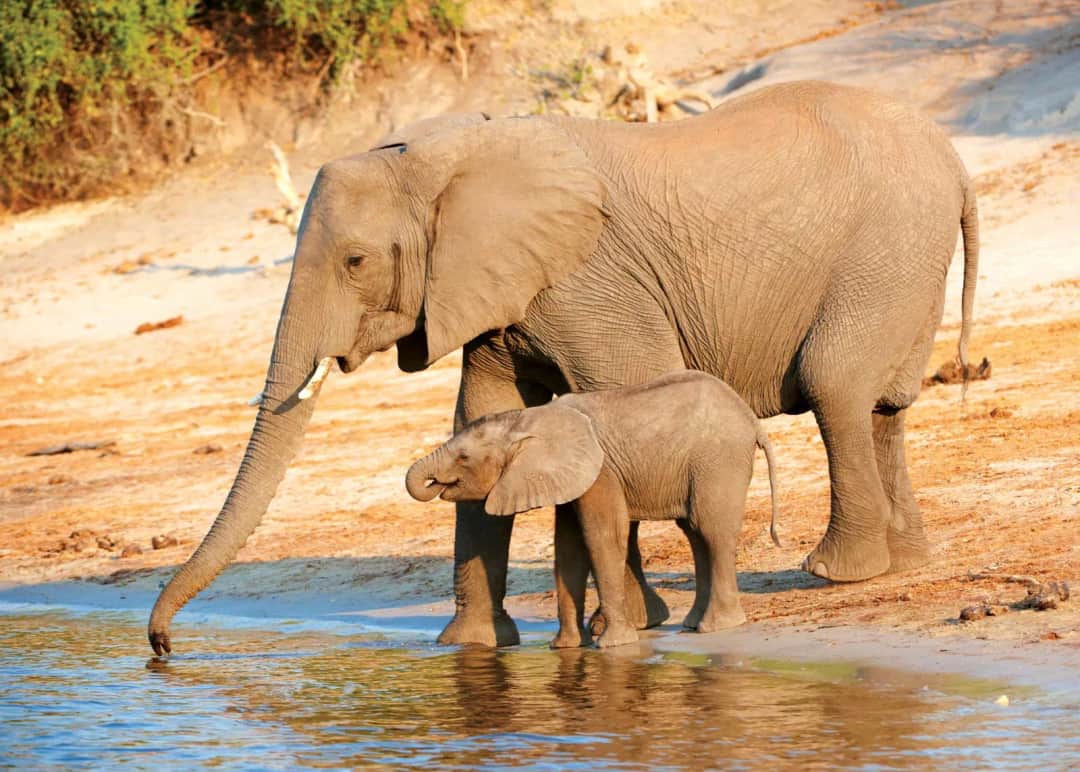
The elephant are the headline and they earn it. Hwange holds one of the largest elephant populations of any protected area in Africa, running well into the tens of thousands in most recent estimates, and in the dry season the density around the pumped pans is close to unmatched anywhere on the continent. What makes it different from seeing elephant elsewhere is not only the number but the behaviour you get to watch, because the animals stay in one place long enough for it to unfold. Families arrive in sequence along established paths, bulls in musth push through the queue, calves are shoved into the mud by their mothers, and older matriarchs stand back and wait out a rival group. Sit long enough and you begin to read the hierarchy at the water rather than simply counting bodies.
Hwange is also one of the better places left in Africa to see painted dogs, the animal most people know as African wild dog. The park and the land immediately around it hold a significant share of the remaining population, and there is a long running research and conservation effort based at Dete on the eastern boundary. Sightings are never guaranteed with a species that can cover forty kilometres in a morning, but two things improve the odds here: the packs are well known and radio collared, so guides often have a starting point, and during the denning months from roughly June to August a pack is anchored to one place and far easier to find. A dog sighting in Hwange is usually a hunt or a pack on the move rather than a distant resting shape.
Lions are abundant and unusually well studied, thanks to a long term research programme that has been following the prides here for decades. In the dry season they follow the same logic as everything else, holding territory around productive pans and hunting buffalo and young elephant at night. Leopard are present throughout but are as difficult here as anywhere, given the density of the woodland. Cheetah occur at low numbers and prefer the open grassland in the south around Ngamo. Spotted hyena are common, brown hyena occur in the drier southern sand country but are very rarely seen, and the smaller carnivores, honey badger, civet, genet, serval and side striped jackal, are mostly an after dark proposition.
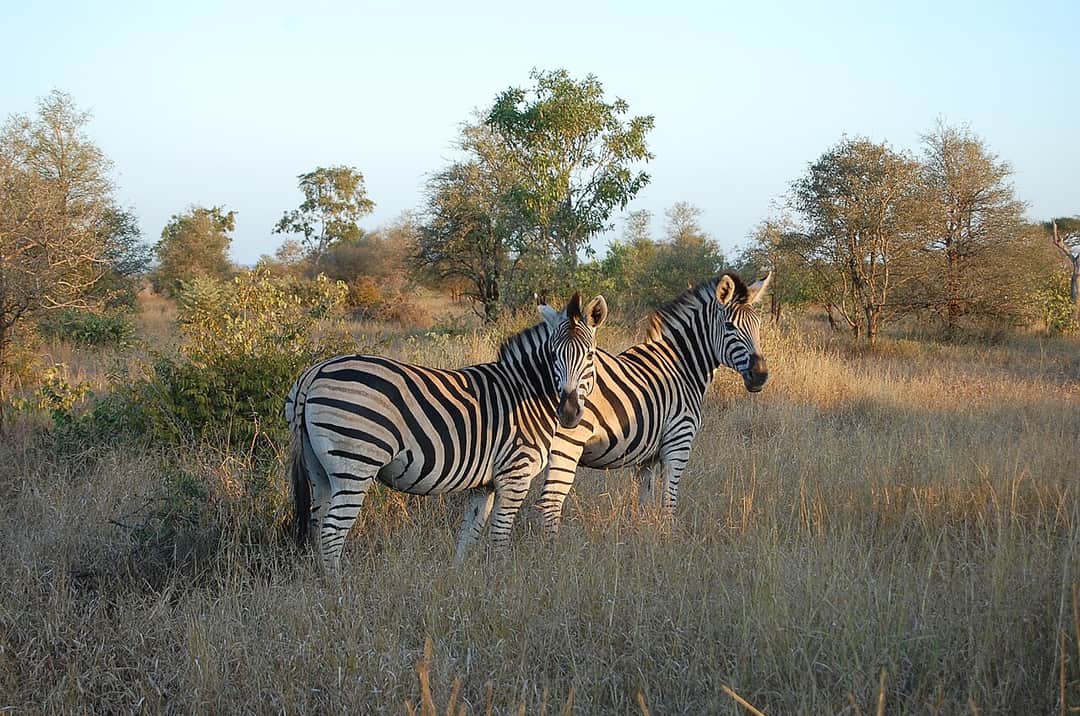
The plains game list is long and includes several species that are hard to find elsewhere. Hwange is one of the more reliable places in the region for sable antelope, which come to water in the late morning and are worth waiting for, and roan antelope occur in the northern vleis. Buffalo move in herds of many hundreds, and a big herd arriving at a pan in the late afternoon is a spectacle in its own right. Add giraffe, zebra, blue wildebeest, eland, greater kudu, tsessebe, waterbuck, impala, warthog and both steenbok and common duiker. Rhino are not what you come to Hwange for and you should not let anybody suggest otherwise.
The birdlife runs to over four hundred species and includes real specialities tied to the Zambezi teak woodland, which reaches its stronghold here. Arnot's chat, Bradfield's hornbill and racket tailed roller are the ones birders travel for. Southern ground hornbill walk the vleis, kori bustard and secretarybird work the open ground, and the pans hold storks, herons and waders through the dry months. From November the migrants arrive and the species count climbs sharply, which is the strongest argument for a green season trip.
Sit at a pan and let the park come to you
This is the central activity of Hwange and the one that visitors from the plains parks take longest to accept. Rather than driving loops looking for animals, you park at a productive waterhole in the late morning or the middle of the afternoon, switch the engine off, and stay. In the dry season the traffic is constant: elephant families arriving down worn paths every few minutes, a buffalo herd shouldering in and displacing everything, zebra and kudu circling the edge waiting for a gap, sandgrouse dropping in at the same hour every day, and predators eventually turning up because they have made the same calculation. Two hours at a good pan in September will show you more, and more interesting behaviour, than four hours of driving. Bring water, something to read for the flat spells, and the patience to stay put when the vehicle in front gives up and leaves.
The Main Camp pans and the Nyamandhlovu platform
Main Camp in the northeast is the park's oldest and most accessible entry point, an easy drive from the Victoria Falls to Bulawayo road, and the circuit of pans running south and west from it is the best introduction to Hwange. Nyamandhlovu is the best known, with a raised concrete viewing platform overlooking the pan that lets you look down on elephant from a safe distance and stay for hours without being confined to a vehicle. Guvalala has a similar platform. Further out, Dom, Makwa, Kennedy 1 and 2, Shumba and Ngweshla each have their own character and their own regulars, and the Ngweshla area in particular has a reputation for lion and for large late season elephant gatherings. This circuit is drivable in an ordinary high clearance vehicle for much of the dry season, which makes it the natural choice for anyone doing Hwange independently.
Sinamatella, Masuma Dam and the northern escarpment
Sinamatella sits on a rocky ridge in the northwest with one of the only genuine long views in the park, out across a broad valley that fills with game in the dry months. The country up here is different from the sand country in the south: more rugged, more mopane, more broken ground. Two water bodies make the sector worth the drive. Mandavu is the largest stretch of open water in Hwange and holds hippo and crocodile alongside everything that comes down to drink. Masuma is the one people talk about, a dam with a campsite and a sunken hide set right at the water, where you can spend an entire day at eye level with elephant a few metres away and sleep within earshot of them at night. The road network in this sector is rougher than around Main Camp and parts of it become difficult to impossible in the rains, so check conditions before committing.
Robins Camp and the far northwest
The Robins sector in the far northwest is the least visited third of Hwange and the most rewarding for anyone who values solitude over convenience. The landscape opens up into grassland vleis fringed with mopane, quite unlike the closed teak of the south, and the game viewing runs to roan and sable, big buffalo herds, good lion and a serious reputation for painted dogs. It is a long way from anywhere, the roads are the roughest in the park, and the sector has historically been the most affected by seasonal closures and by the practical difficulties of keeping remote infrastructure running. If you are the sort of traveller who reads that paragraph and finds it appealing rather than off putting, this is the part of Hwange to build a trip around. Go self sufficient, allow more driving time than the distances suggest, and confirm access before setting out in the wet months.
The southern concessions, Ngamo and the private camps
The southern and southeastern parts of the park are largely given over to private concessions with a small number of camps, and this is where the higher end of Hwange operates. Around Makalolo, Ngamo and the surrounding plains you get open grassland rather than continuous woodland, which changes the game viewing entirely: you can see across country, watch a hunt develop, and find cheetah where they are almost impossible elsewhere in the park. Camps here typically sit at their own pumped pan, often with a sunken log hide reached by a short tunnel so you end up at water level with drinking elephant. Because these are concessions rather than the public game viewing area, guides can generally offer things the main park does not, including driving after dark and walking. It costs considerably more than the public side of Hwange and is still cheaper than the equivalent experience in Botswana next door.
Painted dogs, and the projects that study them
If painted dogs are your reason for coming, plan the trip around them rather than hoping. Talk to camps about which packs are being followed and where, and target the denning months from roughly June to August, when a pack is tied to a single site with pups and can be found repeatedly through a stay rather than once by luck. Guides in the private concessions and the research teams share sighting information, so a camp with good connections genuinely improves your odds. On the eastern boundary near Dete there is a long established conservation organisation with a visitor and education centre, a rehabilitation facility for injured and orphaned animals, and an anti snaring programme, and it is a worthwhile stop on the way in or out. Understanding why the species is in the trouble it is, mostly snares and road deaths and disease from domestic dogs, changes how a sighting feels when you get one.
Walking safaris with a professional guide
Zimbabwe's professional guide qualification is one of the most demanding in Africa, taking years to complete, and walking behind one of these guides is one of the strongest arguments for choosing Zimbabwe over its neighbours. On foot the park resets to a different scale. You spend the morning reading tracks in the sand, working out how long ago an elephant passed, watching a bird party move through the teak, being taught which trees the animals are actually eating and why the pans hold water at all. Approaching elephant or buffalo on foot, correctly and at a respectful distance, is a completely different physiological experience from watching them from a vehicle. Walking is generally offered from the private concessions and by specialist operators rather than as a casual add on in the public areas, so it needs booking as part of the itinerary rather than arranged on arrival.
Self drive, camping and doing Hwange independently
Hwange is one of the more approachable big parks in the region for people who want to drive themselves, which is a large part of why it has a devoted following among southern African travellers. There are national parks lodges and chalets at Main Camp and Sinamatella, a spread of campsites, and a handful of exclusive campsites such as the one at Masuma where you have the site and its hide to yourself. The main pan circuits near Main Camp are manageable in a high clearance two wheel drive during the dry season, though the deep sand in the south and the rough tracks in the northwest need four wheel drive and some experience. Be genuinely self sufficient: carry your own fuel reserve, water, food and recovery gear, do not count on supplies inside the park, and stick to the gate times, which are enforced. Done properly this is the cheapest good safari in southern Africa.
National park
Hwange National Park
Take it with you
Everything on this page in one document you can keep, print, or send to whoever you are travelling with. No email required.
August to October if the elephant concentrations are the point, and they usually are. By then the natural pans have dried and every animal in the ecosystem is working around a small number of pumped waterholes, so the density at a single pan in September or October is the highest you will find all year. The price is heat, and October in this part of Zimbabwe is severe in the middle of the day. June and July give you the best balance: water is already thin and the concentrations are building, the bush still looks alive, and the days are pleasant, though the dawns are genuinely cold and catch people out. The green season from November to April is beautiful and much cheaper but far harder for game viewing, because the animals no longer need the pumps and disperse across country you cannot reach.
Three nights is a sensible minimum and it works well because Hwange rewards repetition rather than coverage. Going back to the same pan at different times of day, and on different days, is how you start reading the place rather than simply photographing it. Two nights is enough only if you are treating it as a side trip from Victoria Falls and accept that you will see one sector. Four or five nights lets you combine two quite different parts of the park, for example the pan circuits around Main Camp plus either the Sinamatella country or a southern concession, and it also gives painted dogs a fair chance to turn up. Because the park is large and the roads are slow, moving between sectors costs most of a day, so build that in rather than assuming it is a transfer.
Yes, with the honest caveat that no place on earth guarantees them. Hwange and the land around it hold one of the more significant remaining populations, several packs are collared and monitored by a long running research programme, and guides share sighting information, all of which stacks the odds better here than in most parks. The strongest single factor you control is timing. During the denning season, roughly June to August, a pack is pinned to one location while the pups are too young to travel, and a camp with good information can often return to it repeatedly. Outside that window a pack may cover tens of kilometres in a morning and finding it is genuinely a matter of luck. Plan on several days and treat a sighting as a good outcome rather than an entitlement.
They are close to different holidays. The north and northeast around Main Camp is the accessible, affordable, self drive friendly Hwange, with the best network of pans, the viewing platforms at Nyamandhlovu and Guvalala, national parks accommodation and campsites, and easy road access from the Victoria Falls road. It is where most first visits should go. The south and southeast are private concessions with a small number of expensive camps, open grassland rather than continuous woodland, more flexible guiding including walking and driving after dark, and far fewer people. The northwest around Sinamatella and Robins is the remote middle option, with dramatic country, good roan and sable, and the roughest roads in the park. If you can afford one night on a concession as part of a longer public area trip, take it, because the guiding freedom changes what is possible.
It is one of the best self drive parks in the region and a large part of its following comes from exactly that. The main pan circuits around Main Camp are manageable in a high clearance two wheel drive vehicle through the dry season, there is national parks accommodation and camping at reasonable rates, and traffic is light enough that you will often have a sighting to yourself. The conditions are that you plan properly. Carry a fuel reserve and do not assume you can buy any inside the park, take your own water, food and recovery equipment, travel with a spare tyre in good condition because the sand and the teak stumps are hard on rubber, and respect the gate times, which are enforced and exist for good reason. The deep sand in the south and the tracks in the northwest need four wheel drive and some experience, particularly late in the dry season.
It is quieter and cheaper than all three, and that is the honest core of its appeal rather than an apology. Kruger has better infrastructure, more reliable rhino and a far denser network of roads and camps. The Serengeti has open plains and the migration. The Okavango has water based activities and a level of exclusivity Hwange does not attempt. What Hwange has that none of them match is the dry season elephant experience at a pumped pan, plus a realistic painted dog chance and an atmosphere of emptiness in the public areas that the famous parks lost long ago. If this is your first ever safari and you want a checklist filled efficiently, Kruger or the northern Tanzania circuit is the easier answer. If it is your second or third and you would rather sit at one waterhole for three hours than drive between sightings, Hwange is the better one.
It is the natural pairing and most visitors do exactly that. The drive from Victoria Falls to the Main Camp area takes roughly two to three hours on a reasonable tarred road, with the park entrance a short distance off the main Bulawayo route, and light aircraft transfers run from Victoria Falls to airstrips inside the park in well under an hour for anyone heading to the southern concessions. Two or three nights of the Falls, the gorge, the river and the activity circuit, followed by three or four nights at a Hwange pan, is a tidy week that needs almost no wasted travel time. It also extends easily in either direction, into Botswana at Chobe and the Okavango, or south to the Matobo Hills near Bulawayo for rhino tracking on foot and rock art, which fills the one obvious gap in a Hwange itinerary.
It is a fair question and the answer is that it changes what you are watching without diminishing it. Nothing about the animals is managed: they are wild, unfenced within a very large ecosystem, and free to move across the border country into Botswana. What is managed is the water, and without it the park would carry a fraction of the game through each dry season. Most visitors find the story adds to the place rather than subtracting from it, because you are looking at the direct result of a century of deliberate work, some of it funded by the camp you are sitting in. It does raise a real debate, which good guides will engage with rather than dodge. Sustaining very high elephant numbers on artificially watered ground puts heavy pressure on the trees around the pans, and there is no easy consensus on the right level of intervention.
November through April is a genuinely different park and it suits some travellers very well. The sand grows grass, the woodland comes back into leaf, almost all the plains game calves within a few weeks, migrant birds push the species count sharply upward, and the storm light is the best of the year. Rates fall and you may have the place to yourself. The honest costs are that game viewing gets considerably harder, because the animals no longer depend on the pumped pans and spread out across ground you cannot drive to, and that access degrades. Black soil sections become impassable, the rougher northwestern sectors are the first to suffer, and some camps and facilities reduce operations or close for part of the period. January and February are the wettest and least practical. If you want green season conditions with a lower risk of being stuck, look at late November or April instead.