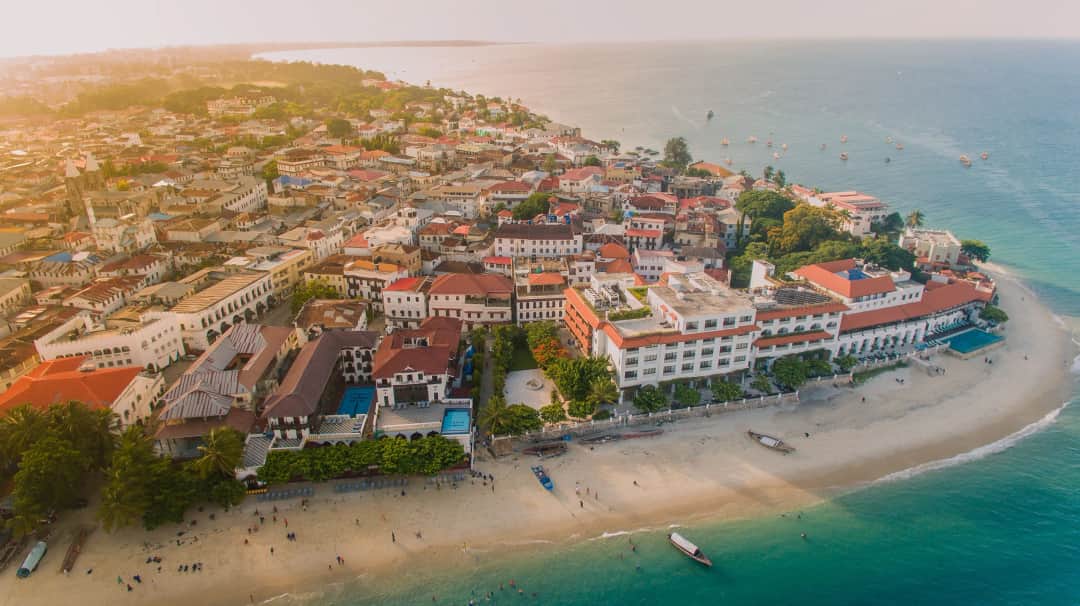
Island in Tanzania
Zanzibar is sold as a single picture, white sand under a leaning palm, and it is really three separate trips sharing one island. There is the historical trip, which is Stone Town, a UNESCO listed labyrinth that took its architecture from Oman, India, Persia, Britain and the Swahili coast at the same time and never quite decided between them. There is the water trip, which is coral reef, dhow sails, turtles and some of the warmest, clearest snorkelling in East Africa. And there is the beach trip, which is where most people book blind, and where nearly all of the disappointment on this island comes from.
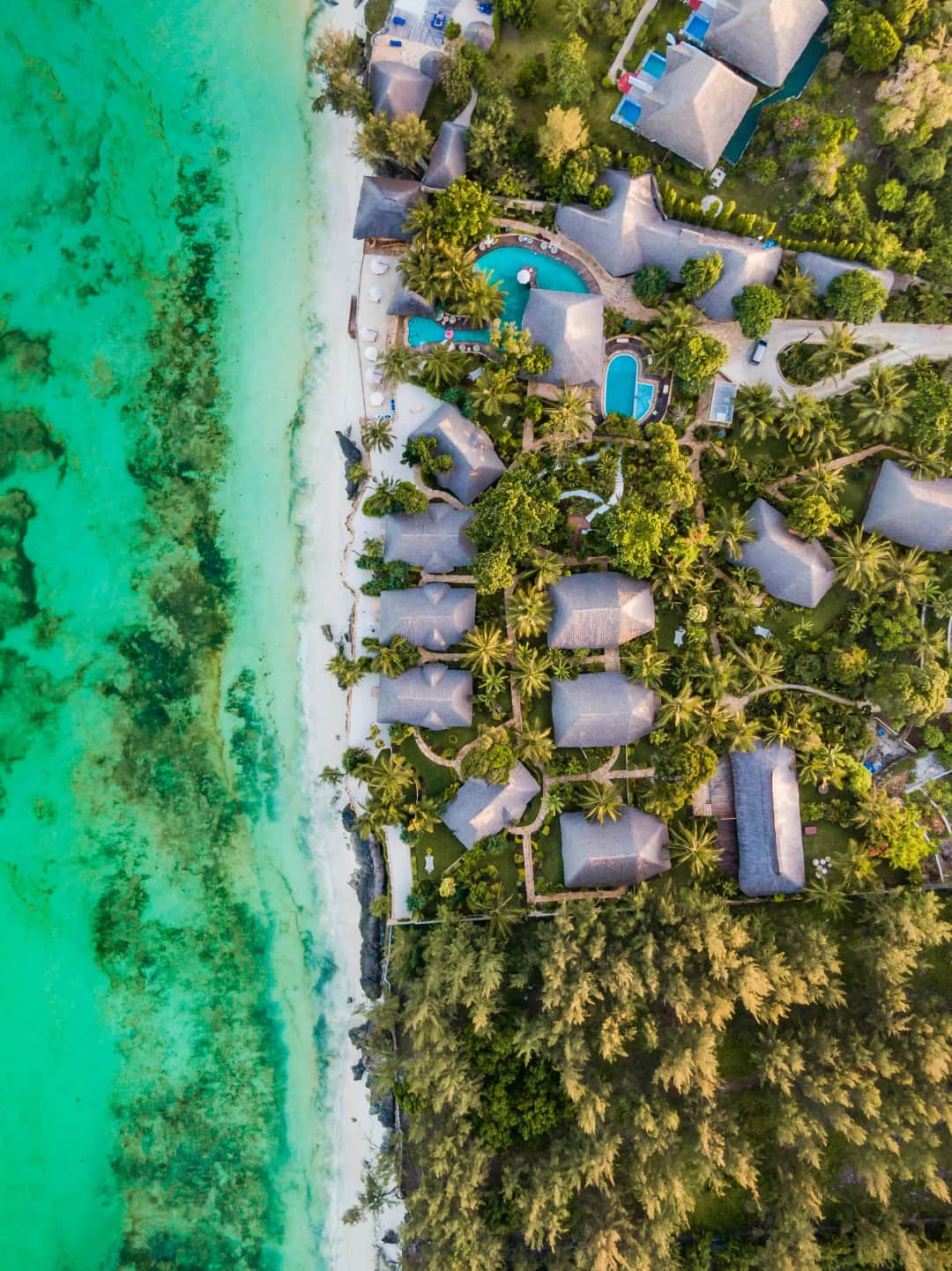
Zanzibar's beaches are not interchangeable, and the tide is the reason. On the east and southeast coasts the tidal range is very large. Twice a day the ocean withdraws several hundred metres, exposing a pale flat of sand, seagrass, urchins and cultivated seaweed, and the swimming pool blue that pulled you in disappears until the water comes back. This is not a flaw in the island, it is simply how a wide shallow lagoon behind a fringing reef works, and locals plan their whole day around it. It only becomes a ruined holiday when nobody told you. The north, around Nungwi and Kendwa, sits at the tip of the island where the tidal swing is far gentler, and you can swim off the beach at any hour. That convenience is why the north is also the busiest and most developed part of the coast. There is no beach on Zanzibar that is quiet, undeveloped and deep at low tide all at once, and choosing which of those three you will give up is genuinely the main decision of the trip.
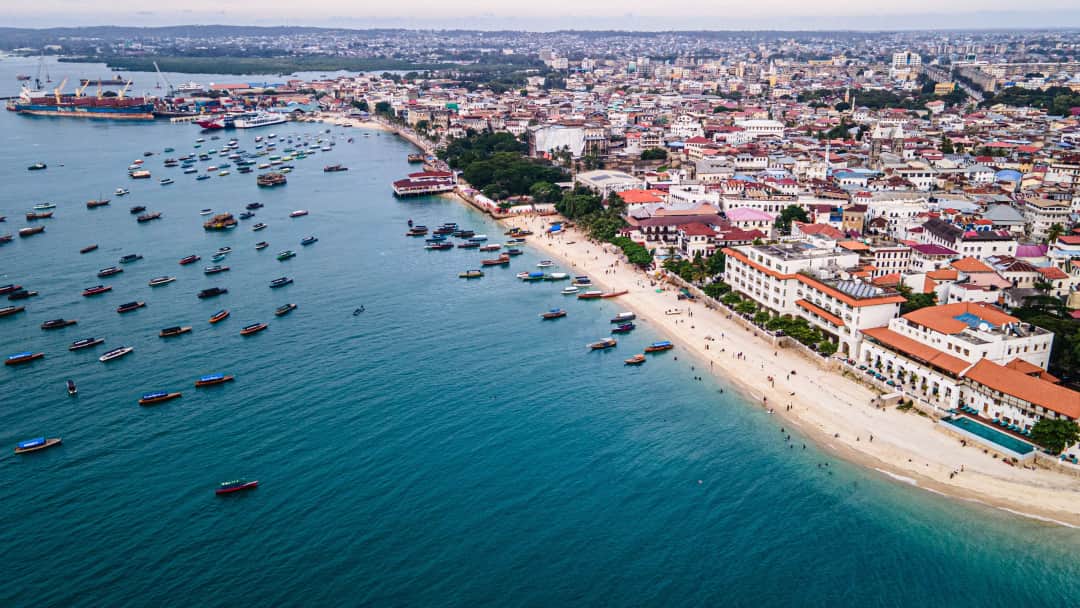
Stone Town deserves to be treated as its own destination rather than a half day tacked onto a beach week. It is a working town, not a preserved one. Alleys too narrow for cars run between houses four storeys high, so the light arrives sideways and in slices, cats sleep in doorways, and the call to prayer comes from several directions at once and slightly out of time with itself. The famous carved doors are everywhere once you learn to read them. It is also where the East African slave trade was run from, and the sites connected to that history are open to visitors and presented without softening. Skipping them because you came for a holiday is the wrong instinct.
The island is Unguja, the largest of the Zanzibar archipelago, and it is part of Tanzania but semi autonomous, with its own president and its own immigration desk that you pass through even on a domestic flight from the mainland. It is overwhelmingly Muslim, and that shapes ordinary things: what people wear away from the hotels, when the restaurants in town are open, how loud a place feels after dark. None of it restricts a visitor much, but travelling here with some awareness of it changes how you are received.
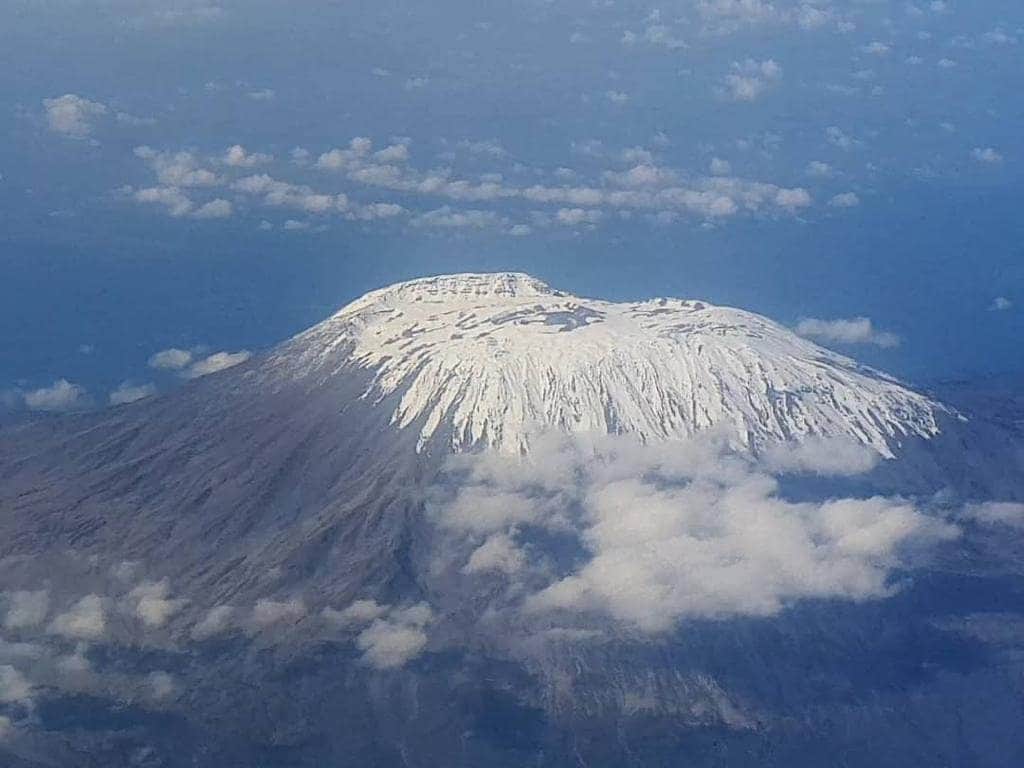
Most people arrive from a northern Tanzania safari or straight off Kilimanjaro, which is exactly the right way round. Zanzibar is a poor place to start a trip and an excellent place to end one. After a week of pre dawn game drives and dust, three or four days of nothing but salt water, spiced food and a slow walk to dinner is close to the perfect corrective.
Best time to visit
June to October is the reliable window and the reason most safari and beach combinations land in it. Skies are clear, humidity drops, the sea is bright, and the southeast monsoon known as the kusi keeps a steady breeze running that takes the edge off the heat. That same wind is why this is prime kitesurfing season on the southeast coast, and also why the east coast can feel breezy rather than still. It is the busiest stretch of the year and the most expensive.
Late December to February is the other good period, driven by the northeast monsoon, the kaskazi. It is hotter and stickier, the sea is glassy and at its warmest, and underwater visibility is often at its best of the year. If your priority is diving and snorkelling rather than lying still, this window is arguably better than the middle of the year. Christmas and New Year are extremely busy and book out months ahead, but the second half of January and February quieten down considerably while the weather stays good.
The long rains run from roughly late March through May and are the one period to think hard about. This is not drizzle, it is heavy tropical rain that can settle in for hours, and May is the wettest of them. Humidity is high, some smaller hotels and beach restaurants close entirely, and boat trips get cancelled. The upside is real though: the island is green, prices drop sharply, and the rain often falls in concentrated bursts rather than all day. If you are flexible and mainly want Stone Town, early to mid March or late May can be very good value.
November into early December brings the short rains, which are much less disruptive. Showers tend to be brief and often overnight, most things stay open, and the island is noticeably emptier than it will be a few weeks later. For a lot of travellers November is the smartest compromise on the calendar.
One planning detail that matters more here than almost anywhere: whichever month you choose, look up the tide times for your dates before you pick a coast. Spring tides around the new and full moon produce the biggest swings, and a southeast coast stay that happens to fall across a spring tide will have its afternoons rearranged for it.
High season
July, August and September are the peak, filled by European summer holidays and by safari travellers coming off the northern circuit in the same weeks. Christmas and New Year is the other spike, and it is the harder one to book, with the north coast around Nungwi and Kendwa filling first. February is busy but manageable. The quietest periods are April and May in the long rains, and early November before the season restarts.
Zanzibar is not a safari destination and should not be booked as one, but the wildlife here is genuinely worth planning days around because almost all of it is either underwater or found nowhere else.
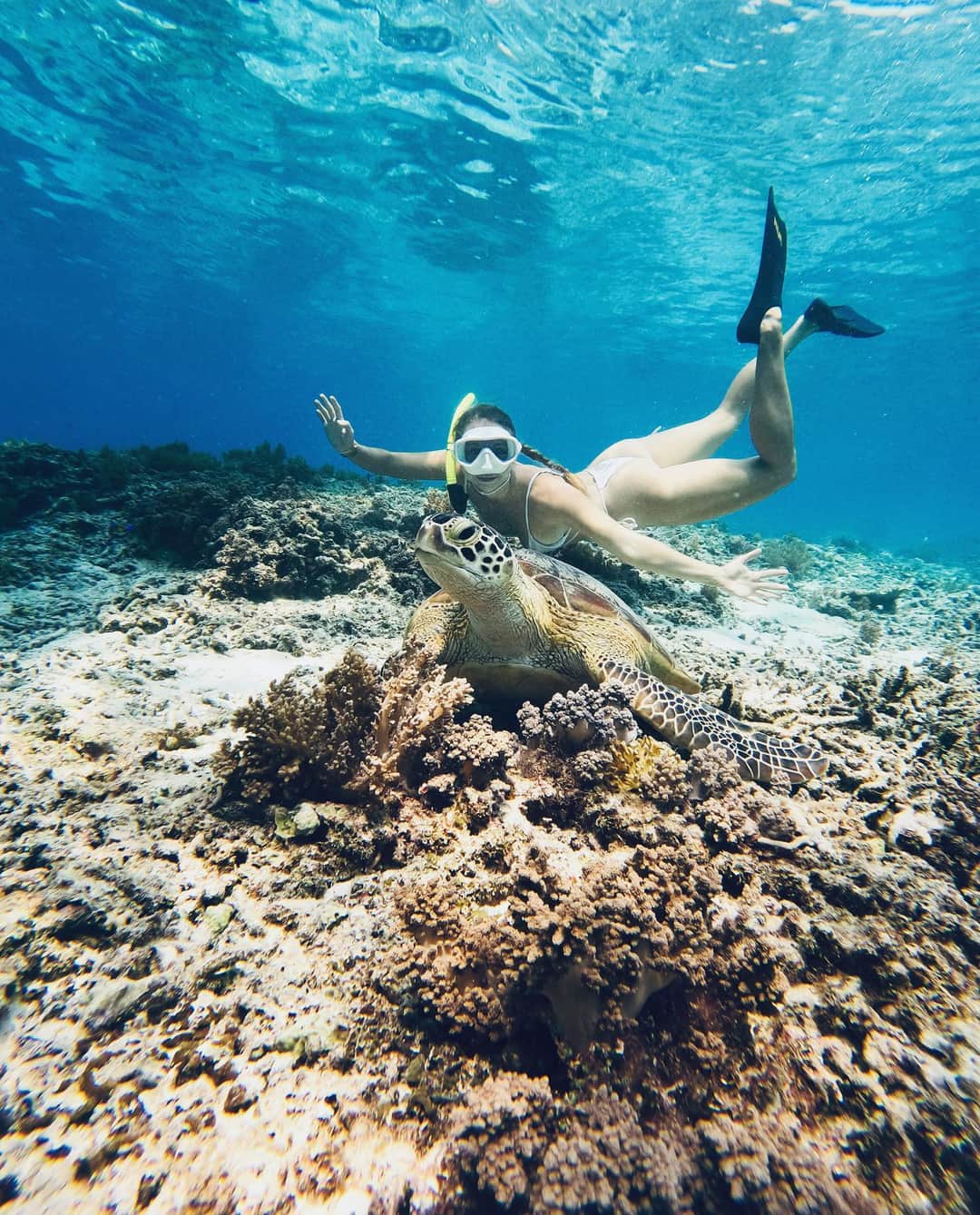
The reef is the main event. A fringing reef runs along much of the coast, and beyond it the drop offs and coral gardens around Mnemba atoll hold the best of it: parrotfish, snapper, moray eels, lionfish, huge shoals of anthias and fusiliers, and green and hawksbill turtles that are seen on a large proportion of trips. Dolphins, mostly bottlenose and spinner, move along the same stretch of water. Visibility is often excellent, water temperatures are warm enough that many people dive without a full wetsuit, and the diving is unusually forgiving, which makes Zanzibar a common place to learn. Bleaching events have damaged coral here as they have across the Indian Ocean, so set your expectations against a real reef under pressure rather than a documentary, and the fish life remains superb regardless.
On land the standout is the Zanzibar red colobus, a monkey that exists on this island and nowhere else on earth. Jozani Chwaka Bay National Park protects the largest population and they are easy to see, unbothered by people, feeding in the trees just above head height. The same park has a mangrove boardwalk that is worth the extra half hour, plus Sykes' monkeys, bush babies and, if you are unusually lucky and out at dusk, Ader's duiker. Birdlife across the island is good and easy: kingfishers, sunbirds, fish eagles over the lagoons and, in the mangroves, herons picking through the roots.
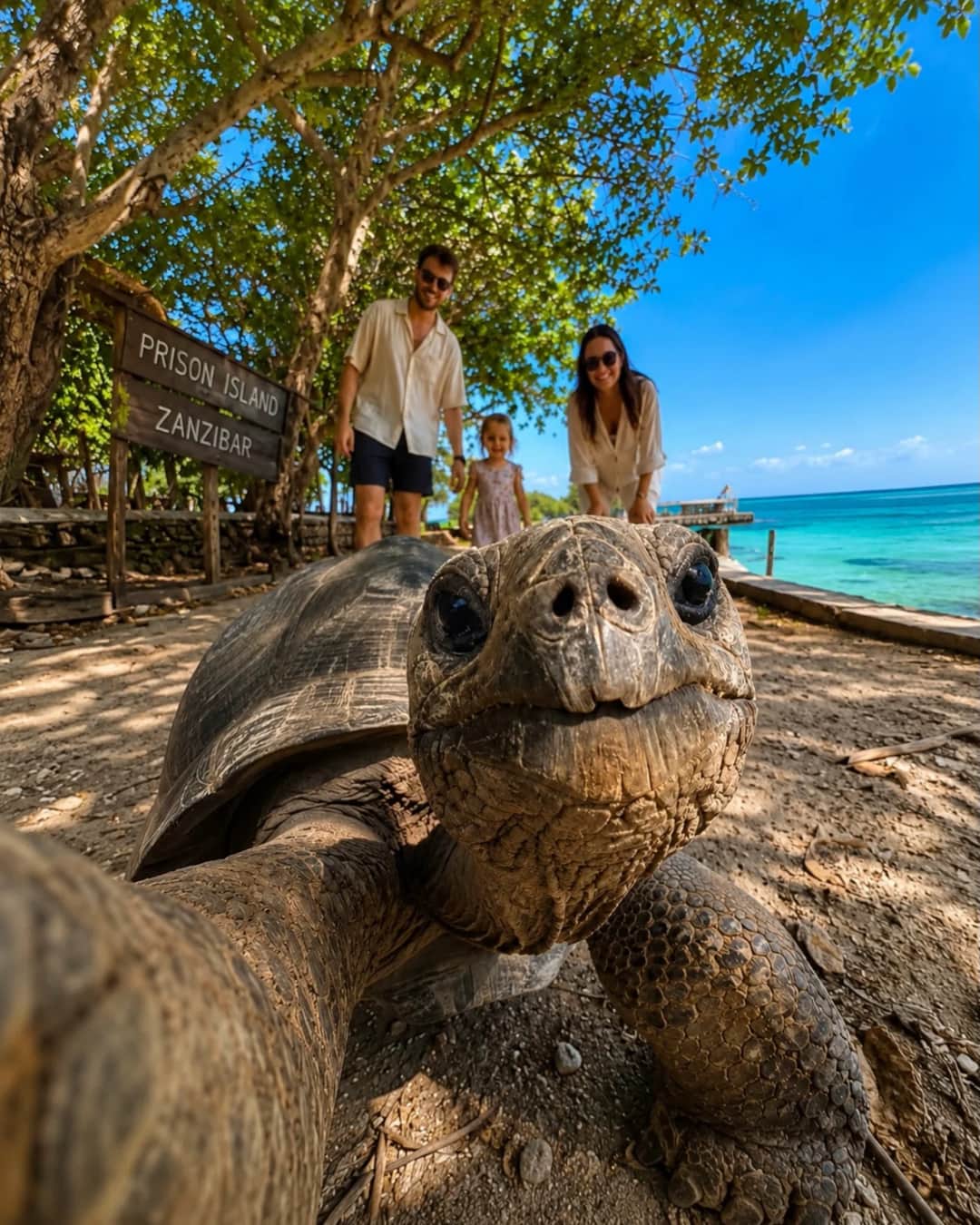
The island's setting does as much work as its animals. Coral rag scrub and clove and coconut plantations fill the interior, mangrove creeks cut into the coast at Chwaka and Menai bays, and offshore sandbanks appear and disappear with the tide within a single afternoon. Giant Aldabra tortoises live on Changuu, a short boat ride from Stone Town, brought there from the Seychelles more than a century ago and now the island's most photographed residents.
Stone Town
Treat it as a separate trip, not a stopover. Two nights is the minimum that lets you see it properly, and one of the best decisions you can make is to stay inside the old town rather than commuting in for a day tour. The plan is to have no plan: the alleys are too tangled to navigate and getting lost is the actual experience, since you cannot get seriously lost on a peninsula this small and you will surface somewhere useful. Look for the carved doors and learn the difference, Indian doors rounded at the top and studded with brass spikes, Omani doors square framed and heavy with Quranic inscription. Walk through Darajani market early when the fish is coming in, climb to a rooftop for sunset, and give the Old Fort and the seafront an evening. The former House of Wonders on the waterfront has been closed following structural collapse and long term restoration, so check before making a special trip to it. Every evening the gardens at Forodhani on the seafront fill with stalls, charcoal smoke and strip lights, and most of Stone Town turns up. It is touristy and it is also genuinely where people go. Expect grilled seafood on skewers, cassava, samosas, urojo soup, freshly pressed sugarcane juice with lime and ginger, and Zanzibar pizza, which is not a pizza but a folded stuffed pancake fried on a griddle. Ask prices before ordering rather than after, choose stalls with a queue and fast turnover, and skip anything that has clearly been sitting out. On the wall beside the gardens local boys spend the evening backflipping into the sea. The town also has excellent proper restaurants, several of them on rooftops, and Swahili cooking here leans on coconut, tamarind, lime and cardamom rather than on chilli heat.
The slave trade sites and the history behind them
Zanzibar was the commercial centre of the East African slave trade for much of the nineteenth century, and the town you are walking through was built on it. The Anglican cathedral stands on the site of the old slave market, deliberately, and beneath the neighbouring building are the holding chambers where people were kept before sale, low ceilinged rooms you have to stoop to enter. In the courtyard the Memory of the Slaves sculpture puts figures in a pit wearing real chains. There is an exhibition alongside that is clear and unflinching, and a good guide will not smooth any of it over. This takes an hour or two and is difficult in the way it is supposed to be. Go anyway, and go early in your stay rather than at the end, because it changes how you read every building afterwards.
The north coast: Nungwi and Kendwa
This is where you go if swimming matters more than solitude. Sitting at the northern tip, these beaches see far less tidal variation than the east, which means deep water off the sand at any hour of the day, no walk across seagrass flats and no checking a tide table before you decide when to swim. The trade off is density. Nungwi is the most developed stretch on the island, busy with hotels, dive shops, bars and touts, and it feels like a resort strip. Kendwa, a short walk or ride around the headland, is calmer and quieter while keeping the same tide advantage, and it faces west, so it is one of the few Zanzibar beaches that gets a proper sunset over the water. If you only have three nights and want to swim without thinking about it, stay at Kendwa.
The southeast coast: Paje, Jambiani and Bwejuu
The most beautiful sand on the island and the coast most often misunderstood. At high tide the lagoon is a shallow, luminous turquoise that does not look real. At low tide the sea withdraws several hundred metres and you are looking at a wide flat of wet sand, seagrass and rows of cultivated seaweed being tended by women in bright kanga who have farmed this lagoon for decades. If you understand that rhythm in advance it is one of the best things about the place. If you booked expecting to swim at four in the afternoon, it is not. Paje is the kitesurfing capital of the Indian Ocean for exactly the reason that frustrates swimmers: flat, waist deep, reef protected water and dependable monsoon wind, which makes it close to ideal for learning. Jambiani is the quieter, more village like version of the same coast, and Bwejuu quieter still. Pick a hotel with a pool here, and it is not a luxury but a practical requirement.
Mnemba atoll and diving from Matemwe
The best snorkelling and diving in reach of the main island. Mnemba is a tiny private island ringed by a protected reef, and while the island itself is off limits to day visitors, the water around it is the point. Coral gardens, walls, enormous fish schools, turtles almost routinely, and dolphins along the channel on the way. Boats run from Matemwe on the northeast coast, the closest launching point and a good place to base yourself if the water is your priority, and also from Nungwi and Kendwa with a longer crossing. Go on the first boat of the morning: the water is calmer, the light better and the site much emptier, since by late morning a considerable number of boats are working the same reef. Certified divers should ask for the deeper sites on the outer wall rather than the standard snorkel drop, and non swimmers can still take the trip and see plenty from the boat.
Inland: Jozani forest and the spice farms
The two things worth leaving the coast for, and they are commonly sold as one day because they sit on opposite sides of the same short drive. Jozani Chwaka Bay National Park is the one land based wildlife stop genuinely worth the trip, and it is easy to fold into a transfer since it lies roughly between Stone Town and Paje. The Zanzibar red colobus lives here and nowhere else on earth, a black and rust coloured monkey with a permanently startled expression, and the troops feed low in the trees along the trail with no fear of people, so you watch them from a few metres rather than through binoculars. Guides are compulsory and provided at the gate, the walking is short and flat, and an hour and a half covers both the forest trail and the mangrove boardwalk, a raised walkway over tidal creek that most day trips skip and that is the quietest part of the park. Go early or late, both for animal activity and to avoid the heat, and keep your distance despite how easy the monkeys make it not to. The spice farms around Kizimbani and Kidichi, inland from Stone Town, are why the island mattered enough to be fought over: Zanzibar was for a long period the world's dominant clove producer. The tours sound like a tired idea and consistently rate as one of the better half days here, largely because they are sensory rather than educational. A guide walks you through the plot pulling up, scraping and crushing things for you to smell and taste: nutmeg still wrapped in its red mace jacket, cinnamon bark peeled off the branch in front of you, cardamom, black pepper, vanilla, turmeric, lemongrass, and tropical fruit you will not have seen before. Most end with a Swahili lunch cooked with what you have just walked past, which is the best argument for going, and the Persian baths at Kidichi are a short detour away.
Kizimkazi dolphins, done properly
Bottlenose and humpback dolphins live year round off Kizimkazi on the south coast, and the standard tour there has a real problem: boats race each other to a pod, drop passengers directly on top of the animals and repeat this until the dolphins leave. It is stressful for the animals and often a poor experience for visitors, who get twenty seconds of chaotic water and a boat chase. Responsible operators do exist and the difference is entirely in how you book, not in where you go. Ask directly whether the boat keeps a set distance, whether it engine cuts on approach, whether swimmers enter in small numbers on the animals' terms, and whether the crew has been through a marine conduct programme. An operator that answers that comfortably is the one to use. If you cannot get a straight answer, take a Menai Bay or Safari Blue dhow trip instead, where dolphins are a possible bonus rather than a chased target.
Dhow days: sandbanks, Prison Island and Safari Blue
The Swahili coast has been sailed in wooden dhows for centuries and a day on one is the most characteristic thing you can do here. Safari Blue, running out of Fumba in the southwest, is the best known full day version: sailing across Menai Bay, snorkelling, a sandbank that surfaces for a few hours at low tide, a mangrove lagoon and a long grilled seafood lunch on the beach. Nearer Stone Town, Changuu, known as Prison Island, mixes a small nineteenth century quarantine and prison complex with a colony of Aldabra giant tortoises, some of them well over a hundred years old. Nakupenda is a pure sandbank trip, a strip of white sand in open sea that vanishes as the tide turns, which sounds contrived and is not. And at the simplest end, a sunset dhow off Stone Town costs little and is the best hour of the day.
Island
Zanzibar
Take it with you
Everything on this page in one document you can keep, print, or send to whoever you are travelling with. No email required.
It comes down to what you cannot compromise on. If you want to swim off the beach whenever you feel like it, stay north at Kendwa or Nungwi, where the tidal swing is small and there is deep water at all hours, and accept that this is the busiest and most built up part of the island. If you want the postcard sand, space to walk and a village atmosphere, stay southeast at Paje, Jambiani or Bwejuu, and plan your days around the tide with a hotel pool for the low water hours. If diving and snorkelling are the point, base yourself at Matemwe on the northeast, closest to Mnemba. And whichever you choose, add two nights in Stone Town at the start or end, because it is a different experience entirely and a day trip does not do it. Many people split the trip in two, a few nights on a coast and a couple in town, and that is usually the right answer for a week.
On the east and southeast coasts the sea withdraws a long way, several hundred metres in places, twice a day. What is left is a wide flat of firm wet sand, seagrass beds, urchins and rows of cultivated seaweed. It is not dirty and it is not a sign of a bad beach, it is a shallow lagoon behind a reef doing what those lagoons do, and it is when local life on that coast is at its most visible, with women working the seaweed lines and children playing out on the flats. It stops being a problem the moment you know it is coming. Check tide times for your dates before booking, choose a hotel with a pool if you are on the southeast, and use low tide for a walk, a kite lesson, Jozani or a spice farm and high tide for swimming. The north coast is where you go if you would rather not think about any of this.
Five to seven nights is the sweet spot, and it should not be fewer than four. A workable week is two nights in Stone Town and four or five on one coast, which gives you the history, one full beach base and time for two or three excursions without spending the trip in a minibus. Three nights is enough only if you commit to one thing, either the town or the beach, and you should not try to split three nights across both. If you are here for two weeks, add a second coast or take the ferry or a short flight to Pemba, which is far less visited and has better preserved diving. Anything shorter than a full day for Stone Town is a waste of the best thing on the island.
On the beach and inside your hotel grounds, normal beachwear is completely fine and nobody expects otherwise. Away from those places the expectation shifts, and it is a straightforward courtesy rather than an enforced rule. In Stone Town and in any village, cover shoulders and knees. For women a loose top with sleeves and a long skirt or trousers is comfortable in the heat and is what visitors who are treated well tend to wear, and a lightweight scarf is useful for mosques and for sun. For men, shirts on rather than off in town, and shorts to the knee rather than swim shorts. Topless sunbathing is not acceptable anywhere. Walking through town in a bikini or bare chested is the single most common way visitors cause quiet offence here, and getting this small thing right visibly changes how warmly you are dealt with.
No, but go informed. Zanzibar during Ramadan is a genuinely interesting time to be here, with the evening streets transformed after the fast breaks. Beach hotels and resorts operate as normal, serving meals and alcohol to guests throughout, so a beach based holiday is barely affected. In Stone Town and the villages it is different: many local restaurants and cafes close during daylight, the Forodhani market runs on a different rhythm, and eating, drinking or smoking openly in the street during the day is disrespectful even though no one will confront you about it. Take meals inside a restaurant or your hotel, be patient with slower service from people who have not eaten since before dawn, and expect the town to come alive at sunset in a way it does not the rest of the year. Alcohol, incidentally, is available year round at hotels, beach bars and tourist restaurants, and simply not sold in most local establishments.
It is close to ideal, and most of the itineraries that include it are built precisely this way. Zanzibar is a short flight from Arusha, Kilimanjaro and the Serengeti airstrips, so the transfer costs you half a day rather than a travel day, and there is no better antidote to a week of five in the morning starts and corrugated roads. Do it in that order. Arriving in Zanzibar first and going on safari afterwards means burning your rest at the point where you are still fresh, and it also means finishing your trip in a tent rather than in the sea. Three to five nights on the island is the usual add on, and four is where it stops feeling rushed. If you are also climbing Kilimanjaro, this is the recovery your legs will want.
It is very good and you do not need any qualification to snorkel. Mnemba atoll is the headline site, with coral gardens, big schools of reef fish and a strong chance of turtles, and there are good reefs off Nungwi, Tumbatu, Menai Bay and Chumbe. Water is warm all year, currents on the standard sites are mild, and visibility is often best in the calmer months from December to February. Zanzibar is one of the more popular places in East Africa to take an entry level certification, and dive schools in Nungwi, Kendwa, Matemwe and Paje run courses continuously. Be realistic about the coral: bleaching has damaged reefs across the Indian Ocean and Zanzibar has not escaped it, so parts of the reef are healthier than others while the fish life remains excellent. Go out on the first boat of the day for calmer water and far fewer people.
It depends entirely on who takes you, and this is worth being blunt about. The mass market version of this trip is bad practice: boats spot a pod, race towards it, drop swimmers straight onto the animals and repeat until the dolphins move away. It disturbs resident animals that are trying to rest and feed, and the visitors themselves usually get a chaotic and unsatisfying few minutes. There are operators working to a proper code of conduct, keeping a set approach distance, cutting engines, limiting the number of people in the water and not pursuing animals that move off. Ask those questions directly when you book and judge the answer. If you cannot get one you believe, do not book it. Watching dolphins from a dhow on a Menai Bay trip, where their appearance is incidental, is a better experience than a bad chase and puts no pressure on the animals.
It is generally a safe and relaxed place, and violent crime against visitors is rare. The realistic risks are ordinary ones: opportunistic theft from beaches and unattended bags, bag snatching from mopeds on quiet Stone Town lanes at night, and overcharging. Do not walk long empty stretches of beach after dark, use a hotel safe, carry only what you need and take a taxi at night in town rather than wandering unlit alleys alone. Persistent beach sellers and self appointed guides are the more common annoyance, and a firm, polite and repeated no works better than engagement. Solo and female travellers do well here, with modest dress making a noticeable difference to how much attention you attract. On the water, take reef shoes for the southeast flats because urchins are the most frequent injury on the island, and use sunscreen far more aggressively than you think you need to, since the equator plus reflected water off white sand catches almost everyone in the first two days.