National park in Kenya
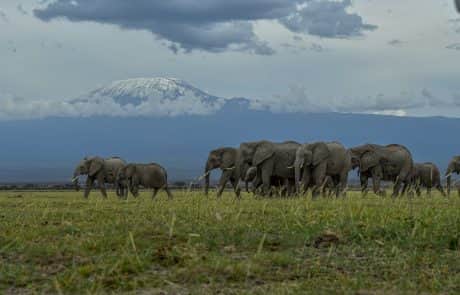
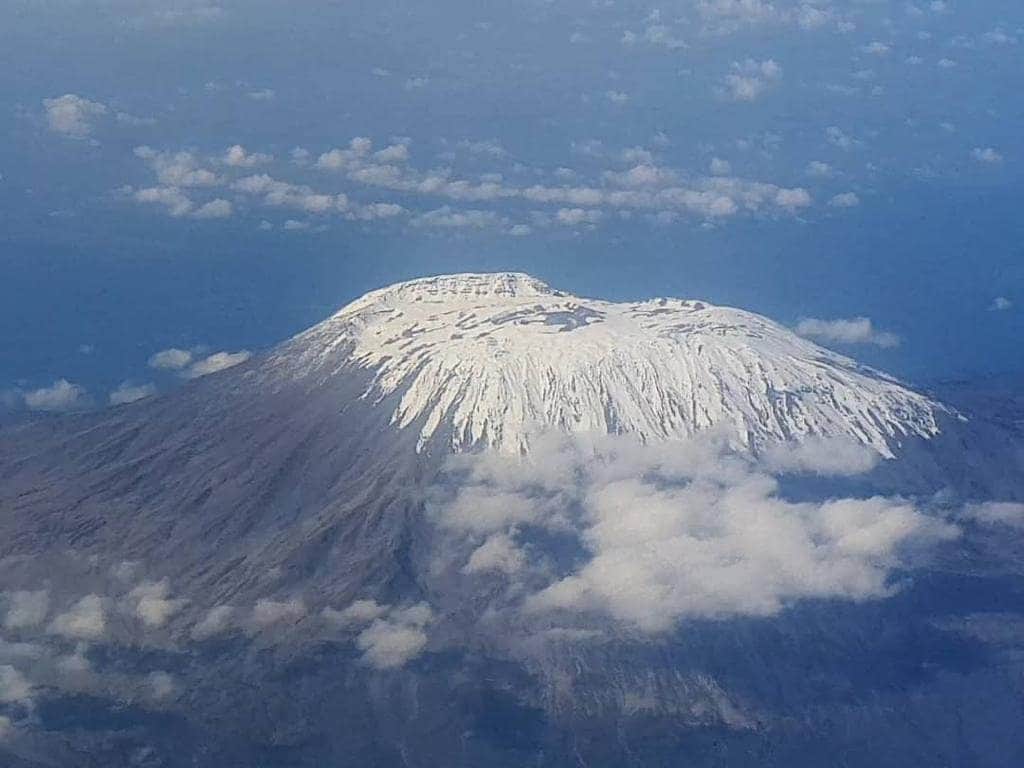
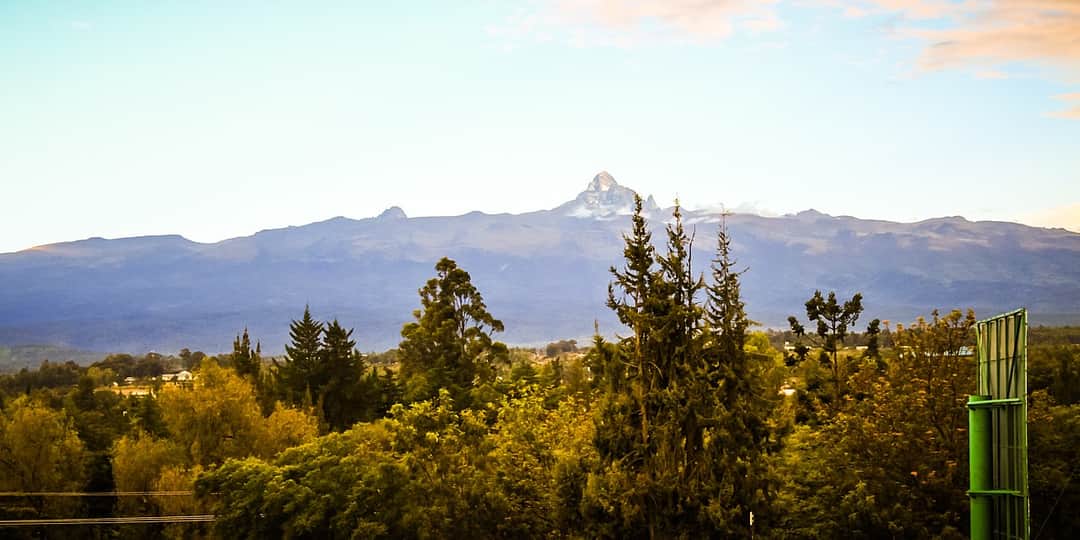
Almost everybody arrives with the same picture in their head: a line of elephants walking through pale dust, and behind them the snow on Kilimanjaro filling half the sky. That photograph is real and it is taken here, in this park, most weeks of the year. What the photograph does not tell you is that the mountain spends the majority of daylight hours hidden behind cloud, and that visitors who roll in at eleven in the morning for a single night quite often drive home again without ever having seen it.
Kilimanjaro is a dawn and dusk animal. It stands out clean and enormous at first light, sometimes for twenty minutes and sometimes for two hours. Then heat lifts off the plain, cloud gathers around the summit from mid morning, and by lunchtime there is a flat white wall where the mountain was. It commonly reappears in the last hour before sunset, gold and then pink and then a grey outline against the stars. If seeing Kilimanjaro matters to you, book two nights rather than one and be outside at sunrise on both of them. One night is a coin toss, and plenty of people lose it.
The park itself is small, roughly 390 square kilometres, which is a fraction of the Maasai Mara and a rounding error next to the Serengeti. You can drive most of its tracks in a couple of days. The floor of it is an ancient lake bed, flat, pale and alkaline, which for most of the year is bone dry and throws up dust devils that walk across the plain like grey ghosts. Cutting through that dust are green swamps that never dry out, because rain and snowmelt landing on Kilimanjaro soaks into porous volcanic rock, travels underground for years, and surfaces here as springs. That contradiction is the whole park: desert and marsh within a hundred metres of each other, which is why the animals are where they are.
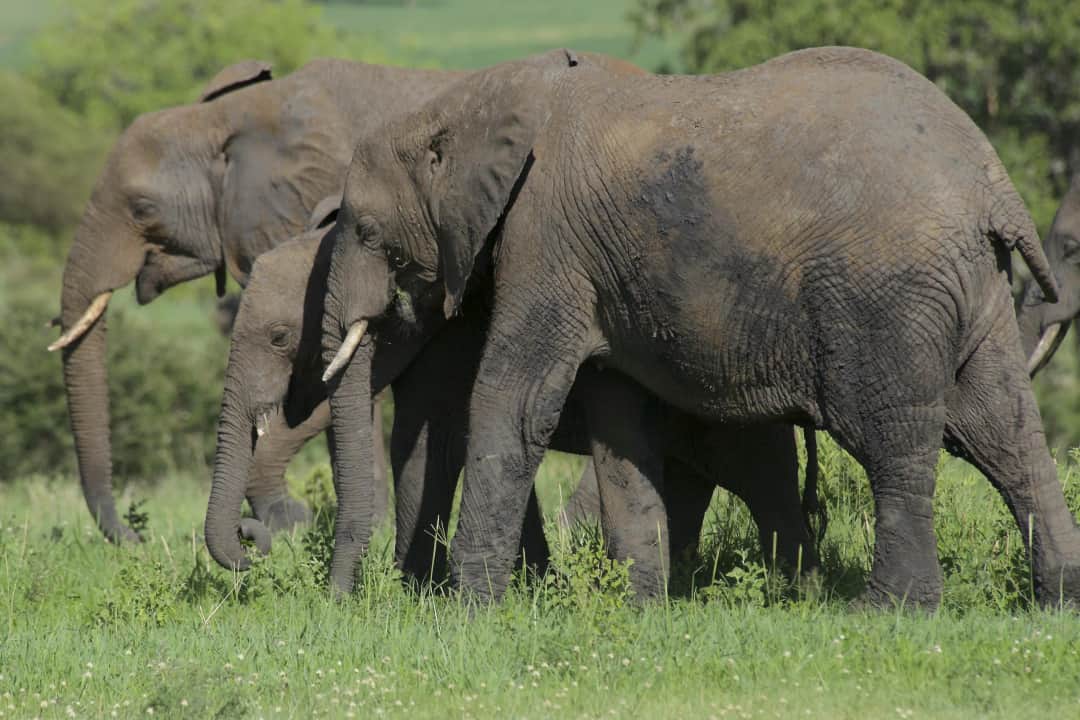
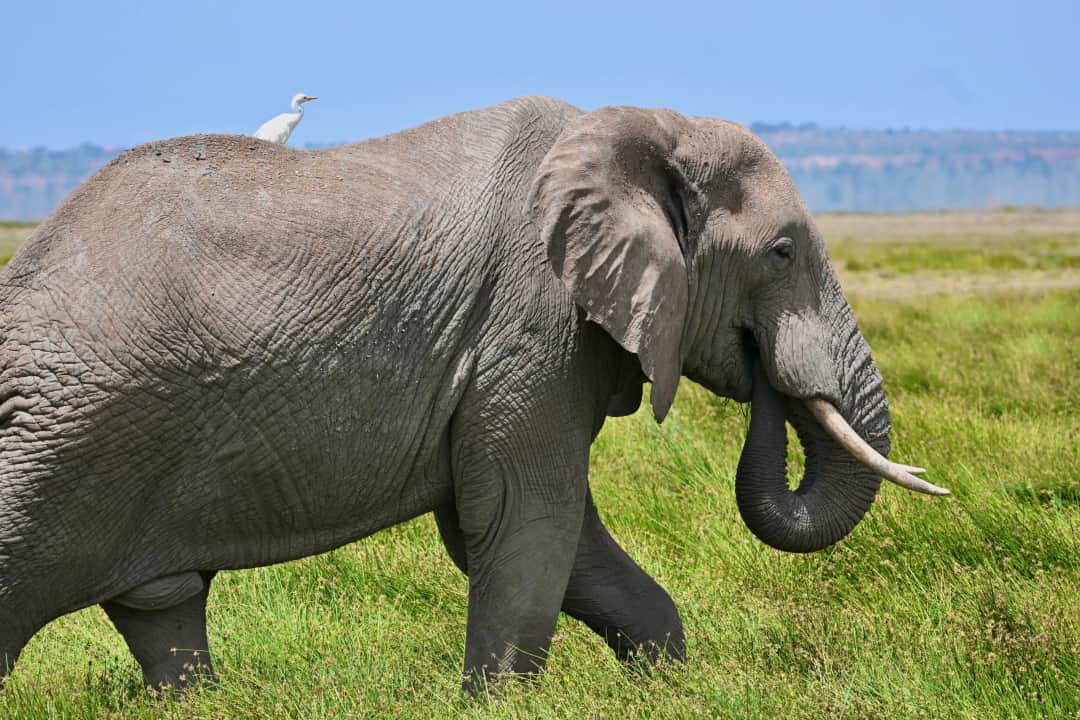
The elephants are the reason to come, and they are not ordinary elephants. The families here have been watched continuously since the early 1970s, in what is one of the longest running studies of any wild mammal anywhere. Researchers know individual animals by name, know their mothers and their grandmothers, and know which bulls are in musth this month. That protection and that scrutiny is a large part of why Amboseli still holds some of the last really enormous tusked bulls left in Africa, animals whose tusks reach the ground. Tim, the most famous of them, died of natural causes in 2020 and was mourned in the Kenyan press like a public figure. A few of that calibre remain, and standing next to one is a different experience from seeing an elephant.
Be realistic about the shape of a visit. Amboseli is usually done in one or two nights, often as a stop between Nairobi and Tsavo, or as the last thing before crossing into Tanzania to climb Kilimanjaro from the other side. It is not a week. What it does, it does better than anywhere: elephants at close range in open country, under the largest mountain in Africa, on land that Maasai families still live on and graze in the spaces between the park boundary and the hills.
Best time to visit
The dry months are the straightforward answer and the reasons are worth understanding rather than just accepting. From late June through October, and again through January and February, the plains outside the swamps burn off to dust and stubble. Every large animal in the ecosystem is then forced into the same few square kilometres of permanent water, which is why the dry season delivers the famous scenes: two hundred elephants strung out across the lake bed at eight in the morning, walking in single file towards the green.
Those same months are also the best odds on the mountain, though nobody should promise you anything. Cold clear mornings are more common when the air is dry, and the two shortest, coldest months, roughly late June to August, often produce the sharpest dawns of the year. January and February are hot and glaringly bright but frequently very clear early. March, April and May are the long rains and the least reliable for Kilimanjaro, because cloud sits low for days at a time. That said, some of the most dramatic views of the whole year come on the morning after a storm has scrubbed the air, so the rains are not a guarantee of failure either.
The wet months have a genuine case, and it is not only about cost. In April and May the lake bed can flood and turn into a shallow sheet of water with flamingos and pelicans on it, which is a completely different park to photograph. The dust vanishes, the plain goes green, the migrant birds arrive and the light is softer all day rather than only at the ends. The cost is dispersal: with water lying everywhere, the animals no longer need the swamps and the great concentrations break up. Black cotton soil turns greasy, and some of the tracks off the main circuit stop being sensible in anything but a proper four wheel drive.
November and early December bring the short rains, which are usually lighter and more scattered than the long ones and rarely ruin a trip. If you want one recommendation rather than a list: come in the second half of the dry season, roughly August to early October, when the swamps are at their busiest and the mornings are at their clearest, and give yourself two dawns. If you are travelling on a budget or you care more about landscape than about volume of animals, take the shoulder weeks either side of the long rains and accept the trade.
High season
July to October is the peak, running alongside the wider Kenyan safari season and the Maasai Mara migration months, and the small camps around the park fill up well in advance. Christmas and New Year is a second, sharper peak when Nairobi empties towards the parks. February is busy again. The quietest weeks by a clear margin are April and May in the long rains, when some properties close and the ones that stay open are close to empty.
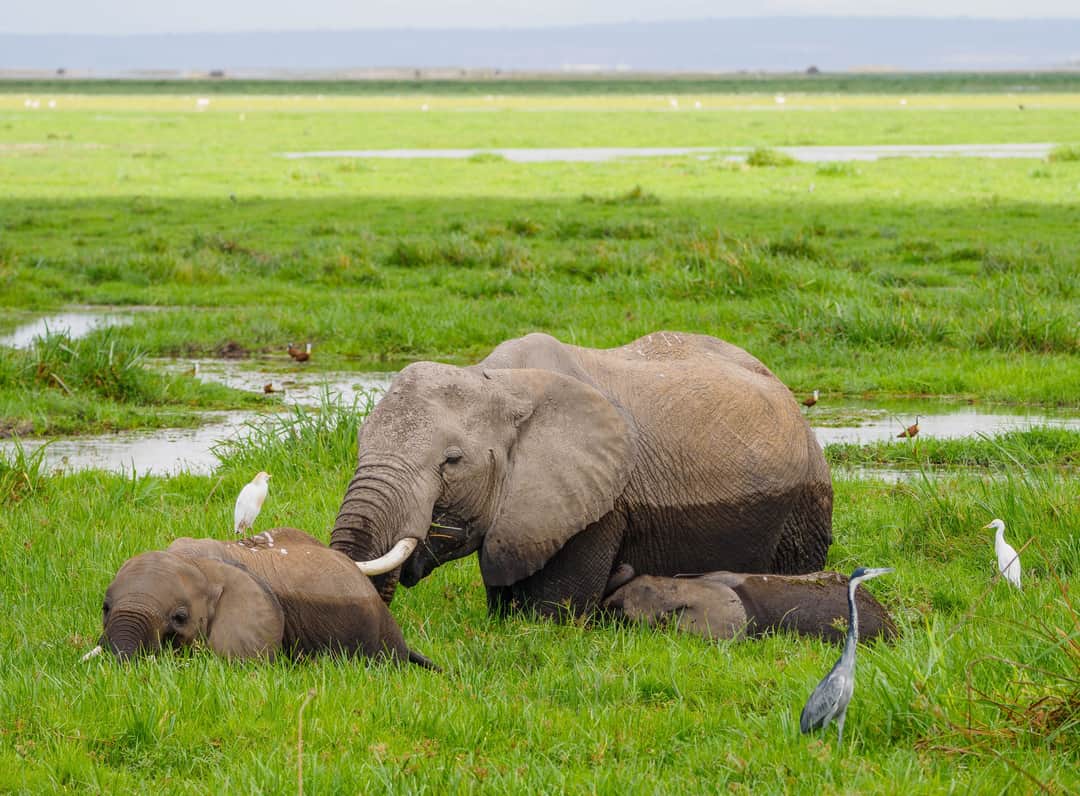
Elephants first, because they are the point. Amboseli holds well over a thousand of them living in family groups that researchers have followed across generations, and unlike elephants in heavily poached country they are calm around vehicles. That calm changes what you get to see. Instead of a nervous herd moving away through bush, you watch a family cross open ground fifty metres off, mothers steering calves, teenagers shoving each other, matriarchs stopping to test the air. The swamp crossings are the set piece: whole families wading chest deep with only trunks and heads showing, then hauling out the far side plastered in black mud. Big bulls come and go on their own timetable, and the largest of them, the ones with tusks that sweep the grass, are among the last of their kind anywhere.
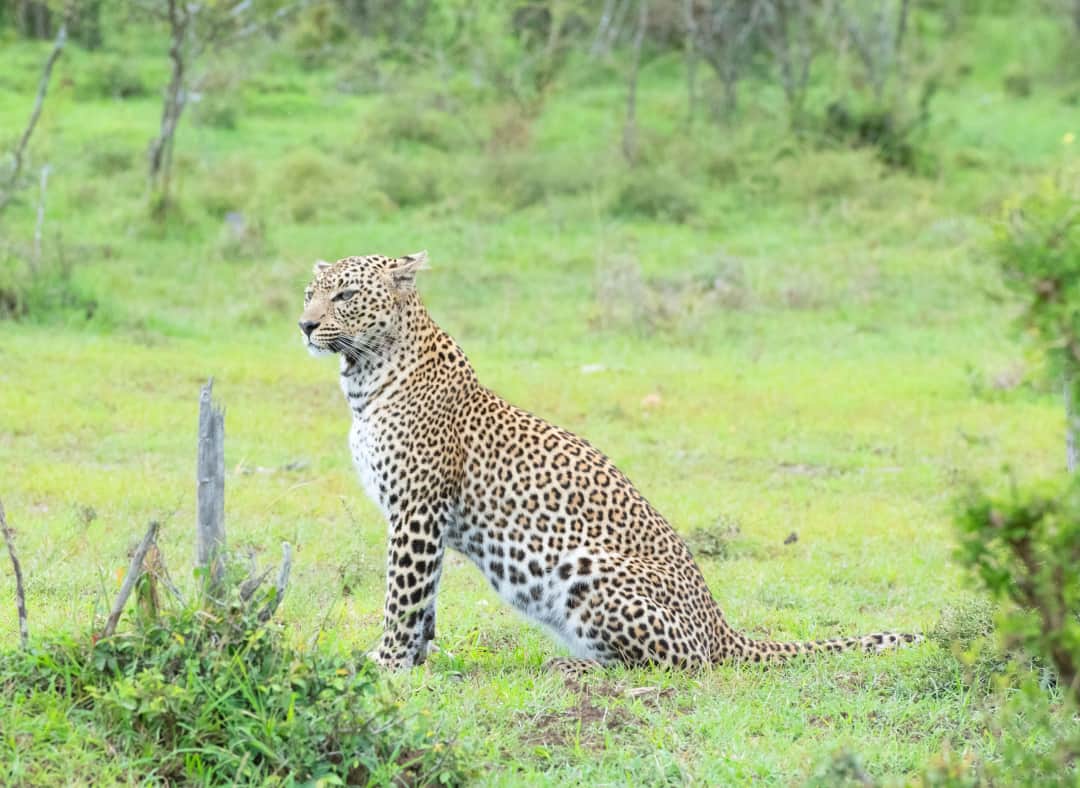
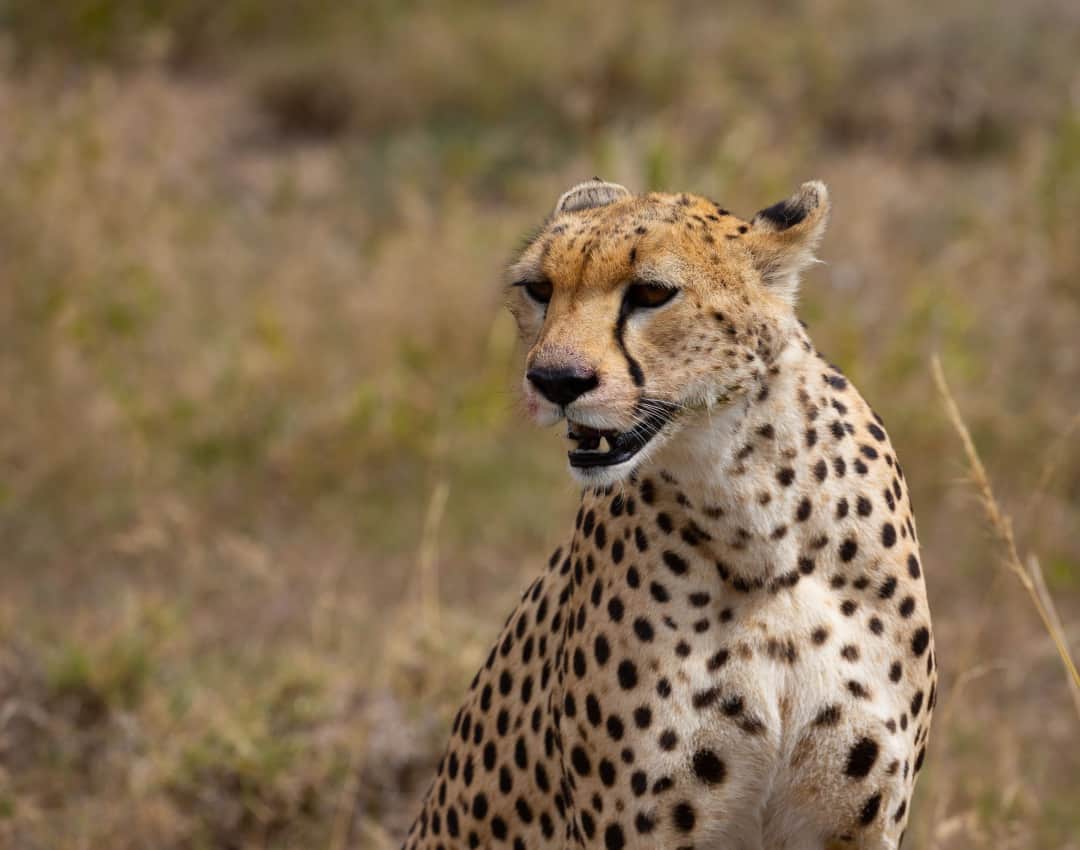
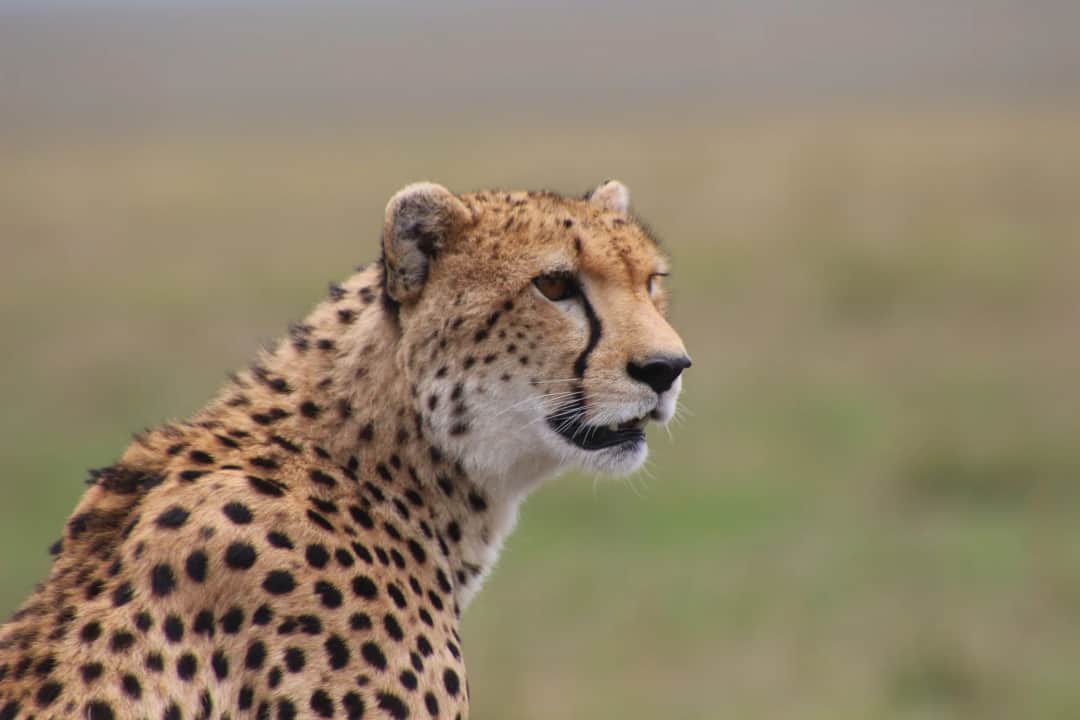
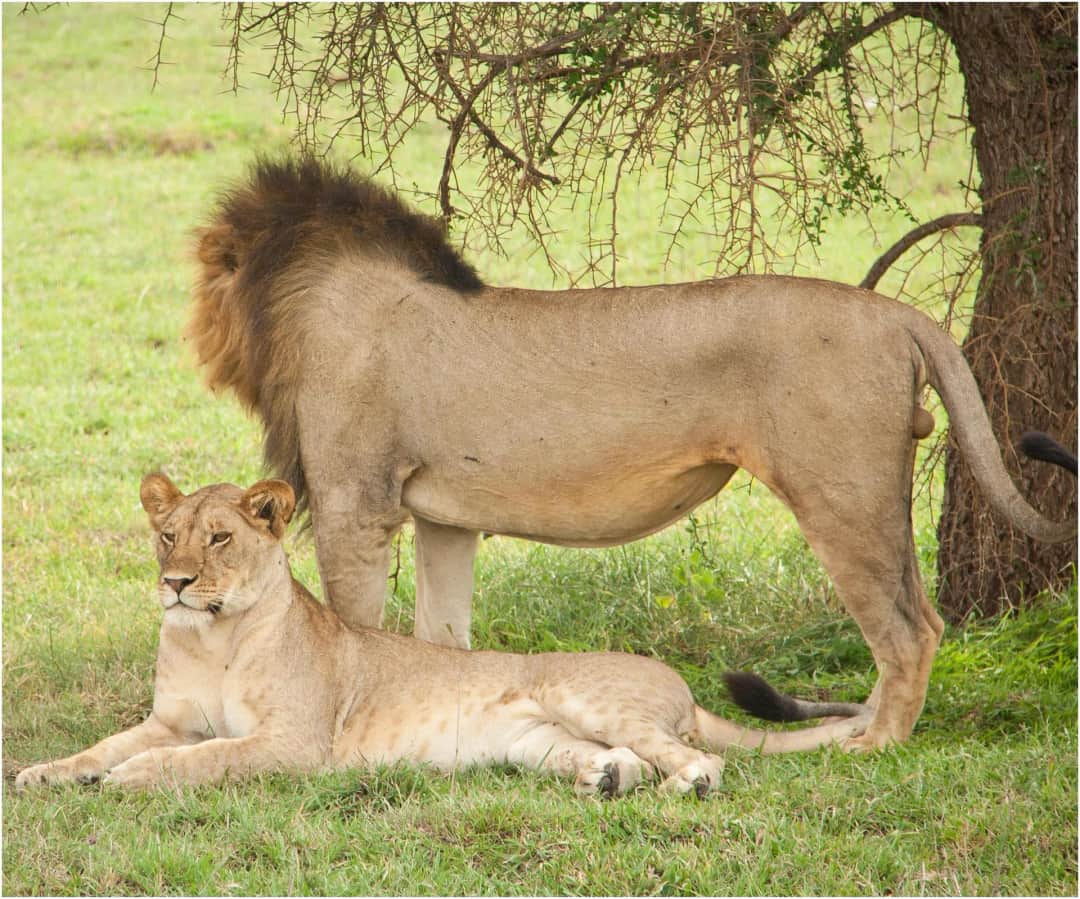
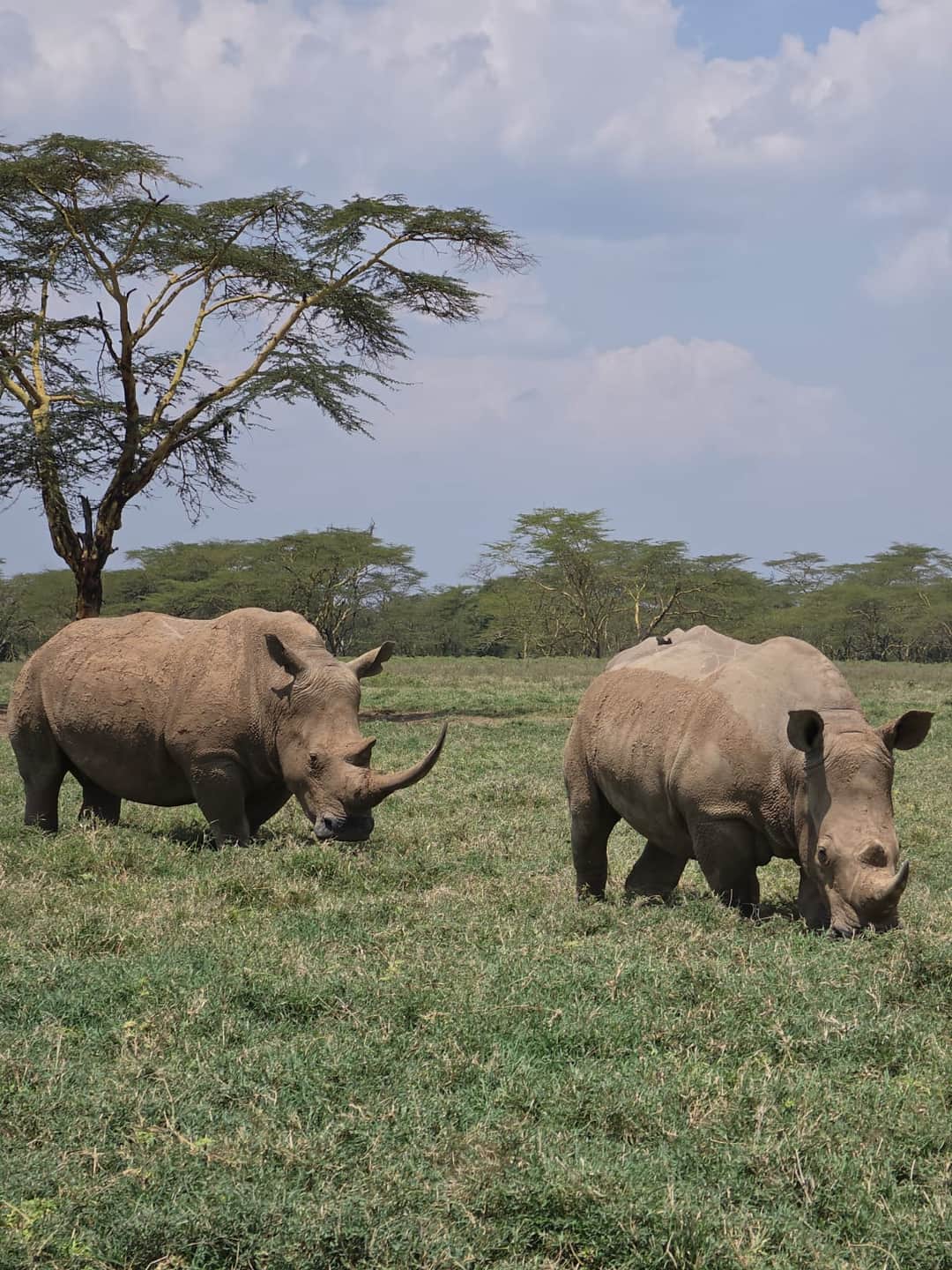
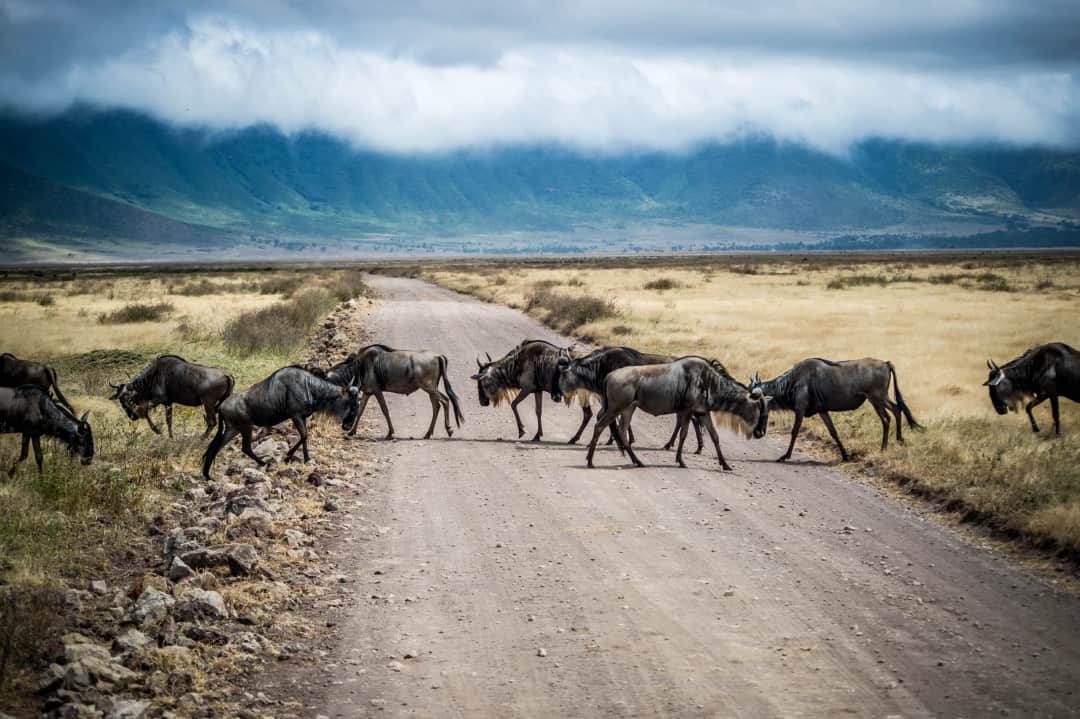
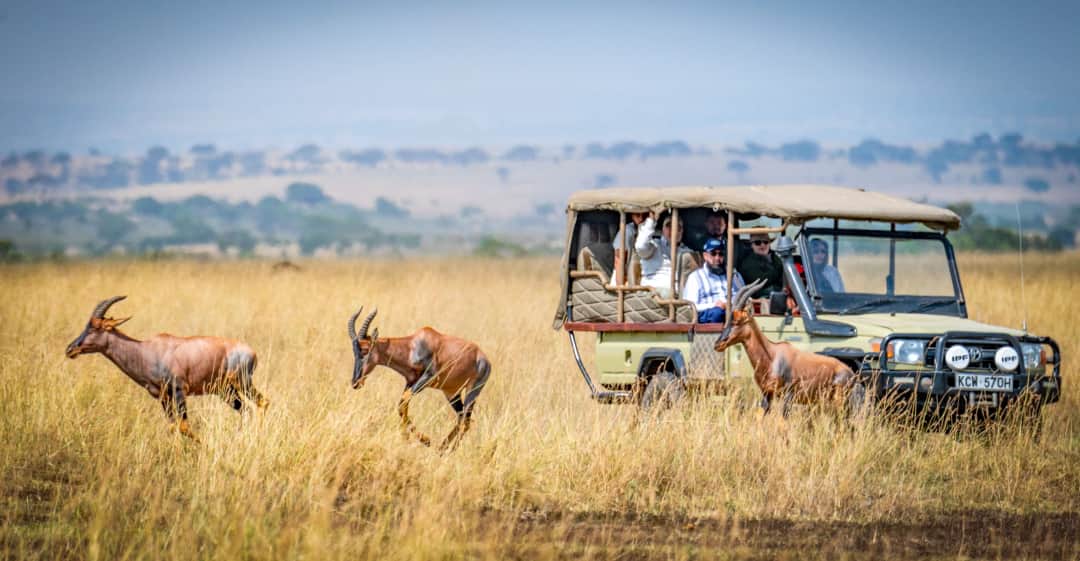
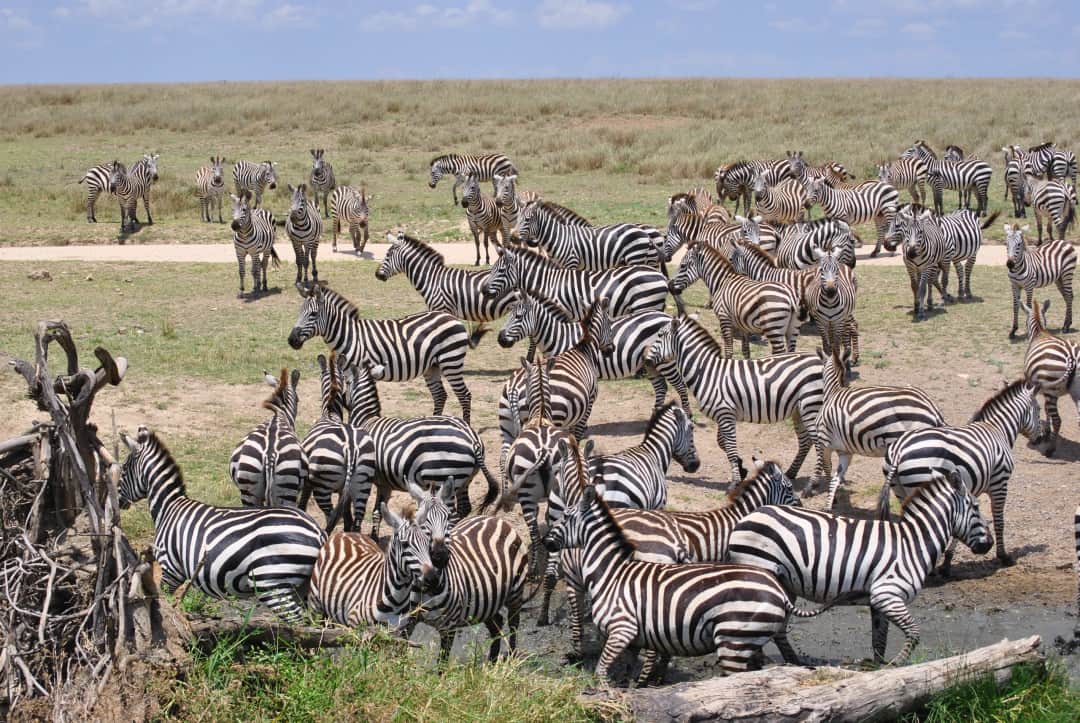
The supporting cast is a proper East African plains community. Buffalo in large herds, plains zebra, wildebeest, Maasai giraffe browsing the fever trees, impala, Grant's and Thomson's gazelle, waterbuck at the swamp edges, warthog trotting with their tails up, and hippo that lie submerged in the deeper channels all day and come out to graze at dusk. Spotted hyena are common and often seen at first light. Lion are present and are seen regularly enough, though they are not at the density you find in the Mara, and the population here has been through hard decades of conflict with livestock outside the park. Cheetah favour the open ground towards Kitirua and the western plains. Leopard exist but are genuinely difficult here. There are no rhino: they were lost to poaching decades ago and Amboseli is a four of the big five park, which is worth knowing before somebody sells you all five.
The birding is much better than the park's reputation suggests, with well over 400 recorded species packed into a small area, largely because the mix of open alkaline flats, permanent swamp and woodland is so unusual. The swamps hold African fish eagle, herons, egrets, African jacana walking on lily pads, sacred ibis, hamerkop and grey crowned crane. When the lake floods, lesser flamingo and great white pelican arrive and the dry pan becomes a waterbird site. On the dust you get kori bustard, secretary bird, crowned and blacksmith lapwings, and swarms of larks and pipits that only a patient guide will bother to name for you. Raptors are conspicuous all year: martial eagle, tawny eagle, bateleur, and pygmy falcon around the drier acacia.
A word on the trees, because visitors notice and misread them. Whole stands of dead acacia stand bleached across parts of the park, and it looks like disaster. It is partly elephants, which push over and strip trees, and partly the slow salinisation of the ground as the water table has shifted. The living yellow barked fever trees along the swamp margins are the counterweight and are the loveliest thing in the park at four in the afternoon, when the low sun turns the bark almost luminous. Amboseli has also been through serious drought in recent years, most severely in 2022, when many animals died, and honest guides will tell you about it rather than pretend the ecosystem is untroubled.
Observation Hill at sunrise or sunset
Observation Hill, known locally as Normatior, is a small volcanic cone standing alone out of the flat, and it is one of very few places in a Kenyan national park where you are allowed to leave the vehicle and walk. The climb is a few minutes on a stepped path and any reasonably mobile person can do it. From the top you get the whole geography in one turn: the swamps green and snaking below you with elephants moving through them, the white lake bed running off west, the acacia woodland to the north and Kilimanjaro filling the southern sky when it is out. Go at either end of the day. In the middle of the day it is hot, hazy and the view is flat. At sunset the swamps light up and you can watch elephant families beginning their evening crossings from directly above them, which is a perspective no game drive gives you.
The swamps: Enkongo Narok, Longinye and Olokenya
The permanent swamps are the engine of the whole ecosystem and where you should spend most of your driving hours. Fed by underground water from Kilimanjaro, they stay green through the worst of the dry season, so in September the entire cast comes to them: elephants wading in to feed on the sedge, buffalo bogged to the belly, hippo, waterbuck, and every wading bird in the region. Get there early. The classic sequence is elephants leaving the drier ground at dawn and walking in long lines towards the water, which is the shot everyone wants and which happens on ordinary mornings rather than special ones. The tracks run along the edges rather than through, and the drier margins can still be soft, so this is where a good driver earns their keep. Afternoons are also productive, with the same movement running in reverse from about four o'clock.
The dry lake bed and the dust
Lake Amboseli occupies the western side of the park and for most of the year it is not a lake at all but a flat white pan of fine alkaline dust. It looks empty and most itineraries hurry across it, which is a mistake, because it is the most cinematic ground in the park. Mirages stretch animals into stilt legged shapes, dust devils spin up out of nothing and travel for hundreds of metres, and a herd crossing it at distance with the mountain behind is the definitive Amboseli image. It is also where the light plays hardest: heavy backlight in the late afternoon turns the dust kicked up by moving elephants into gold. In heavy rain years the pan floods and becomes shallow water with flamingos on it, which is worth seeing precisely because so few visitors ever do.
Dawn and dusk with Kilimanjaro
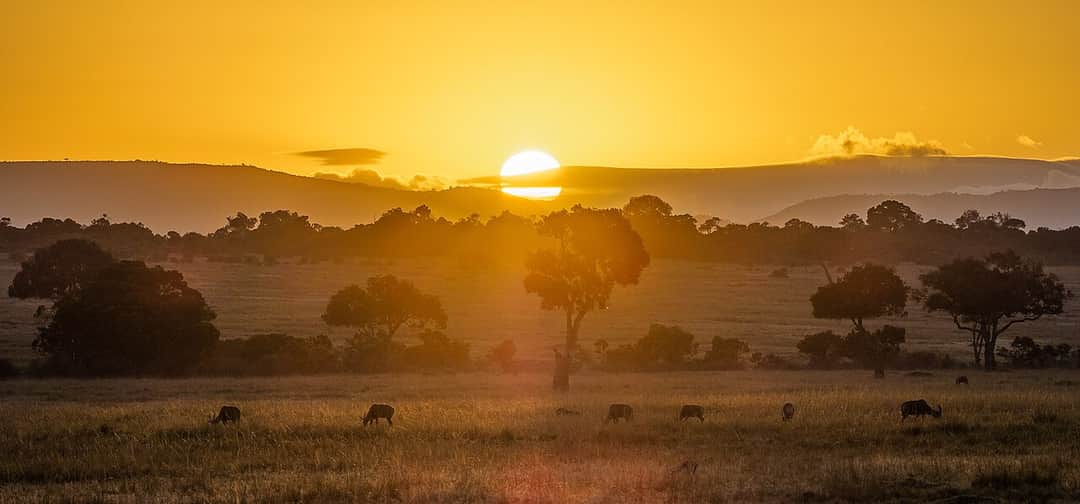
Treat the mountain as an appointment rather than a backdrop. Be out of camp before the sun is up, not at the usual leisurely safari hour, because the clearest window is often the first thirty minutes of light and the cloud can close in before your coffee is finished. The classic vantage points look south and southeast across the open ground towards Kibo, and any experienced guide knows three or four spots where a herd is likely to be at that hour. In the evening, position yourself so the elephants are between you and the mountain and shoot into the last light. A guide who is willing to leave camp in the dark is worth more here than an upgraded room. If cloud beats you on the first morning, try again on the second. The mountain rewards people who give it more than one chance.
The elephant families and the research legacy
Amboseli's elephants have been studied continuously since 1972, and the accumulated knowledge changes what a game drive can be. Guides who work here regularly know the families on sight and can tell you which one you are watching, who the matriarch is, roughly how old she is and which calf belongs to whom. Ask for that. A herd becomes something else entirely when it stops being generic elephants and becomes a specific family with a history. This is also the best place in Africa to look for a super tusker, a bull carrying tusks so long they scrape the ground. There are only a handful left on the continent and several of them live here. Sightings are not routine and should not be promised, but the odds are better in Amboseli than anywhere and even the ordinary bulls here carry impressive ivory by modern standards.
Maasai communities around the park
Amboseli is an island inside Maasai land, and the group ranches around it, Olgulului, Kimana, Mbirikani and others, are where the elephants actually spend a great deal of their time. Cultural visits are widely offered and the quality varies enormously. The staged version, where a bus arrives, a dance is performed and a jewellery table appears, is dispiriting for everybody involved. The better version is arranged through a camp with a long standing relationship with a particular community: a walk with a Maasai guide who explains which plants are used for what, a visit to a school or a livestock enclosure, a genuine conversation about how families live alongside animals that eat crops and kill cattle. Ask your operator directly how the money is shared and whether the community chose to host. If the answer is vague, skip it rather than fund the poor version.
The surrounding conservancies for night drives and walking
Inside the national park you drive, you stay on the tracks, you do not get out except at Observation Hill, and you are back through the gate by evening. The community conservancies on the boundary, including Kimana, Selenkay and the Kitirua area, run under different rules and that is why an increasing number of good itineraries put at least one night outside the park. Out there you can walk with an armed Maasai guide, which turns tracks, dung, broken branches and bird alarm calls into the actual activity rather than a footnote. You can also drive after dark for genet, civet, white tailed mongoose, bushbabies, aardwolf and the cats that only start working when the sun is down. The game density is lower than in the swamps, so treat a conservancy night as a different experience rather than a substitute for the park.
Combining Amboseli with Tsavo, the Chyulus or a Kilimanjaro climb
Amboseli is small enough that almost nobody comes here alone, and its position makes the combinations easy. Eastwards through Kimana gate you run towards the Chyulu Hills, green rolling volcanic country that looks nothing like the dust you just left, and on into Tsavo West with its lava flows and the spring fed pools at Mzima. That pairing gives you two completely different landscapes in one trip. Southwards, the border with Tanzania is close, and it is common to finish a short Kenyan safari here and then cross to Moshi or Arusha to climb Kilimanjaro from the Tanzanian side, which is the only side you can climb from. Doing the safari first and the mountain second is the wrong order for most people: climb while you are fresh, then let the safari be the soft landing for your legs.
National park
Amboseli National Park
Take it with you
Everything on this page in one document you can keep, print, or send to whoever you are travelling with. No email required.
Possibly, and the odds depend almost entirely on how you structure the visit rather than on luck. The mountain is usually visible around sunrise and again in the last hour of daylight, and usually hidden by cloud from mid morning until late afternoon. That pattern holds through most of the year, though clear spells are more frequent in the dry months of June to October and again in January and February. The practical consequence is simple: arriving at midday for one night and leaving after breakfast gives you one realistic dawn and one realistic evening, and the weather can take both. Two nights doubles your chances and costs comparatively little. Set an alarm, be out before first light, and accept that even then some visitors go home having seen only the base of it.
Two nights is the sensible answer and it is what most well built itineraries use. That gives you two sunrises for the mountain, a full day of game driving covering the swamps, the lake bed and Observation Hill, and an afternoon in reserve for whatever you missed. One night works if it is part of a longer route and you understand what you are gambling on, since a single dawn is a genuine coin toss for Kilimanjaro. Three nights is comfortable rather than necessary, and is best spent with one of those nights in a conservancy outside the park so you can walk and drive at night. Beyond three nights the park starts repeating itself, because the road network is small and the productive ground is concentrated around the swamps.
Yes, but for a specific reason rather than a general one. The Mara is better for predators, for sheer density of plains game and for the migration season. Amboseli offers none of that at the same level. What it offers instead is elephants in a way the Mara cannot match: larger family groups in wide open country, remarkably relaxed around vehicles, in a landscape of white dust and green swamp under a snow capped mountain. The two parks feel completely different and photograph completely differently. If your only interest is cats, Amboseli will underwhelm you. If you want elephants, landscape and a picture nobody else at home has, it is the more distinctive of the two.
The second half of the dry season, roughly August to early October, is the strongest all round window. The plains outside the swamps are burnt off, which forces elephants, buffalo and everything else into the wetlands in large concentrations, and the dry air improves your chances with the mountain. January and February are the other dry window, hot and very bright, often extremely clear at dawn, and slightly less crowded than the middle of the year. The long rains of March to May bring the fewest visitors and the lowest rates, with a green transformed landscape and sometimes a flooded lake with flamingos on it, at the cost of dispersed animals and soft tracks. November and early December, the short rains, are usually a light and workable compromise.
Yes, and it is one of the most natural pairings in East Africa, though you have to cross an international border to do it. Kilimanjaro can only be climbed from the Tanzanian side, so the trip runs Nairobi to Amboseli, then across to Arusha or Moshi to start the climb. Take one piece of advice on sequencing: do the mountain first and the safari afterwards. Climbing takes five to nine hard days and you want to hit it fresh rather than tired from early game drive mornings, and coming down to a few days of sitting in a vehicle watching elephants is a far better recovery than the reverse. Build a rest day between the two, because the transfer and the border take longer than the map suggests.
Both work and the choice comes down to how many days you have. The drive runs roughly four to five hours depending on traffic getting out of Nairobi, mostly on tarmac with a rougher final stretch, and it costs less and lets you continue by road to Tsavo or the Chyulus afterwards. Light aircraft from Wilson Airport take under an hour to the park airstrips and turn a driving day into a game drive, which matters a great deal on a two night visit. The usual compromise is to fly in and drive out, or fly one leg and use the vehicle for the onward journey. Whatever you choose, confirm what happens at the other end, because a flight without a vehicle and guide waiting for you is only half a transfer.
Rhino is settled: there are none in Amboseli, they were lost to poaching decades ago, and any itinerary promising the big five here is either sloppy or dishonest. Lion are present and seen fairly regularly, particularly early and late, but the density is nothing like the Maasai Mara and the population has had a hard time historically because of conflict with livestock in the surrounding group ranches. Leopard exist and are genuinely hard to find. Cheetah are seen on the open western plains often enough to be worth asking about. If your trip is built around cats, put your nights in the Mara and treat Amboseli as the elephant and landscape leg of the same holiday rather than expecting it to do both jobs.
Amboseli is a demanding park to photograph well and the difficulties are predictable, which means you can plan around them. The alkaline dust is extremely fine and it gets everywhere, so change lenses as little as possible, keep bodies in a sealed bag between sightings and bring a blower and cloths. Midday light is flat, glaring and full of haze that will soften anything shot at distance, so treat the middle of the day as downtime. The good hours are the first two and the last two, when low sun rakes across the dust and backlit herds throw up gold. Bring a long lens for the elephants and, more importantly, something wide, because the signature image here is a small herd in a very large landscape rather than a frame filling portrait. Shoot from as low as your vehicle allows.
Lodges inside the park put you closest to the swamps and let you be at the best ground at first light, which is the single biggest advantage on a short visit. The trade is that you are bound by park rules: no walking, no night drives, no off road, and gate times that end your evening early. Camps in the surrounding conservancies and group ranches give you walking with Maasai guides, night drives, far fewer vehicles and a stronger link to the communities who actually live with these animals, at the cost of a longer drive to the swamps each morning. On two nights, stay inside. On three or more, split them, with the park nights first while your enthusiasm for pre dawn starts is still intact.