National park in Tanzania
A very long time ago a volcano that may once have stood as tall as Kilimanjaro emptied its magma chamber and collapsed into the space it left behind. What remains is the Ngorongoro Crater: a caldera roughly twenty kilometres across, its floor enclosed by walls that rise around six hundred metres and run unbroken the whole way round. Almost everything that makes this place extraordinary follows from that single piece of geology.
Because the crater is enclosed, most of its animals never leave. The floor holds open grassland, a shallow soda lake, freshwater swamps, a spring-fed marsh and a small forest of yellow-barked fever trees, all inside an area you can drive across in about an hour. There is enough of everything down there that the wildlife has no reason to go anywhere, so predators live permanently among their prey instead of following it across a landscape. The density of large animals that results has no real equivalent in East Africa. When people say you can see the Big Five in a single morning here, that is not a sales line: it happens, not reliably enough to promise, but often enough that it is a fair thing to hope for. Black rhino are the reason. This is one of the more dependable places on the continent to see one.
Now the honest part, because it matters to how you plan. Ngorongoro is the most visited place on Tanzania's northern circuit and it feels like it. In July and August the descent road carries a steady procession of vehicles from first light, and a good sighting, a lion on a kill or a rhino out on the short grass, will draw a ring of twenty or more minibuses and Land Cruisers within minutes. You are not going to have this place to yourself, and anyone telling you otherwise is selling. What you are buying instead is certainty. Very few safari destinations anywhere deliver as much in as little time.
That trade goes with the other thing people get wrong: the crater is a half day, not a holiday. Vehicles descend at dawn, spend a limited stretch of time on the floor and climb back out by early afternoon, and there is a separate charge for each descent, which is why almost no itinerary includes two. Ngorongoro is something you slot into a longer trip, usually between Lake Manyara or Tarangire and the Serengeti, and it works beautifully in that position. Planning it as a destination in its own right is how people end up disappointed.
It also helps to know that the crater is only one piece of the Ngorongoro Conservation Area, and a small piece at that. The wider area takes in the Olduvai Gorge, where the Leakeys reshaped what we know about human origins, the quieter Empakaai and Olmoti craters where you are actually allowed to walk, a belt of misty highland forest, and the southern short-grass plains that the wildebeest use for calving. It is also home to Maasai families who live and graze cattle inside it, alongside the wildlife, which almost no other protected area of this stature permits. Two nights on the rim rather than one buys you access to all of that, and it is the single best upgrade most people can make to a northern circuit itinerary.
Best time to visit
Ngorongoro is one of the few East African destinations where the honest answer is that any month works. The animals on the crater floor are resident rather than migratory, so unlike the Serengeti there is no season when the wildlife is somewhere else. What changes month to month is the weather, the state of the roads, the colour of the grass and the number of other vehicles.
June to October is the long dry season and the standard recommendation. The crater floor grass is short and cropped, which makes spotting easy, the air over the caldera is usually clear enough to see the far wall, and the descent and ascent roads are in their best condition. It is also the busiest and, on the rim, the coldest. August mornings on the crater edge can be genuinely raw before the sun clears the eastern wall.
January and February are the quietly excellent months and few people book them deliberately. This is the short dry spell between the two rains: the floor is green, the light is better for photography, calves are on the ground and the crowds thin out after the New Year peak. Crucially, it is also when the wildebeest and zebra are calving on the southern plains of the conservation area around Ndutu, so a well-planned itinerary in these weeks gets both the crater and one of the great wildlife spectacles of the year without adding much driving.
The long rains from roughly late March into May are the gamble. Rates soften, the crater is at its emptiest and the highlands are strikingly green, but the rim is often wrapped in cloud for hours at a time, the roads down can be slick and awkward, and there is a real chance of spending your one descent under low grey skies. If you are on a single short itinerary, avoid it. If you are travelling for longer and can absorb one bad day, it can be the most atmospheric time to be here. The short rains in November and early December are much milder, usually falling as afternoon showers rather than all-day weather, and rarely spoil a morning descent.
High season
July through September is the clear peak, when the crater is paired with Serengeti migration itineraries and vehicle numbers on the floor are at their highest. The Christmas and New Year fortnight is the second peak and rim lodges book out months ahead. February is moderately busy with calving-season traffic. The genuinely quiet windows are April to May and, to a lesser extent, November.
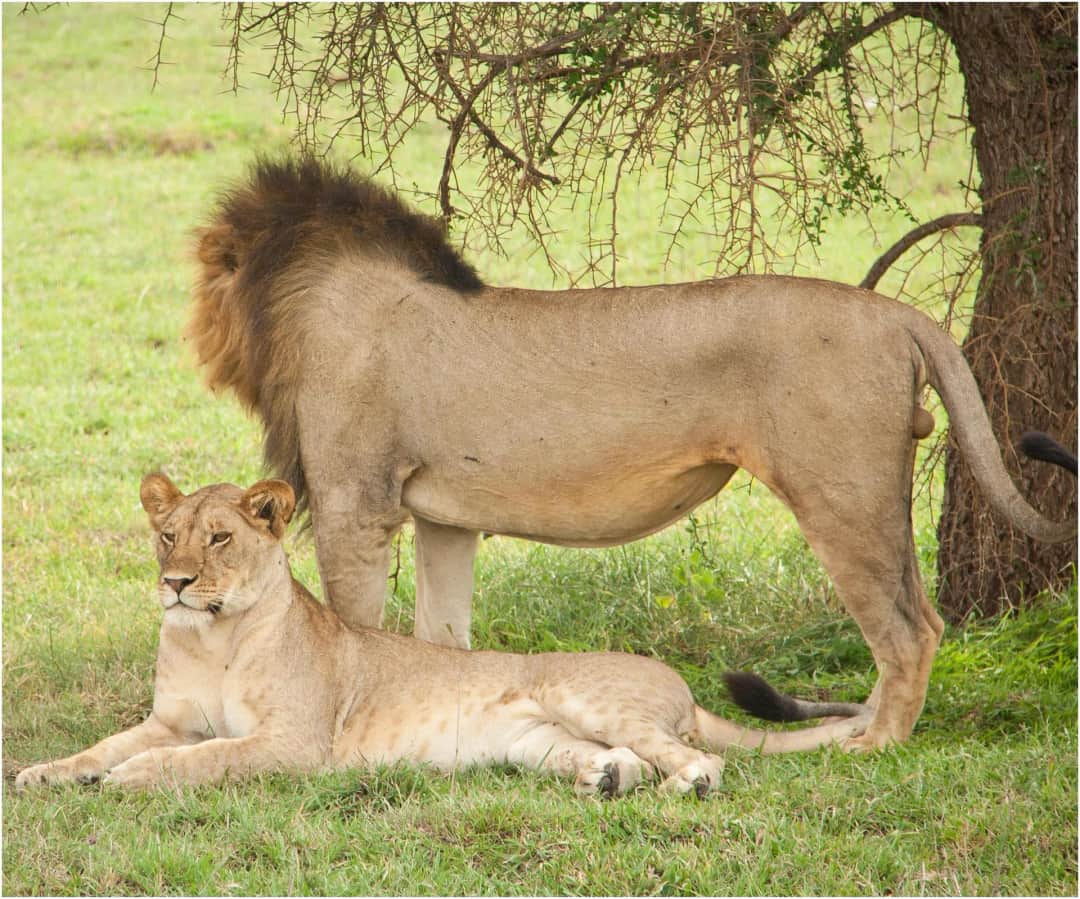
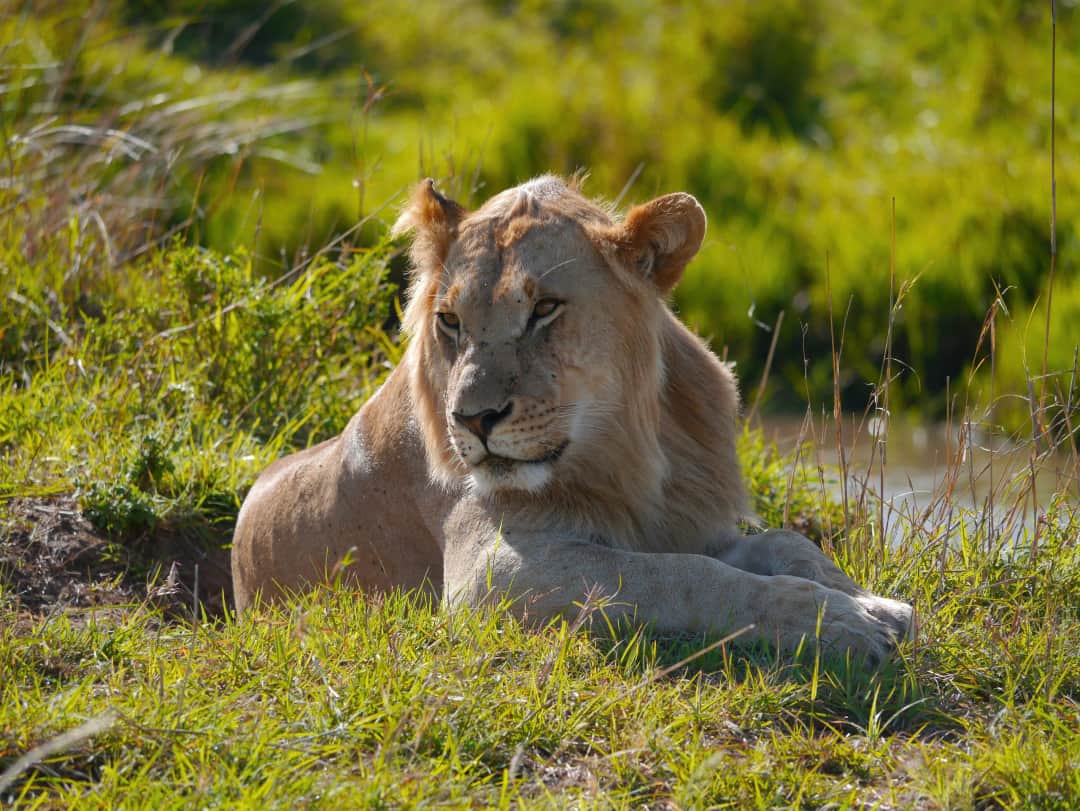
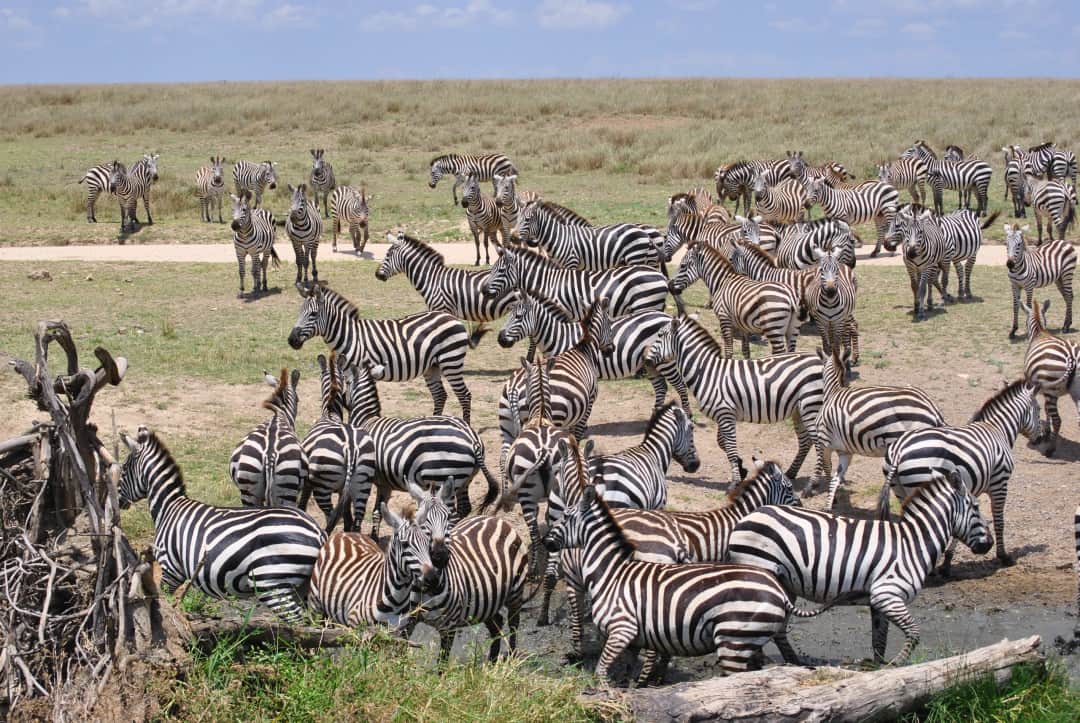
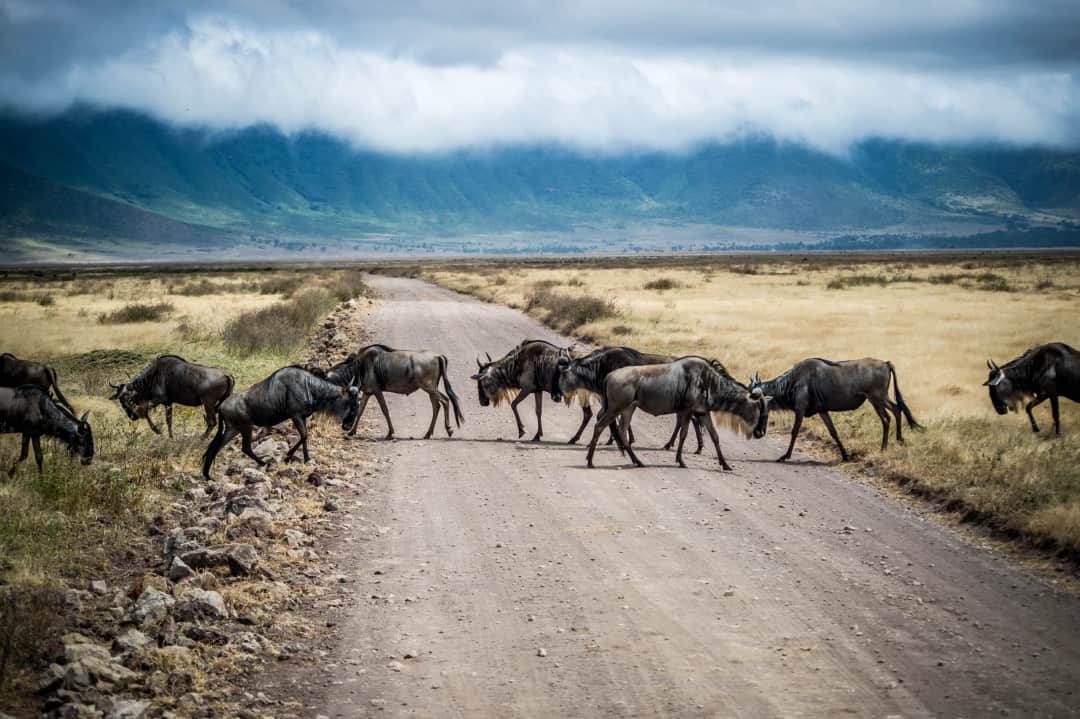
The crater floor supports a permanent population of somewhere around twenty to thirty thousand large animals, and the composition is unusual. Wildebeest, zebra, Thomson's and Grant's gazelle and buffalo make up most of the biomass, grazing the short grass in mixed herds that barely lift their heads as vehicles pass. Lion density here is among the highest recorded anywhere, and the prides are habituated to the point of indifference, which is why cubs on a kill in the open is such a common Ngorongoro photograph. Spotted hyena are equally abundant and worth watching properly rather than dismissing: in the crater they are frequently the ones making the kill and the lions the ones stealing it, which is the reverse of what most visitors expect.
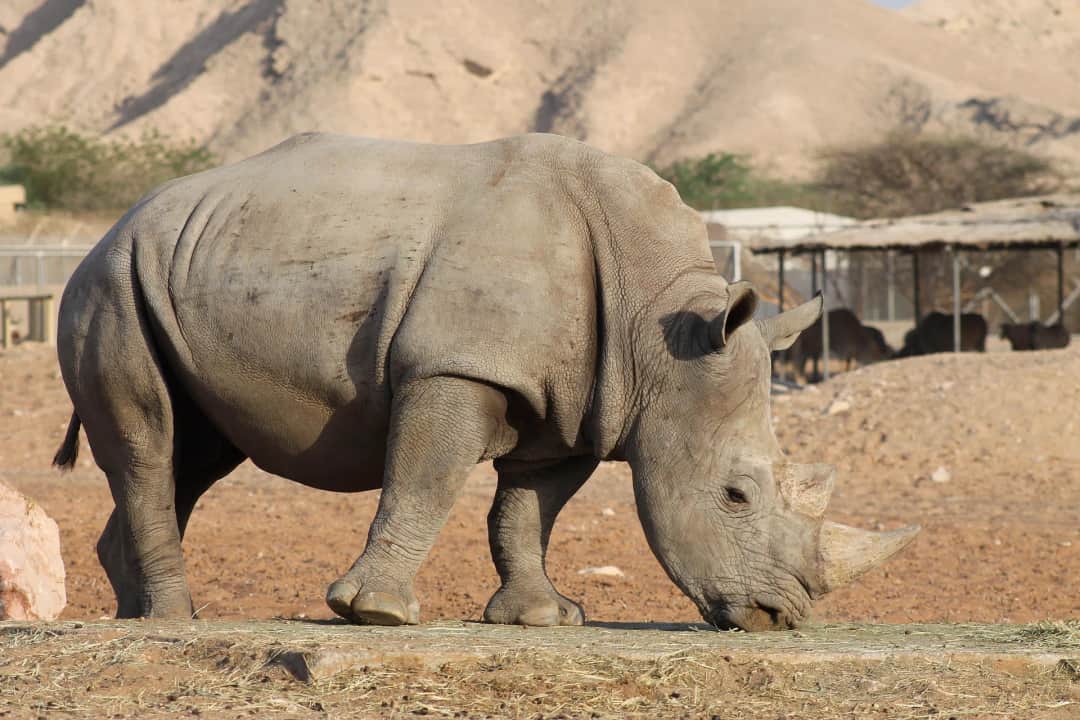
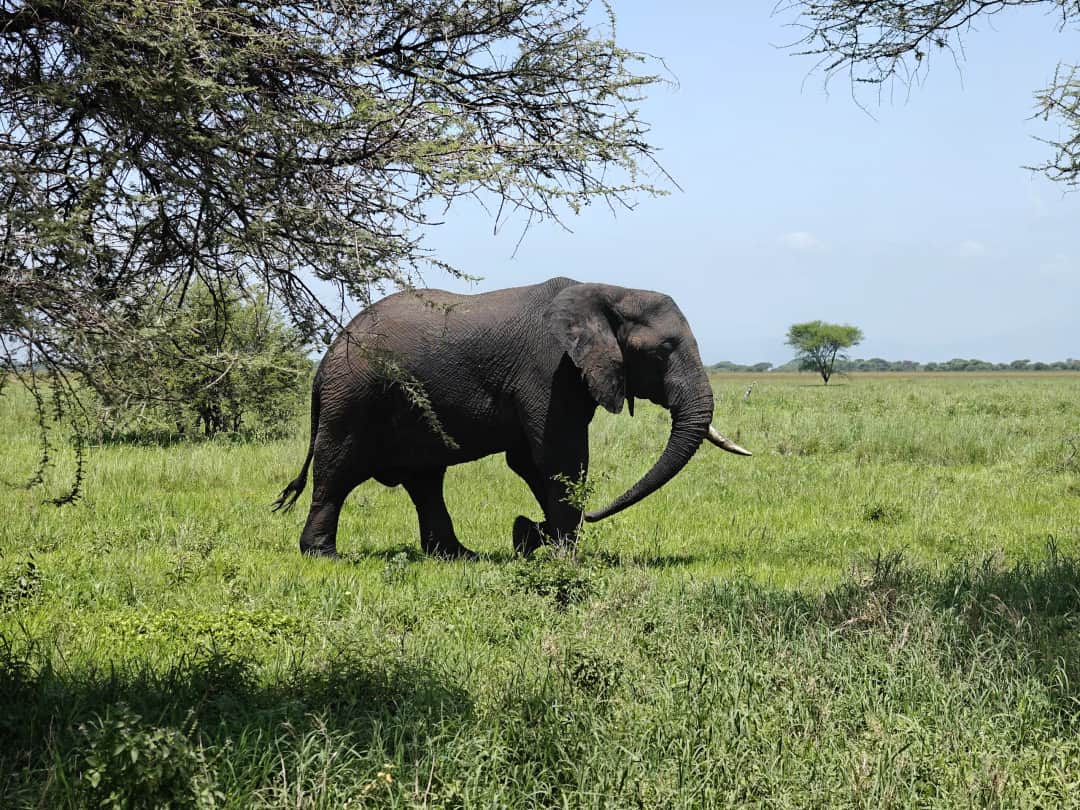
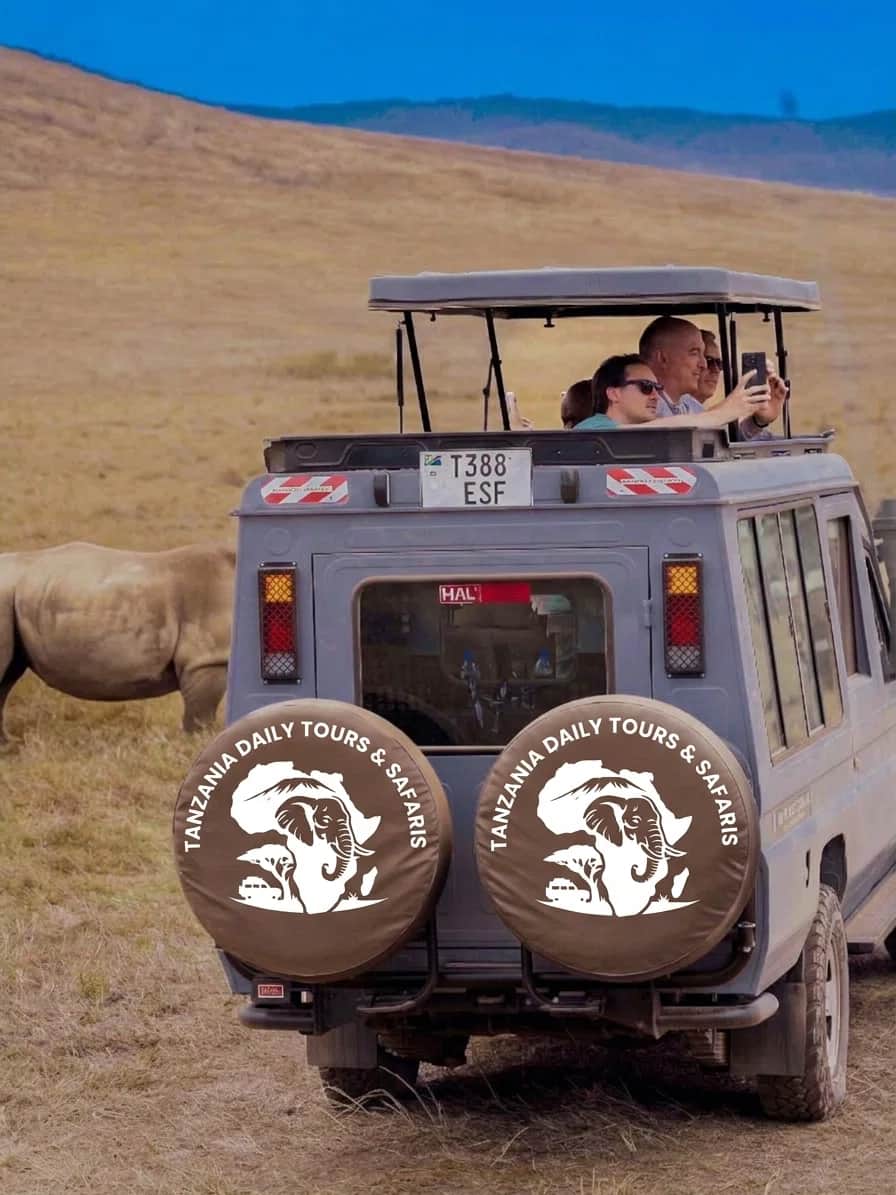
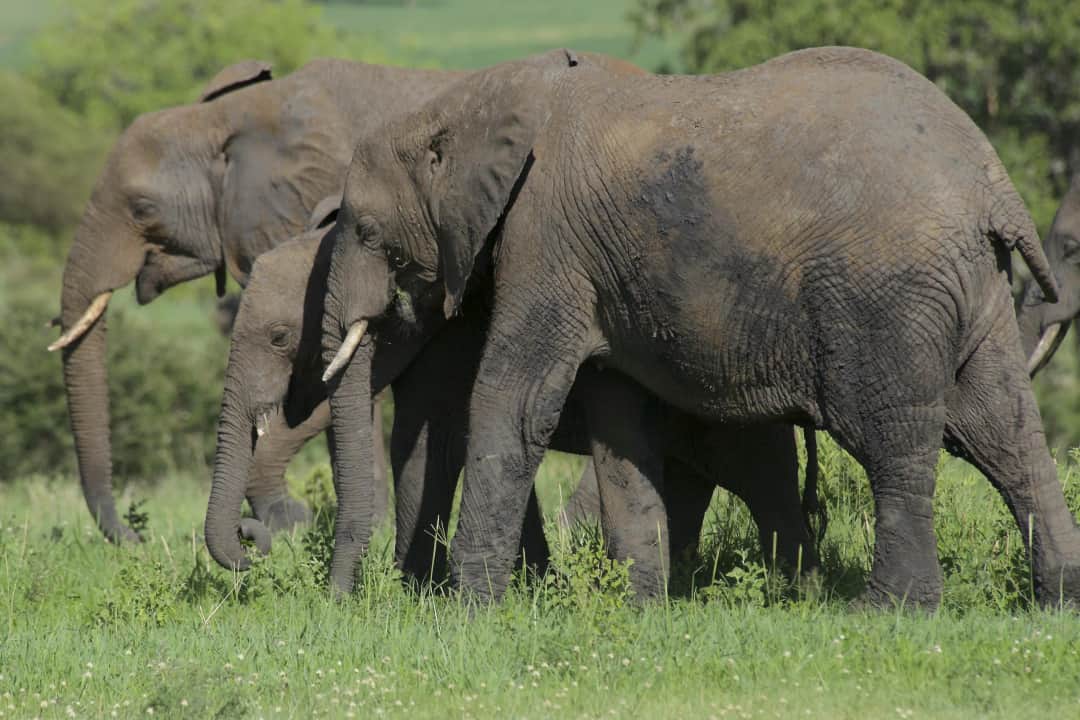
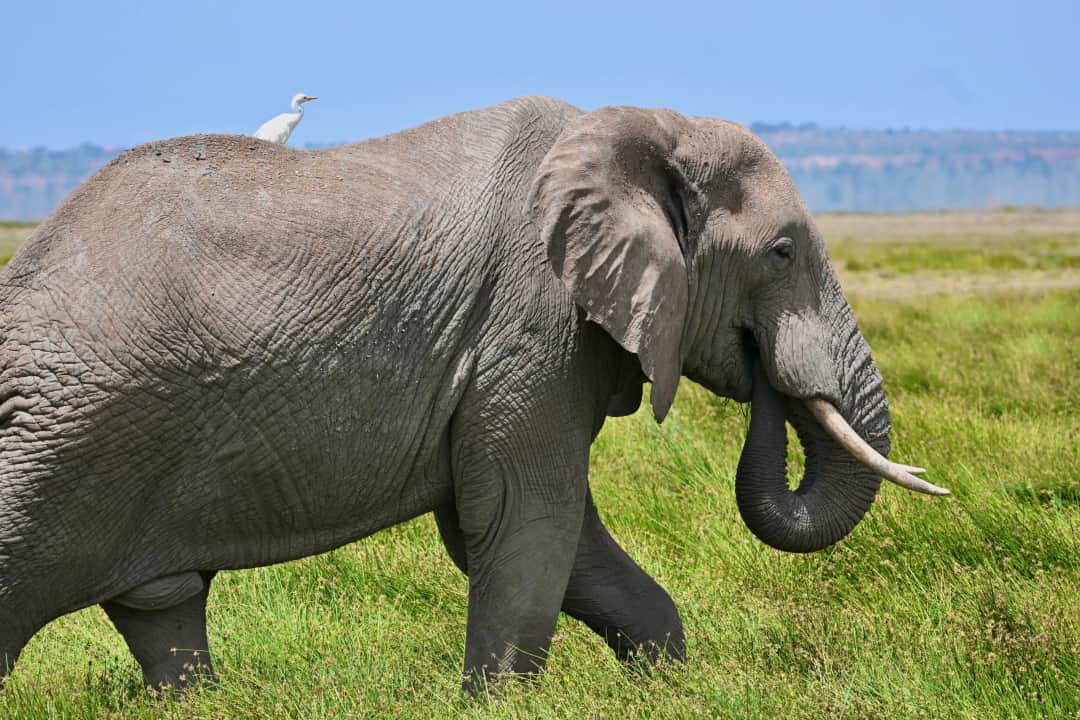
Black rhino are the headline. The crater holds a small, closely monitored population and they favour the open grass and the Lerai Forest edge in the early morning before moving into cover as the day warms. Sightings are common by the standards of anywhere else in East Africa, but they are often at distance, so bring binoculars rather than relying on a long lens and a hopeful crop. Elephants on the floor are almost all old bulls, some carrying the heaviest tusks left in Tanzania, while the breeding herds stay up in the rim forest. Leopard are present but genuinely difficult, which is why they are usually the animal that breaks an otherwise complete Big Five day.
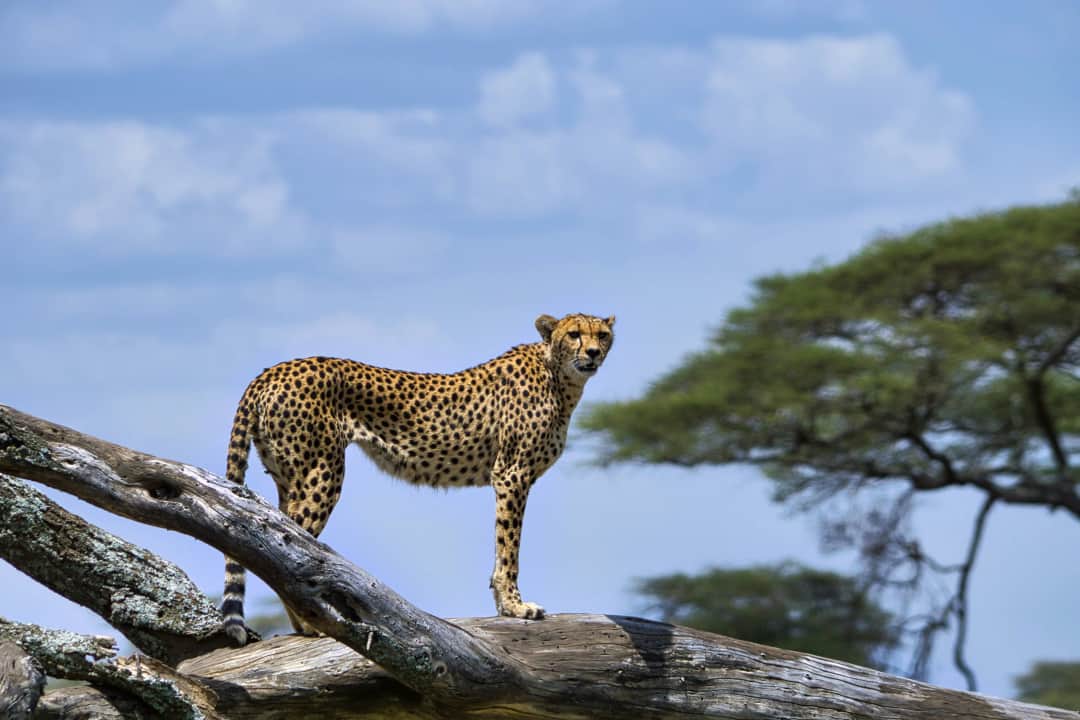
Some absences are as telling as the presences. There are no giraffe on the crater floor: the walls are too steep for them to descend comfortably and the browse is wrong. Cheetah occur but are scarce, squeezed by the sheer number of lions and hyenas competing for the same open ground. What you do get, more easily than almost anywhere, is serval hunting through the grass, golden and black-backed jackal, and bat-eared fox on the drier flats.
Lake Magadi, the shallow soda lake in the middle of the floor, draws lesser flamingo in numbers that rise and fall with the water level, so treat them as a bonus rather than a fixture. The Mandusi and Gorigor swamps hold hippo, and the spring-fed pools on the eastern side are where you will see them properly. Birdlife across the floor is excellent and easy: crowned crane, kori bustard, ostrich, augur buzzard along the walls, and long-crested eagle in the rim forest. One conservation reality worth knowing is that the crater's isolation cuts both ways. The same walls that concentrate the wildlife also limit the movement of genes in and out, and the lion population in particular has been studied for decades because of it.
The crater floor game drive
This is the reason you came and it runs to a fairly fixed shape. You leave your rim lodge in the dark, reach the descent road as it opens and drop six hundred metres down a steep one-way track in about twenty minutes, arriving on the floor as the light comes up and the mist burns off the grass. You then have a limited window, in practice a morning rather than a day, to work the open plains, the lake shore, the swamp edges and the forest, before climbing out by a separate ascent road. Off-road driving is not permitted, so everything happens from a network of tracks, and your guide's skill shows in route choice and in reading the radio traffic rather than in going anywhere clever. Ask to be at the gate the moment it opens. The first ninety minutes on the floor are worth the rest of the day combined, both for the animal activity and because you get them before the bulk of the traffic arrives.
Lerai Forest, Lake Magadi and the swamps
It is worth understanding that the floor is not one habitat but four, and that a good drive samples all of them. Lerai is a stand of yellow-barked fever trees in the south, shaded and cool, where big elephant bulls browse and where rhino and occasionally leopard rest up through the middle of the day. Lake Magadi is the pale soda pan at the centre, ringed by flamingo when the water suits them and by wallowing wildebeest when it does not. The Mandusi and Gorigor swamps on the western and southern sides hold hippo and pull elephant and buffalo in during dry months. The Munge stream runs down off the rim into the lake and its course is reliably good for predators. If your guide only drives the open short-grass plains because that is where the lions are, you are seeing a quarter of the crater.
Olduvai Gorge
A thirty metre gash cut through layered volcanic ash on the road between the crater and the Serengeti, and one of the most consequential archaeological sites on earth. Louis and Mary Leakey worked here for decades and the fossils and stone tools they recovered, including the skull that became known as Nutcracker Man, pushed the human story back further than anyone had expected and helped establish East Africa as its birthplace. Nearby Laetoli produced something even more affecting: a trail of hominin footprints preserved in hardened ash, made by individuals walking upright millions of years before anything we would recognise as a tool. There is a small museum and viewpoint over the gorge with a short talk. It takes under an hour, it sits directly on a route you are already driving, and skipping it to save time is a decision most people regret afterwards.
Empakaai Crater walk
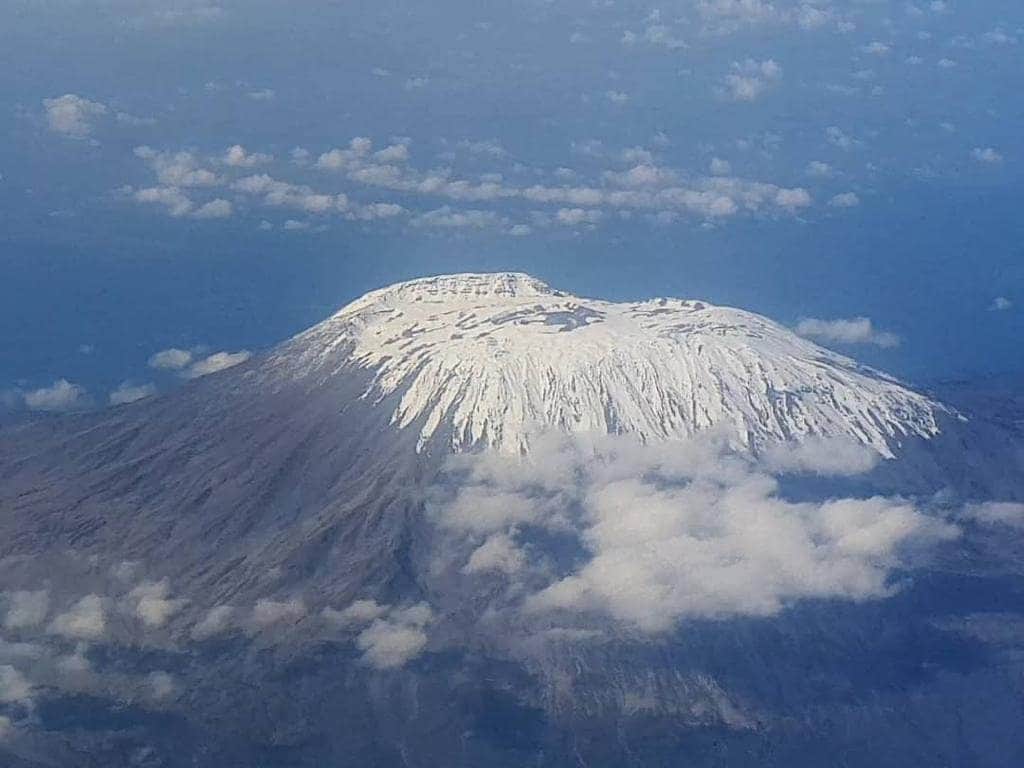
The best walking in the conservation area and almost nobody does it. Empakaai is a smaller, deeper caldera in the northern highlands, its floor half filled by a soda lake that is often pink with flamingo. You descend through dense montane forest on a steep path, roughly three hundred metres down to the shore, and walk back up the same way, which takes a couple of hours in total and is honest work at altitude. On a clear morning the rim gives you the near-perfect cone of Ol Doinyo Lengai to the north and, occasionally, Kilimanjaro floating on the horizon far to the east. You go with an armed ranger and, usually, a Maasai guide. It is muddy after rain, it is quiet, and it is the antidote to a morning spent in a queue of vehicles.
Olmoti Crater and the Munge waterfall
Gentler than Empakaai and often paired with it. Olmoti is a shallow, grassy caldera above the village of Nainokanoka, more an open bowl than a crater in the dramatic sense, and Maasai herders graze cattle across it. The walk climbs steadily through highland grassland to the rim and then out to the point where the Munge stream drops over a lip of rock in a narrow waterfall on its way down towards the Ngorongoro floor. Reckon on two to three hours at a relaxed pace with a ranger. The appeal is not spectacle so much as the simple fact of being on foot in open highland country with wildlife around, which after several days of viewing the world through a raised roof hatch turns out to matter more than you would guess.
The rim road and the highland forest
The drive along the crater rim is an attraction in its own right and is frequently treated as dead mileage. The road runs through cool, dripping montane forest hung with old man's beard, where elephant breeding herds, buffalo and bushbuck move through the trees and the birding is completely different from the floor below. Every few kilometres the forest breaks and the whole caldera opens up beneath you. Sunrise from a rim viewpoint, with cloud pouring over the far wall and pooling on the floor, is one of the images people carry home from Tanzania. Go early or late; through the middle of the day the rim is often simply inside a cloud and you will see nothing at all.
The southern plains and the calving season
The short-grass plains in the south of the conservation area, around Ndutu and the Salei plains, are part of the same ecosystem as the southern Serengeti and the boundary between them means nothing to the animals. From roughly December to March the wildebeest herds are here, and in February most of the year's calves are born within a few weeks of each other, which brings in every predator in the region. It is a completely different kind of wildlife watching from the crater: open, mobile, unpredictable. If you are travelling in the first quarter of the year, structuring your trip so that the crater and the calving plains sit on the same route is the strongest use of your days on the northern circuit.
Time with Maasai communities
Ngorongoro is a multiple-use conservation area, which means Maasai families live inside it and graze cattle, sheep and goats on the same ground the wildlife uses. Herders bring livestock down to water at the springs and move on; the arrangement is old, negotiated and unlike almost anywhere else of comparable status. Most itineraries offer a visit to a boma. Be clear eyed about it: some of these visits are thoughtful and genuinely run by the community, others are a short dance, a photograph and a jewellery stall, and the difference is worth asking your operator about directly before you agree. The better versions, often arranged as a walk with a Maasai guide rather than a stop at a gate, are far more interesting than the packaged kind.
National park
Ngorongoro Crater
Take it with you
Everything on this page in one document you can keep, print, or send to whoever you are travelling with. No email required.
One descent, which in practice means one morning, is what almost everyone does and it is enough to see the crater properly. Vehicles are limited in how long they may stay on the floor and there is a separate charge for each descent, so a second one is rarely worth the money when the same budget buys nights elsewhere. Where the extra time pays is on the rim rather than the floor. Two nights instead of one lets you add Olduvai Gorge, a walk down into Empakaai, a morning at Olmoti or a proper visit with a Maasai community, none of which most three-day itineraries include. A one-day crater trip run out of Arusha is genuinely viable and popular, but understand what it involves: several hours of driving each way, a very early start, and a descent that arrives after the first vehicles. If your schedule allows a rim overnight instead, take it, because being at the gate when it opens changes the quality of the morning completely.
It happens, and more often here than anywhere else, but treat it as a good outcome rather than the plan. Lion, buffalo and elephant are close to guaranteed on the crater floor on any given morning. Black rhino are likely rather than certain, and often at a distance across open grass. Leopard is the one that breaks the set. They are present, mostly around the Lerai Forest and up in the rim forest, and they are difficult to find in either. Plenty of visitors leave Ngorongoro with four out of five and a very good day behind them. If you have a leopard already from Serengeti or Tarangire, that pressure disappears and you enjoy the crater for what it is instead of ticking a list.
Better than almost anywhere else in East Africa, which is a real statement given how few black rhino remain. The crater population is small, individually known to the rangers and closely protected, and the animals are creatures of habit, favouring the open short-grass plains in the cool of early morning before drifting towards the Lerai Forest and thicker cover as the sun gets up. That timing is the whole game. If you are on the floor at first light you have a good chance; if you descend at ten you have a much poorer one. Manage your expectations on distance too. Many sightings are several hundred metres off, a dark shape moving slowly across grass, and off-road driving is prohibited so your guide cannot close the gap. Bring proper binoculars. They will do more for your rhino sighting than any camera you own.
It is crowded, and it is still worth it. Those two things sit together more comfortably than people expect. In July and August you will share the floor with a great many other vehicles, sightings gather queues, and the picnic site at the eastern springs is busy at lunchtime. Anyone who tells you this is a wilderness experience is misleading you. What mitigates it is timing and expectation. Get down first, work the quieter western and northern parts of the floor rather than following radio calls to whatever the crowd has found, and accept that Ngorongoro is trading solitude for certainty. If solitude is what you are after, spend your money on remote parts of the Serengeti or the southern parks and treat the crater as the efficient, extraordinary half day it is. Visiting in the shoulder months of November, April or May also makes a noticeable difference to how many vehicles you see.
The crater is one feature inside a much larger protected landscape, and this confuses a lot of first-time visitors. The Ngorongoro Conservation Area covers a large stretch of highlands, forest, craters and plains between Lake Manyara and the Serengeti, and the caldera itself is a small fraction of it. Everyone driving to the Serengeti by road passes through the conservation area whether or not they descend into the crater. The rest of it includes Olduvai Gorge, the Empakaai and Olmoti craters, the montane forest along the rim, the Salei and Ndutu plains in the south, and a resident human population. It also means the conservation area is managed on a different principle from a national park: people, livestock and wildlife share the land by design rather than by exception.
Colder than nearly everyone expects, and this is the most common packing mistake made here. The rim sits at well over two thousand metres, several hundred metres above the crater floor and far above the safari country most visitors have just come from. Nights and dawns are cold enough that lodges light fires and put hot water bottles in the beds, and a pre-dawn drive to the descent road with the roof open is bracing in a way that catches people out. Pack a fleece or down layer, a windproof outer, a hat and, if you feel the cold, gloves. It matters most in the June to August window and after rain, when the rim is also damp. The compensation is that it warms up fast once you are on the floor and the sun is up, so layers you can strip off in the vehicle are the answer rather than one heavy coat.
Not on the crater floor, apart from designated picnic sites and toilet stops. Game viewing is done from the vehicle on a fixed network of tracks, off-road driving is not allowed, and the floor is cleared of visitors before dark. At the picnic site by the eastern springs, keep your lunch in your hands or in the vehicle; the black kites there are practised at taking food out of the open. Walking is very much available elsewhere in the conservation area, and this is the part most itineraries leave out. Guided walks with an armed ranger run on the rim, down into Empakaai and up to Olmoti and the Munge waterfall, and longer highland treks with Maasai guides can be arranged. If being on foot matters to you, build a second rim night into the trip and ask your operator to include one of these rather than assuming a walk will be offered.
Because Ngorongoro was deliberately set up as a multiple-use area rather than a national park. When the boundaries were drawn in the late 1950s and the Serengeti became a park that people could no longer live in, Ngorongoro was designated as the place where Maasai pastoralists would continue to live and graze livestock alongside the wildlife. Cultivation is restricted, but herding is part of the design, and you will see cattle and herders on the same slopes as zebra and buffalo. It is one of the few arrangements of its kind anywhere at this level of international protection, and it is not without tension. How many people and how much livestock the area can carry, and what residents are owed in return, are live and sometimes contested questions in Tanzania. Visitors do not need to have a view on that, but it is worth understanding that the herders you pass are not incidental to the landscape. They have been part of how it works for a very long time.
Either works and the road geography usually decides it. Driving itineraries run west from Arusha through Tarangire or Lake Manyara, up onto the Ngorongoro highlands, past Olduvai and down onto the Serengeti plains, so the crater sits naturally on the outbound leg or on the way back. If you have a preference, doing the Serengeti first is often the better order. You arrive at the crater with a leopard and some open-plains driving already behind you, so the pressure to see everything in one morning is off and you can enjoy the density for its own sake. It also means you finish on the crater, which is a strong closing day. The counter-argument is altitude and comfort: some people prefer to break the long drive early with a rim night. Either way, keep the crater descent as a dawn start rather than a stop squeezed in between two long transfers.