National park in Tanzania
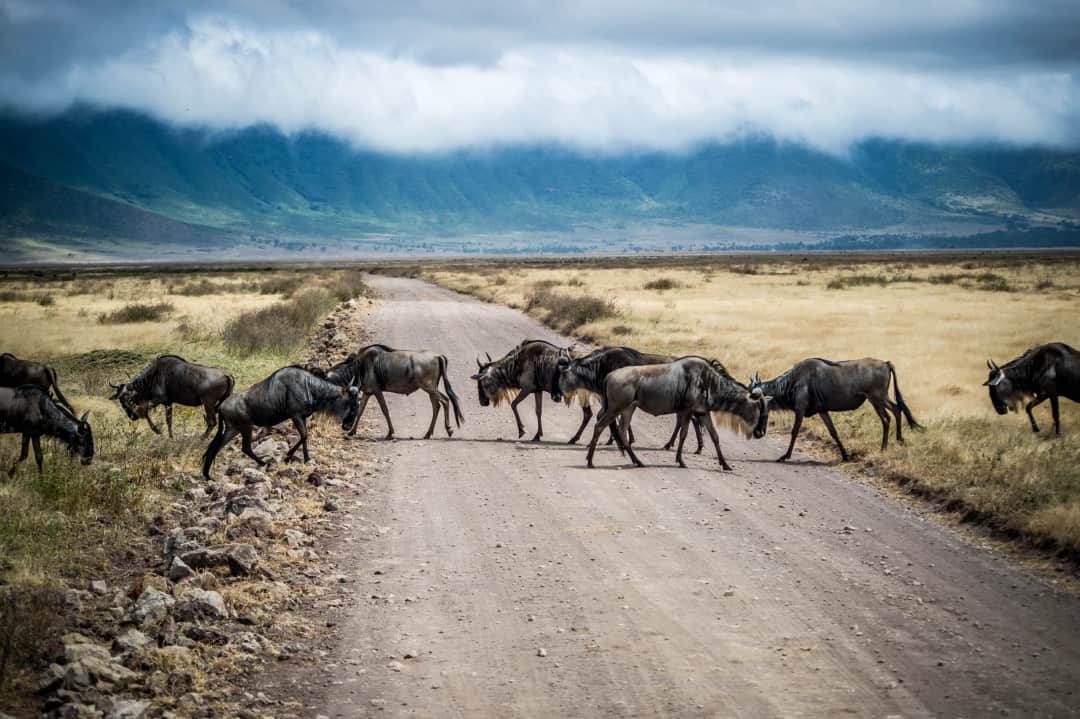
Most people arrive in the Serengeti carrying one image: a wall of wildebeest throwing itself into a crocodile river. That image is true. It is also a few months of the year, in one corner of a park the size of a small country, and only if the herds decide to move on the morning you happen to be parked there. Closing the gap between that postcard and the actual place is most of the work of planning this trip.
The name is Maasai, siringet, roughly the place where the land runs on forever, and the southeastern plains earn it without argument. This is grassland so flat and so wide that you can watch weather arrive from an hour away, broken only by kopjes, ancient granite islands pushed up through the grass which hold shade and water and therefore lions. North and west the country changes completely into acacia woodland, river valleys, rolling hills and finally the Mara river cutting through the far north. It runs to roughly 15,000 square kilometres inside a single park boundary, and driving from its southern gate to its northern airstrip takes the best part of a day.
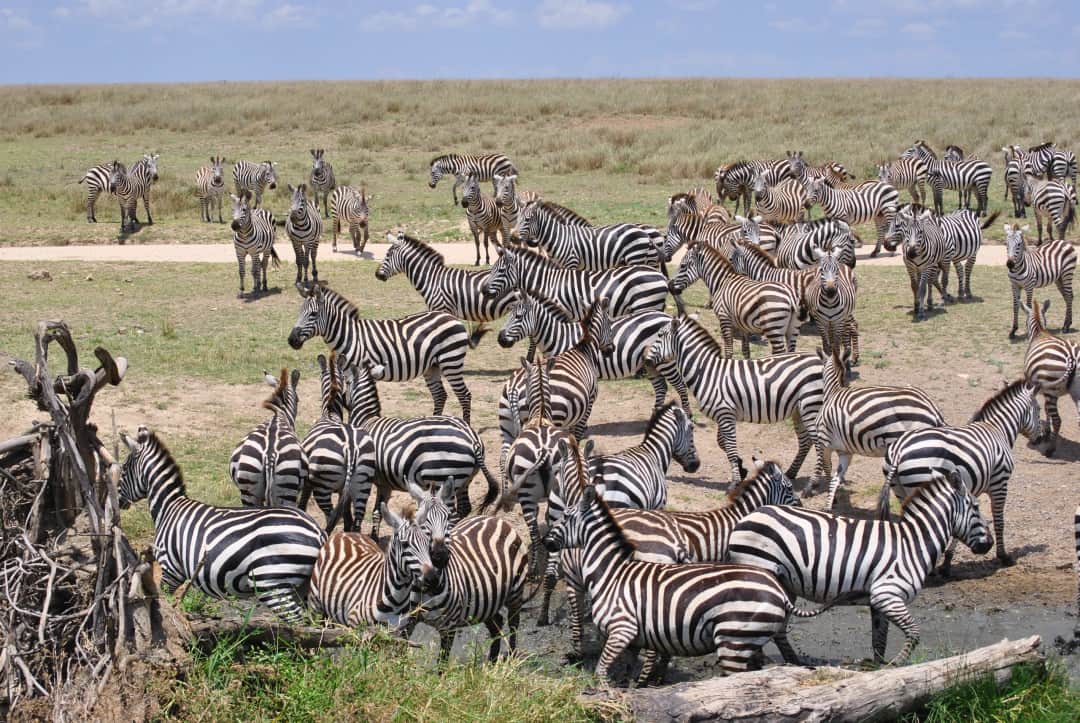
The migration is not an event, it is a loop that never stops. Well over a million wildebeest, with a few hundred thousand zebra travelling alongside them, spend the entire year walking a slow circle around this ecosystem, following rainfall and the new grass that comes with it. That means the herds are always somewhere. It also means that in any given month they are somewhere specific, and that somewhere may be a full day's drive from the camp you booked. Choosing the wrong month for the experience you had in your head is the single most expensive mistake on a Serengeti trip, and it is made constantly.
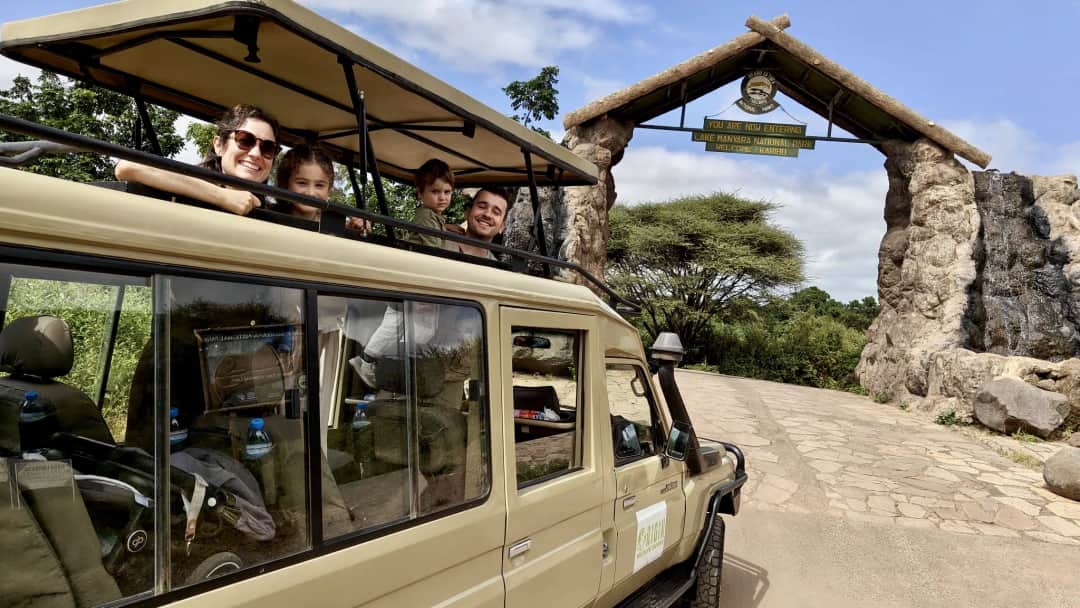
A day here takes on a shape you settle into quickly. Coffee in the dark, out of camp at first light because that is when the cats are still moving, three or four hours of driving with the roof up and your elbows on the rail, back for lunch and the flat white heat of the middle of the day, then out again from four until the light goes. You cover a lot of ground and much of it is empty. The park rewards patience rather than checklists, and the best hour of most people's week is the one they spent sitting still with the engine off, watching something take its time.
The last thing worth knowing before you book is that the Serengeti is not only the migration. Lion prides, leopard along the Seronera river, cheetah on the open southeastern plains, elephant, buffalo, giraffe, hippo and hyena live here permanently and do not go anywhere when the wildebeest do. Plenty of people have an excellent week here having never seen the great herds at all. If somebody sells you a three day trip in a month when the migration is at the other end of the park, the trip is not ruined, it is simply a different trip, and you should know which one you are buying.
Best time to visit
There are two separate questions here and people routinely collapse them into one. The first is what the weather is doing. The second is where the herds are. They do not have the same answer, and for most visitors the second one matters more.
December to March the herds are down on the southern short grass plains, spread across the Ndutu area and the country south of Naabi Hill. Late January through February is calving, when the great majority of the year's calves are born inside a window of two to three weeks. It is the densest wildlife spectacle on the continent and the best predator viewing of the Serengeti year: cheetah hunting on ground so open you can watch a chase from the first crouch to the finish, lion and hyena working the edges of the herds, newborns standing within minutes because nothing out there waits. If you want to watch predators actually hunt, come for calving rather than for the crossings.
April and May are the long rains. The herds drift north and west off the drying plains, black cotton soil turns to grease, some camps close and the park is at its emptiest. Rain here usually arrives as heavy afternoon storms rather than all day drizzle, so it is more workable than it sounds, and it is the greenest and the cheapest the Serengeti ever gets. By late May and June the herds are typically strung through the western corridor and pressing at the Grumeti river, where the crossings are smaller and far less famous than the Mara ones, and the crocodiles are enormous.
July through October is the dry season and the northern season. The herds are in the far north around Kogatende and the Lamai wedge, crossing and recrossing the Mara river, sometimes several times in a week, often drifting back and forth across the Kenyan border. This is the classic crossing window and also the busiest and most expensive time of year to be up there. Everywhere else in the park this is simply the easiest time to travel: dry roads, thin bush, and animals concentrated around what water is left.
In November the short rains begin and the herds turn south again, moving down through the Lobo and Seronera country over a few weeks and back onto the plains for December. All of which comes with the caveat that governs everything above: this is a rainfall pattern, not a timetable. The herds have arrived a month early and a month late within the same decade. Book around the month, then hold the expectation loosely.
High season
July to October is the peak, driven almost entirely by the Mara river crossings in the north, where the small camps book out close to a year ahead and the popular crossing points genuinely fill with vehicles. Christmas and New Year is a second peak, and February calving in the south is a third that gets busier every year. April and May are the quietest months in the park by a wide margin.
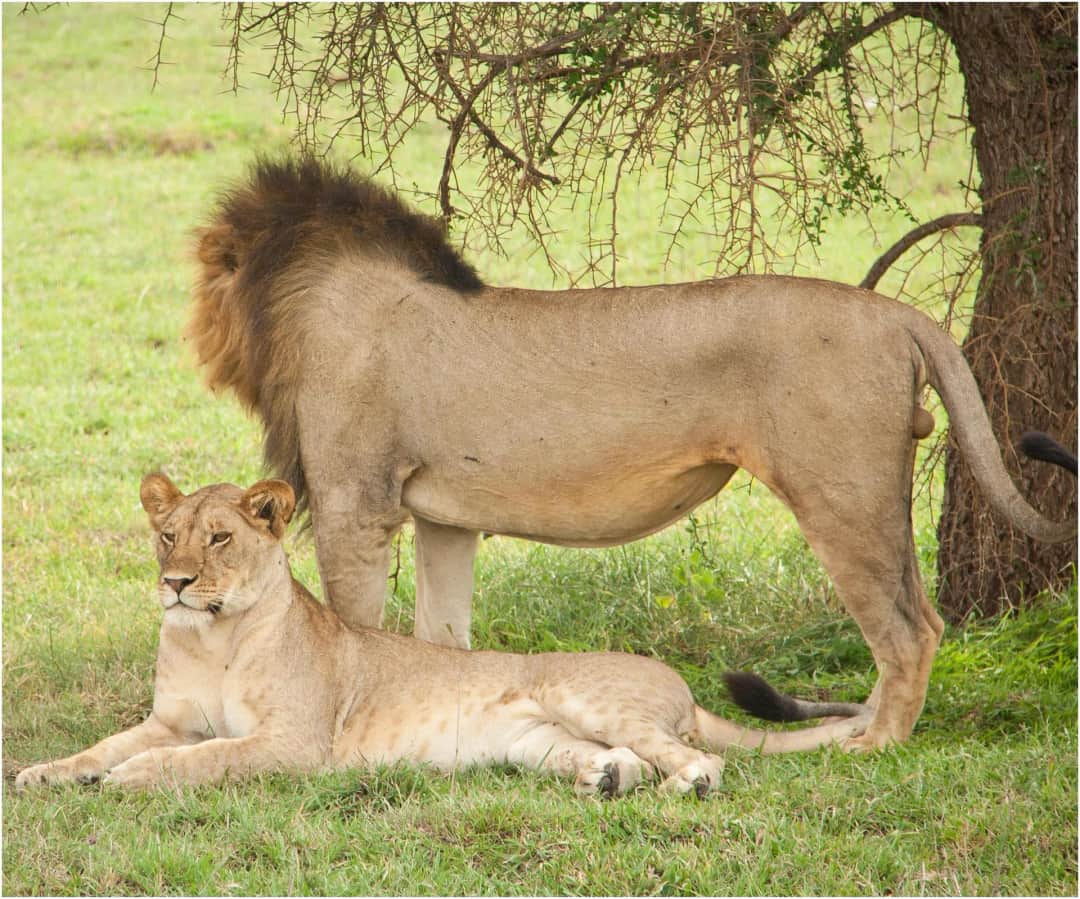
The Serengeti holds one of the largest lion populations left anywhere, and on most trips you have a lion abundance rather than a lion shortage: prides draped over kopjes, lying in the road, sheltering under parked vehicles for the shade. Cheetah favour the open southeastern plains where they can see and run, and calving season is the best few weeks of the year to watch a hunt play out in full view. Leopard are the reliable surprise of the central Serengeti, where the sausage trees and figs along the Seronera river are about as dependable a leopard address as exists in Africa. Spotted hyena are everywhere and considerably more interesting than their reputation, being efficient hunters rather than only scavengers.
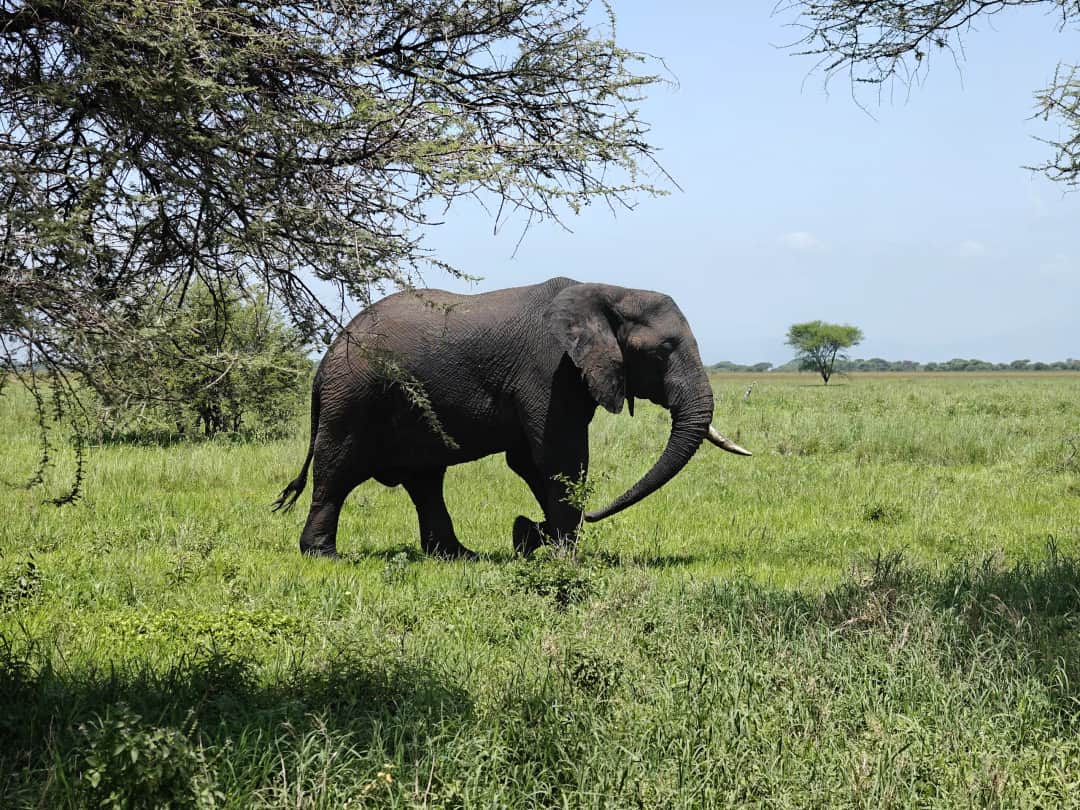
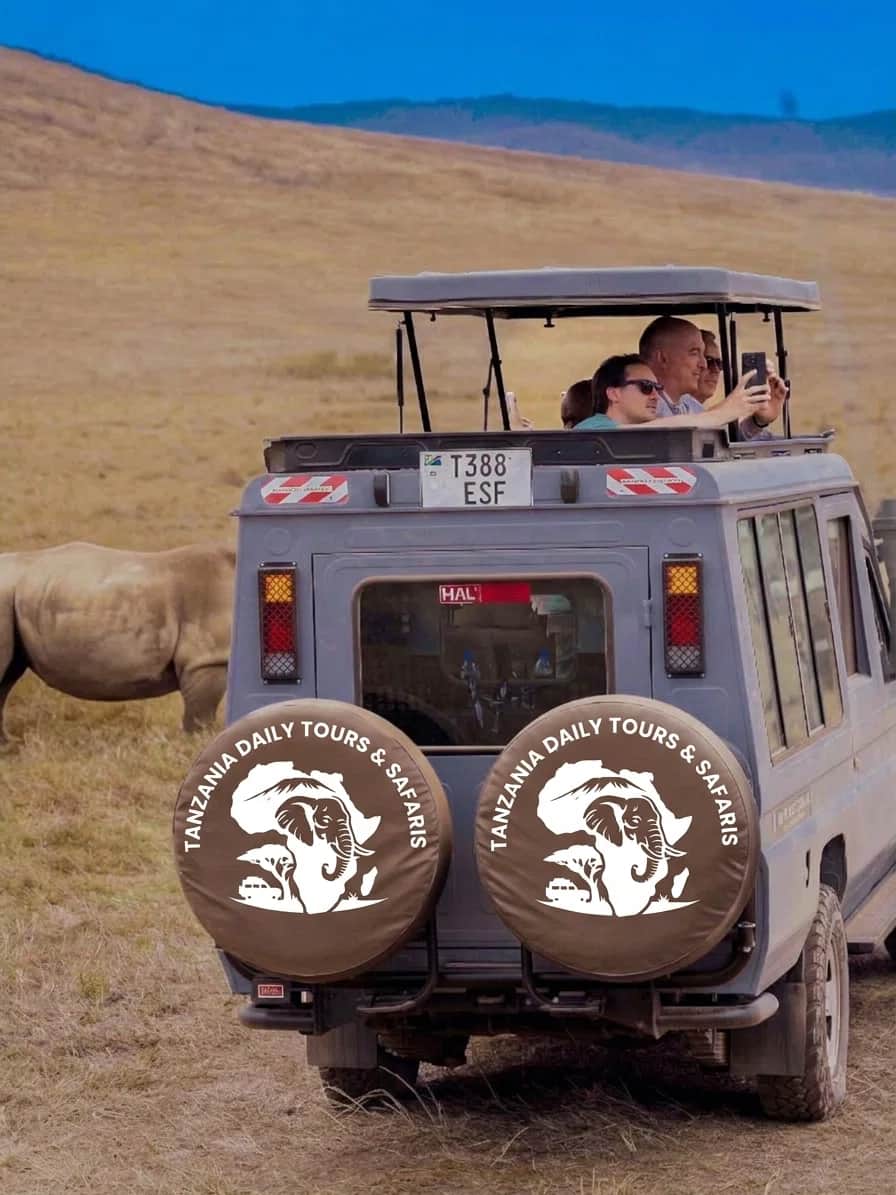
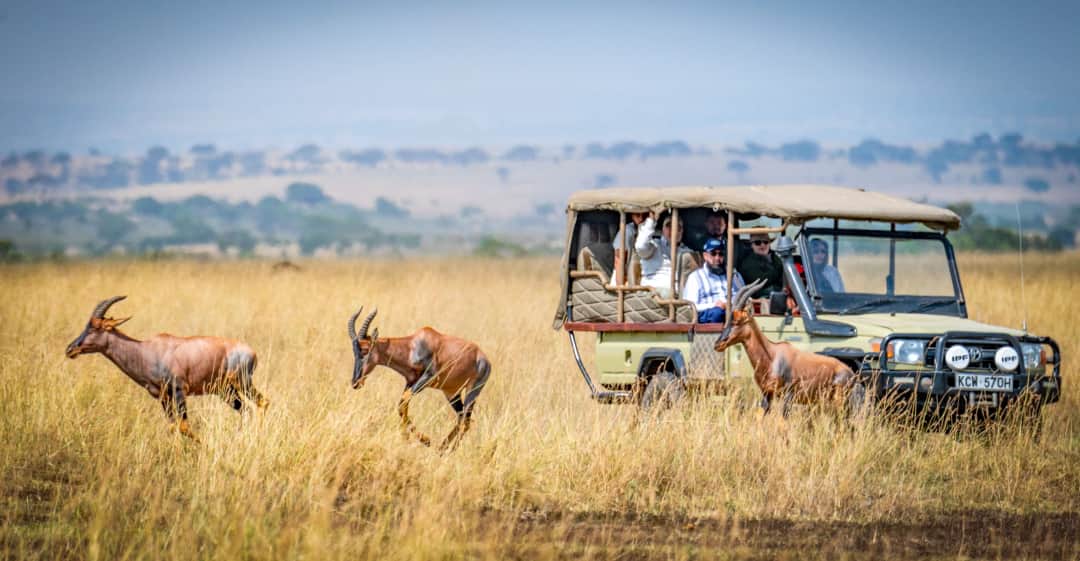
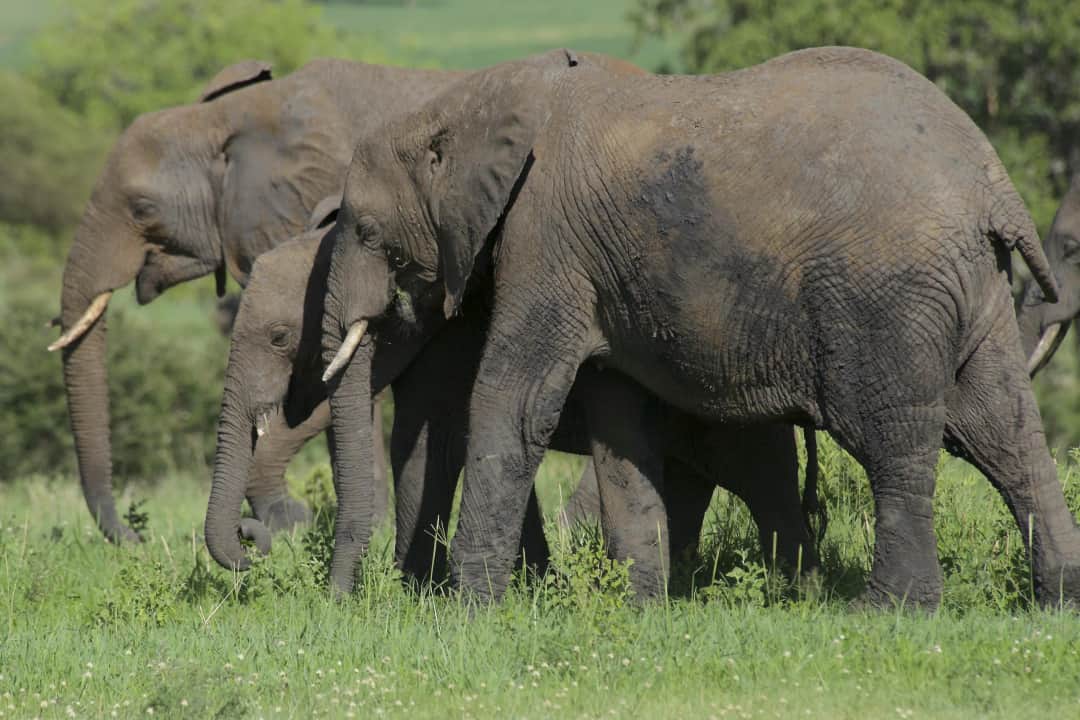
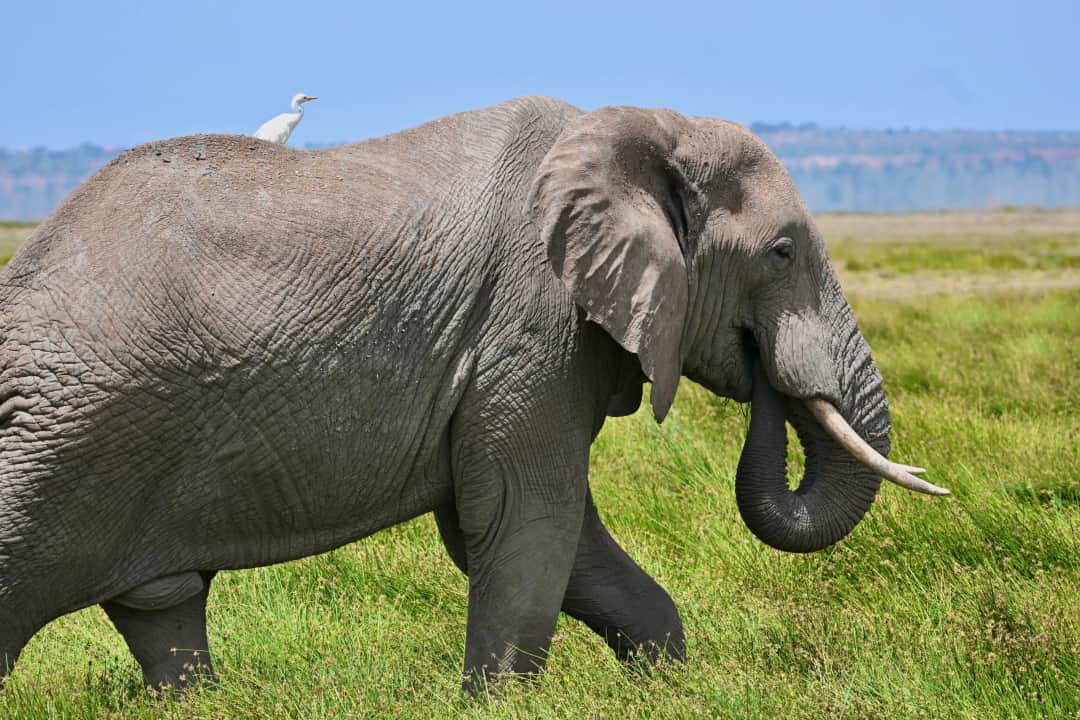
Beyond the cats there is elephant, mostly in the north, around Lobo and through the western woodlands; buffalo in herds that darken a hillside; giraffe browsing the flat topped acacia; hippo packed shoulder to shoulder in the pools at Retima and along the Grumeti; topi standing sentry on termite mounds; and eland, hartebeest, impala, warthog and both Thomson's and Grant's gazelle in numbers that stop registering after a day. Black rhino survive here in small and closely protected numbers, with the Moru Kopjes area in the southwest the most realistic place to hope for one, though nobody should book a Serengeti trip on the promise of rhino. Ngorongoro Crater is the better bet for that.
The small things are where a good guide earns the fee: bat eared foxes sitting outside their dens on the plains, serval hunting rodents in long grass at first light, black backed and golden jackals, dwarf mongoose living inside old termite mounds, agama lizards blazing pink and blue across the kopjes. Birdlife runs to more than 500 species, and even people who arrived indifferent to birds end up watching secretary birds stamping through the grass, kori bustards displaying, lilac breasted rollers on every third bush, and vultures dropping onto a carcass in a sequence you can learn to read.
Season matters less for the resident animals than most people expect. The dry months make everything easier to find because the grass is short and the water is limited, so the animals come to you. The green season hides more but hands you newborns of every species, migrant birds and the plains at their best. Predators do not migrate. They hold territories and eat whatever the season brings through them.
The southern plains and Ndutu in calving season
From roughly December to March the short grass plains south of Naabi Hill are the centre of the Serengeti world, and in late January and February they are the calving grounds. Herds spread to the horizon in every direction, and because the grass is low and the country is open you see everything: a cheetah stalking from a kilometre out, a lion pride shadowing the edge of a herd, a calf on its feet within minutes of being born. One practical detail catches people out constantly. The Ndutu area sits inside the Ngorongoro Conservation Area rather than the national park, so a southern calving itinerary is not simply a Serengeti booking, and camps and permits need to match. Check that your itinerary actually puts you where the herds will be rather than an hour and a half north of them.
Seronera and the central Serengeti
The Seronera valley in the middle of the park is the default Serengeti for most itineraries, and there are good reasons for that. Permanent water in the Seronera river holds game all year, so this is the one part of the park that does not depend on where the migration happens to be. It has the densest concentration of lodges and camps, the main airstrip, and the best leopard viewing in the park, usually poured along a branch of a sausage tree through the middle of the afternoon. The cost is company: in high season a good sighting here can gather a dozen vehicles inside twenty minutes. If your trip is short, or it is your first safari, or the herds are inconveniently placed for your dates, Seronera remains the sensible choice. Simply do not expect to have it to yourself.
Moru Kopjes and the southwest
Southwest of Seronera, the Moru Kopjes are the Serengeti of the imagination: great weathered granite domes standing out of the grass, fig trees growing from the cracks in them, and lions on top for the view and the breeze. This is also the most likely part of the park to encounter black rhino, protected here with real effort, though a sighting is nothing like routine. Moru holds the park's Maasai rock paintings, ochre shields painted onto an overhang, and the gong rock, a boulder that rings when struck and was used as a signalling stone. It is a comfortable half day out from Seronera and sees a fraction of the traffic, which on its own justifies the fuel and the hours.
The western corridor and the Grumeti
The western corridor runs out towards Lake Victoria along the Grumeti river, and it has a season rather than a year. Roughly late May into July the herds pass through and press up against the water. The Grumeti crossings are smaller and more scattered than the Mara ones and draw a fraction of the audience, but the crocodiles here are among the largest anywhere in Africa and an ambush when it comes is not a lesser spectacle. Outside that window the corridor is quiet, with riverine forest holding black and white colobus monkeys you will not see in any other part of the park. The roads suffer badly in the rains and the drive out from Seronera is long, so this section needs a dedicated night or two rather than a day trip tacked onto something else.
The far north, Kogatende and the Mara river crossings
The far north around Kogatende and the Lamai wedge is where the Mara river crossings happen, roughly July to October, and it is a genuinely different landscape: rolling hills, bigger trees, more elephant and cooler air than the plains. Crossing days are mostly waiting. A herd gathers on a bank, hesitates, mills about for an hour or three, then either commits in a rush or turns round and wanders off to try again tomorrow. When it does go it is chaos, all dust and noise and crocodiles and animals swimming past the ones that did not make it. The one unbreakable rule for the crossings is that you have to sleep up there, because Kogatende is five to six hours by road from Seronera and a day trip is not a real plan. Most people fly in.
A balloon flight at dawn
Balloon flights launch before first light, so you are up in the dark and standing at the launch site while the burners are still filling the envelope. You fly for around an hour, low over the grass at times and a few hundred metres up at others, drifting wherever the morning wind decides to take you, and land wherever you land for a bush breakfast. It is expensive relative to everything else in a safari day and it is not really a wildlife viewing exercise, but it is the only way to feel the scale of the place, and floating over the herds when they are below you is the thing people talk about for years afterwards. Flights run out of Seronera through most of the year and seasonally over the southern plains and the north. Book it before you arrive, because each morning carries very few seats.
Mobile camps that move with the herds
A mobile camp is a small tented camp with no permanent structures, which packs up and moves two or three times a year to stay close to the herds: south for calving, west or north as the season turns. This is the clean answer to the whole where do I stay problem, because the camp does the following for you. What you trade is comfort. Canvas walls, bucket showers heated over a fire, solar lamps, no pool and no usable wifi. Fixed lodges give you plumbing, generators, sometimes a pool and a view designed to be looked at, but they stay where they were built, which is fine in Seronera where the game is resident and a real limitation everywhere else. If your trip is planned around the migration, a well placed mobile camp beats a smarter fixed lodge in the wrong part of the park every time.
Walking, night drives and the concessions on the boundary
Inside the national park you drive, you stay on the tracks and you are back by gate time. Off road driving and night drives are not permitted, and that restraint is a large part of why this ecosystem is still in the condition it is. The private concessions and community wildlife areas along the park's boundary run under different rules, which is why a lot of well built itineraries include a night or two just outside the park. Out there you can walk with an armed guide, which resets the scale of everything and turns tracks, dung and bird alarm calls into the main event rather than a footnote. You can also drive after dark for genet, civet, aardwolf, bushbabies and cats that only start work once the sun is down. If you have more than four nights, spending one of them outside the boundary adds more variety than another day in the same vehicle.
National park
Serengeti National Park
Take it with you
Everything on this page in one document you can keep, print, or send to whoever you are travelling with. No email required.
It depends entirely on what you are picturing, and this is exactly where trips go wrong. If you want the river crossings, you want roughly July to October in the far north around the Mara river. If you want calving, newborns and the best predator action of the year, you want late January and February on the southern plains around Ndutu. Those are different months, opposite ends of a very large park, and almost always different camps. There is no single month that hands you both. Decide which of the two images you actually came for and build the trip around that. If nobody asked you this question before quoting you an itinerary, ask it yourself.
No, and treat any operator who implies otherwise with suspicion. A crossing is a decision taken by a wildebeest herd on the day, and herds routinely spend hours gathered on a bank, walk away, and come back the following morning. Even in peak season, in the right place, a run of quiet days happens to somebody every week. What improves the odds is time and position: stay in the north for three or four nights rather than one, be at the river early, and be willing to sit for hours without moving. Most people who see a crossing saw it because they sat through two days of nothing first. The rest of the northern Serengeti is excellent game country in its own right, which is worth remembering while you wait.
Match the area to the month. December to March, the south and the Ndutu plains. Late May to July, the western corridor and the Grumeti. July to October, the north around Kogatende. November, the herds are moving south through Lobo and the central Serengeti. The centre around Seronera works in any month because its game is resident, which is precisely why so many itineraries default to it. If your dates are fixed and the herds are going to be at one end of the park, either commit and go to that end properly, or accept that you are booking a resident game safari with very good cats and no great herds. That is a perfectly good holiday, as long as nobody sold it to you as the migration.
Three nights in the park is the practical minimum, and it only really works if you fly at least one leg, because the drive from Arusha up to Seronera takes the best part of a day in each direction. Four or five nights is where the place opens up: enough to sit with a sighting instead of hurrying on to the next one, and enough to combine two areas, for example the centre plus either the south or the north. If the crossings are the whole point, budget at least three nights in the north on their own, on top of anything else you plan. Anything under three nights in the park tends to turn into a tour of the road between the gate and the lodge.
Driving up from Arusha through the Ngorongoro highlands takes most of a day and you feel every hour of it on corrugated road, but it is cheaper, it lets you build in Tarangire and Ngorongoro Crater on the way, and the moment the track tips over Naabi Hill and the plains open out in front of you is a real one. Flying takes about an hour in a light aircraft into Seronera, Kogatende, Grumeti or the Ndutu airstrips, costs more, and buys back a day and a half of your holiday. The rule of thumb: if your trip runs a week or more and you want the whole northern circuit, drive at least one direction. If you are short on days, or your target is the far north, fly. Reaching Kogatende by road from Arusha is a two day proposition and very few people should attempt it.
In specific places at specific times, honestly yes. Seronera in August and the popular Mara crossing points in September gather a lot of vehicles, and the photographs never show the twenty other cars parked behind the photographer. It is a very large park though, and the crowding is heavily concentrated. Moru, the western corridor outside its season, the Lobo country and the far northeast are quiet on almost any day of the year. You can largely design the problem out by travelling in a shoulder month, staying somewhere less obvious, and asking your guide to leave camp earlier than everyone else. Guides talk to each other constantly, so a good one knows both where the sighting is and whether it is worth joining.
A shared vehicle with five or six other people is the standard budget arrangement and it works perfectly well, but everyone in it wants something slightly different and the vehicle moves at the pace of the group. A private vehicle costs more and buys you the two things that actually decide what you see: the ability to leave before dawn and the ability to stay at one sighting for two hours. Ask about seating either way, because a middle seat with no window is a poor place to spend a week. For a couple or a family who can stretch to it, the private vehicle is the upgrade with the largest effect on the trip, ahead of a smarter room.
It is one of the best first safaris in Africa, precisely because open plains let you see animals at a distance and watch behaviour unfold, rather than glimpsing a rump disappearing into thick bush. With children the real constraints are the driving hours and the early starts, not the animals. Many camps set a minimum age, particularly the smaller tented ones, and the family friendly lodges with pools and shorter drives cluster in the central Serengeti for good reason. A private vehicle matters more with children than with anyone else, because it lets you cut a game drive short without disappointing five strangers.
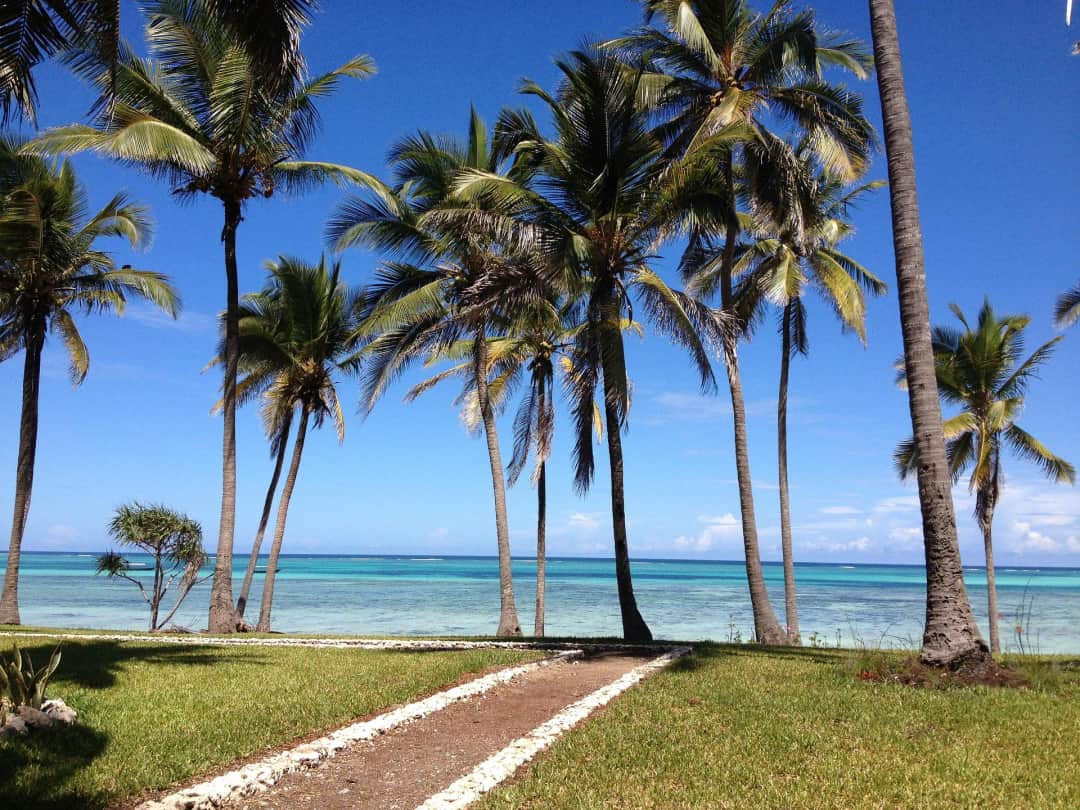
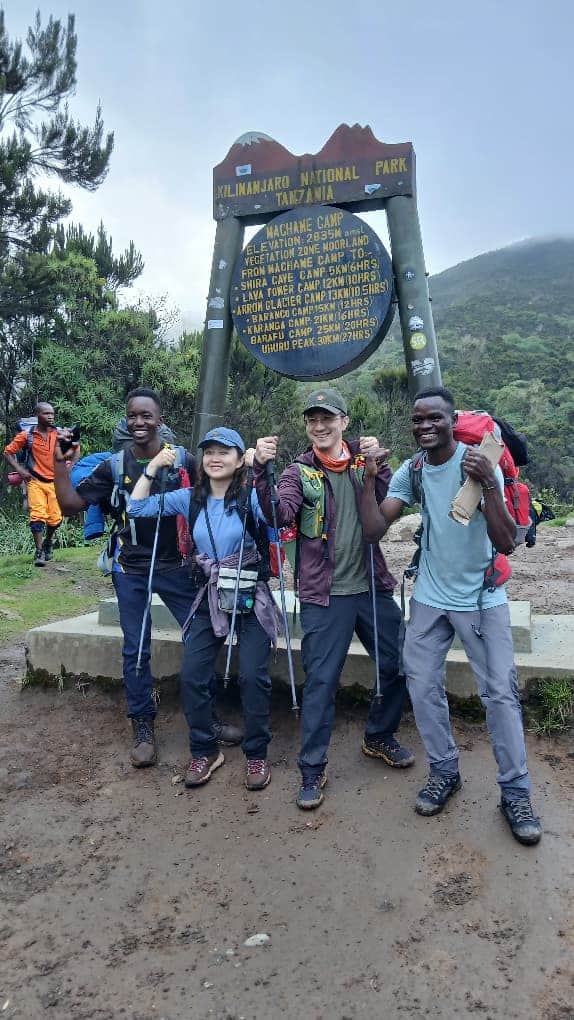
Almost everyone does, and the geography makes it straightforward. The standard northern Tanzania run strings Tarangire, Ngorongoro Crater and the Serengeti along one road, and each does a different job: Tarangire for elephant and baobabs, Ngorongoro for sheer concentration and a genuine chance at rhino, the Serengeti for space and the herds. A Zanzibar or Pemba beach week afterwards is a short flight and a sensible way to finish. If you are also climbing Kilimanjaro, do the mountain first and the safari second. Game drives are a very forgiving thing to do on ruined legs, and it keeps your climb clear of anything picked up on the road.