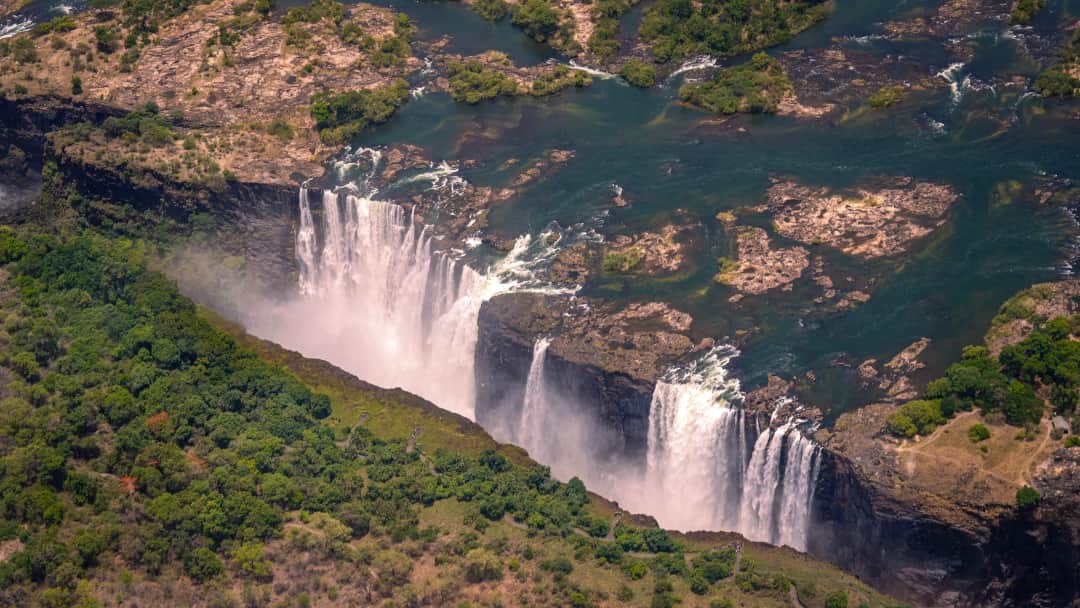
Site in Zambia
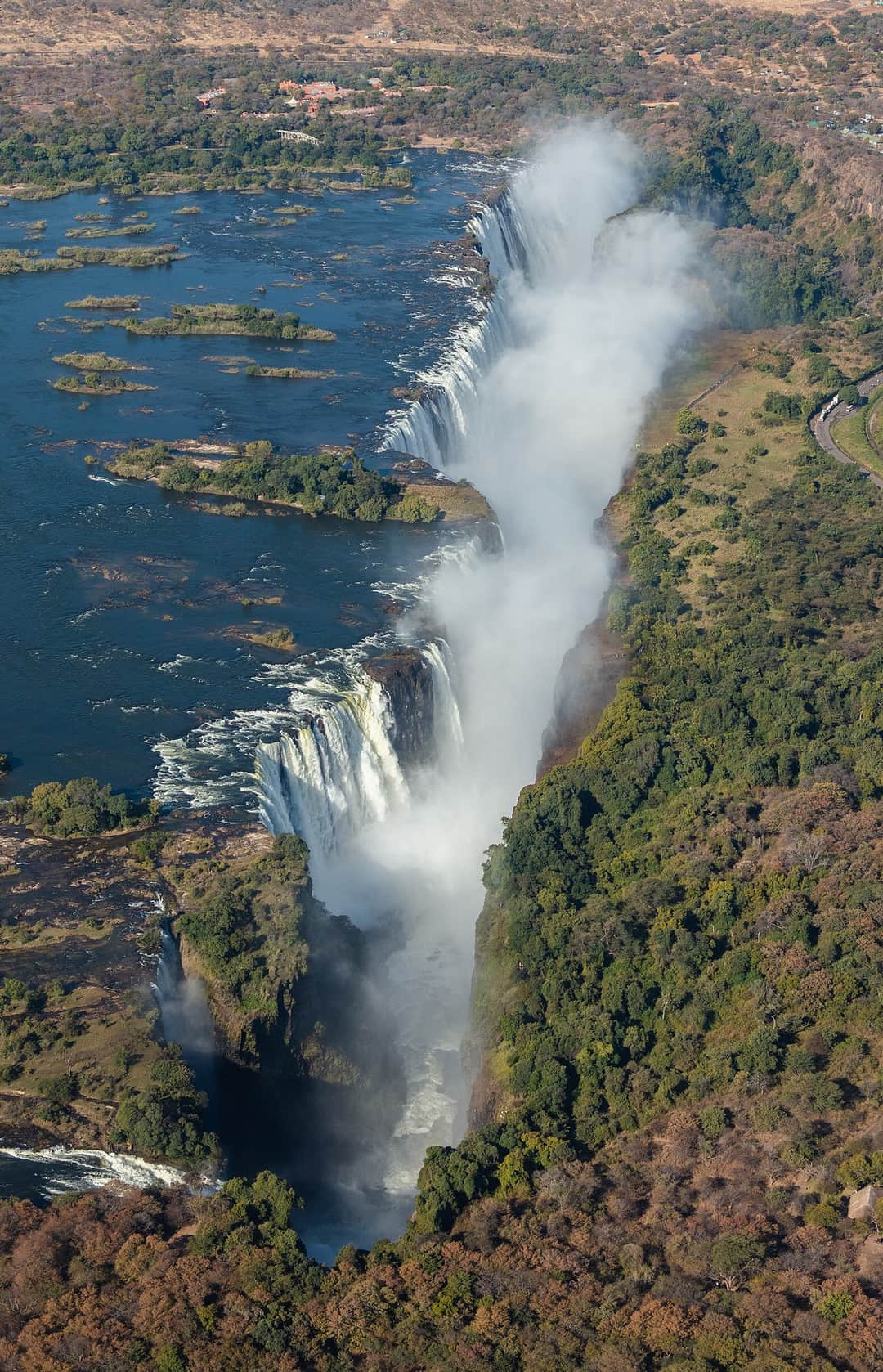
The Zambian bank does not hand you the postcard. If you have seen one photograph of Victoria Falls, a mile-wide sheet of water seen whole from a facing cliff, that image was almost certainly taken from Zimbabwe. Zambia holds the eastern end of the chasm and the gap where the entire river escapes, which means fewer head-on panoramas and far more of something else: proximity. From this side you walk out over the gorge on a footbridge with the falls throwing water at you sideways, you descend to the river at the bottom, and in the right months you sit down in a pool on the very lip of the drop with a hundred metres of nothing underneath you. It is the more physical of the two experiences and by some distance the more variable.
The centrepiece is the Knife Edge Bridge, a narrow footbridge from the main path across a chasm onto a promontory that faces the Eastern Cataract and looks down into the Boiling Pot. In the flood months, walking it is closer to weather than to sightseeing. Spray comes up out of the gorge in columns, blows back across the bridge horizontally, and soaks you through in the time it takes to cross. People buy a poncho at the gate, put it on, and are wet anyway. On a heavy April day you can stand there and see nothing but white while the ground vibrates, which is either the best thing that happens to you all week or a total waste of a morning, depending entirely on what you came expecting.
Two things are possible only from Zambia, and both of them depend on the river being low: Livingstone Island, the patch of rock and trees on the lip where David Livingstone first looked over the edge, and the Devil's Pool beside it, where you can swim to the very brink and look down. No operator on the Zimbabwean side can put you in that water. That single fact reverses the usual advice about which bank to choose, because it means the Zambian side is at its best in exactly the season when the falls themselves are at their weakest. Nobody planning this trip can avoid the trade-off, and everybody should understand it before booking a month.
The town changes the character of a stay too. Livingstone is a working Zambian town of some size, sitting roughly ten kilometres back from the falls, with a long colonial-era main street, a national museum, markets, and a life that is not organised entirely around visitors. That is a genuine attraction if you want to feel like you are in a country rather than at an attraction, and a genuine inconvenience if you wanted to walk to the waterfall after breakfast. Only a couple of hotels sit right by the entrance with walking access. Everyone else drives or takes a taxi, and plans their day around it.
What fills the rest of the time is a strong list. Mosi-oa-Tunya National Park runs along the river above the falls and holds a small, heavily protected white rhino population that you can track on foot with armed scouts, which is not something the other bank offers. Microlight flights leave from the Zambian side and put you in an open cockpit a few hundred feet above the spray. The bridge, shared between the two countries, carries the bungee and the gorge swing. The Batoka Gorge below carries some of the best commercial white water in the world. And the upper Zambezi, wide and slow and full of hippo, does the sunset cruises. A stay of three nights here is not hard to fill.
Best time to visit
On the Zambian bank, the water level does not merely change the view. It decides which of two completely different trips you are taking. The Zambezi is fed from a catchment far upstream, so it keeps rising well after the local rain has stopped: the flow builds from around January, peaks in April, and drains away through the second half of the year to a low point around late October and November.
February to May is flood season and it is the Zambian side at its most extreme. The Eastern Cataract, which is the section this bank shows you, is thundering and continuous. The Knife Edge Bridge becomes a soaking, and on the heaviest days the spray is dense enough that you see essentially nothing from it. The path down to the Boiling Pot is often unusable, and Livingstone Island and the Devil's Pool are closed because the current over the lip would kill anyone who tried. April is the peak of all of this. Come then if you want to be physically overwhelmed by the volume of water, and accept that you may not get a clear photograph of anything.
June and July are the compromise months and the safest single choice if you only care about seeing the falls. The river is falling but still heavy, the Eastern Cataract still runs across its full width, the spray has dropped enough that the viewpoints clear for stretches of the day, and the weather is dry, bright and mild. Dawn can be genuinely cold in June, which surprises people who packed only for heat. The catch is that Livingstone Island usually has not opened for the season yet, so the Devil's Pool is still off the table.
August to October is the Zambian season proper. The island opens as the flow drops, typically from around the middle of August, the Devil's Pool starts running, the Boiling Pot path is dry and easy, and the Batoka Gorge opens up for the full rafting run. This is the window in which the Zambian side offers things nowhere else can. It is also when the Eastern Cataract begins to thin, and by late October and November it can reduce to streaks over bare black rock, or in a poor year to almost nothing. October heat is severe and the air is hazy with smoke.
December and January bring the first storms, green bush and a rising river. The Devil's Pool typically stays open into January and then closes as the flow picks up, though the exact date shifts every year with the rainfall. It is the quietest and cheapest time to be here and a decent gamble if you want fewer people. One more piece of timing worth knowing: for a few nights around each full moon in the high-water months the park opens after dark for lunar rainbows, faint arcs of colour thrown by moonlight through the spray, and it is a strange and memorable hour if your dates happen to line up.
If you want one recommendation for this bank specifically, take late August or September. There is still real water going over, the island and the pool are open, the gorge is walkable and the rafting is at its best.
High season
August to October is the busiest stretch on this side, driven by the Devil's Pool season and the rafting, with the island slots and the better lodges booking out months ahead. Late December into early January is a second peak as southern African families travel, and Easter is a short third. The park is at its quietest in February and in the second half of November, and going through the gate at opening time will always buy you an hour of relative calm regardless of month.
The animal you come to Zambia for is the white rhino, and Mosi-oa-Tunya National Park is one of the more accessible places on the continent to see one on foot. The population here is small, reintroduced, and guarded around the clock by armed scouts who know each individual by name and sight. Walking safaris go out on foot with those scouts, tracking the animals through mopane and riverine scrub until you are standing perhaps thirty metres from a two-tonne grazer that has decided you are not worth moving for. It is not a wilderness experience in the Luangwa sense, the park is small and the river is never far away, but being on foot changes the register of a wildlife encounter completely and it takes about half a morning.
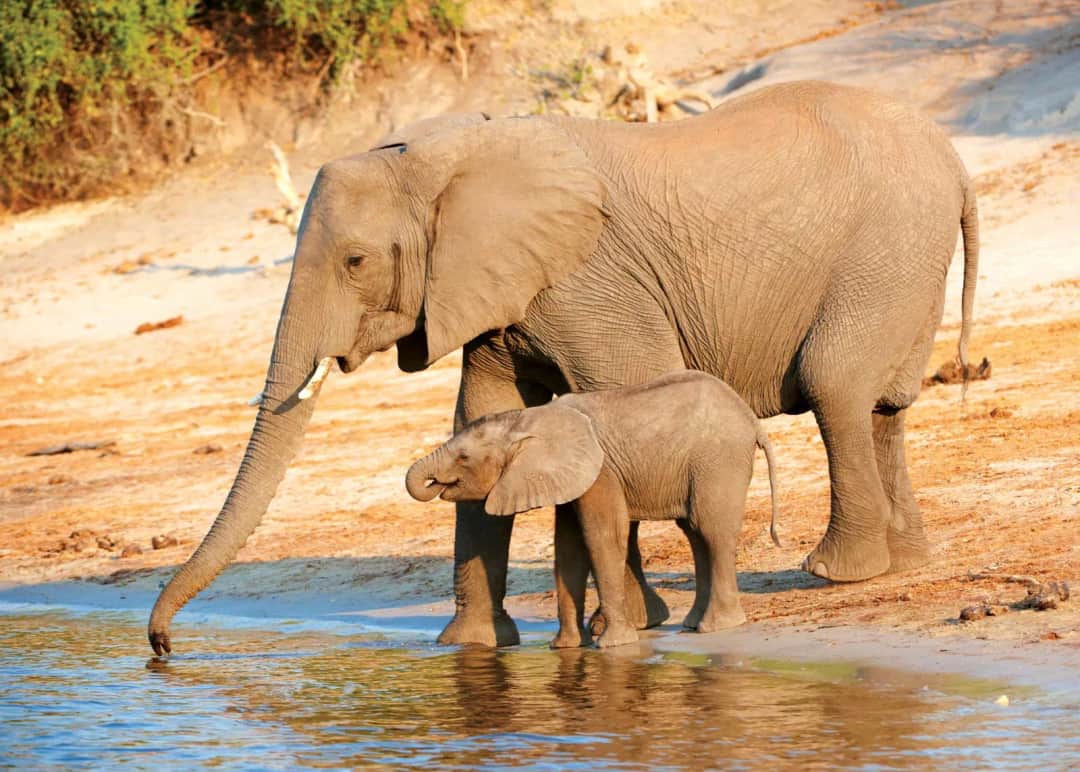
The rest of the park is quiet, gentle game viewing along the Zambezi above the falls: giraffe, zebra, buffalo, impala, warthog, bushbuck and waterbuck, with elephant crossing between the islands and vervets and baboons at the picnic sites. There are no lion here, which is precisely what makes the walking possible. Hippo pods hold the deeper channels and crocodiles lie out on the sandbars, and both are the animals to take seriously rather than anything with claws. In the town itself, and on the lawns of the hotels nearest the entrance, zebra and impala graze among the sun loungers with total indifference to people, which never entirely stops being odd.
The gorges below the falls are the birding draw and they are excellent. Verreaux's eagles hunt hyrax on the black basalt walls, and the Batoka is one of the more reliable stretches in Africa to look for the Taita falcon, a small, fast, very localised raptor that birders travel here specifically to find. In low water, rock pratincoles appear on the exposed rocks in the river above the lip, one of the more charming sights of the dry season. Along the upper river you get African skimmers cutting the surface at dusk, fish eagles on almost every dead tree, and half-collared and giant kingfishers working the quieter channels.
The spray-fed forest exists on this bank too, though in a thinner strip than opposite, and the same principle applies: everything green along the gorge edge is being watered by the falls every day of the year, in a landscape that a hundred metres inland is dry mopane woodland. Look for the abrupt line where the two meet. Trumpeter hornbills call over the canopy, Schalow's turaco moves through it in flashes of green and crimson, and the sound of the whole strip is a permanent low roar that you stop hearing after about an hour and notice again the moment you leave.
The Knife Edge Bridge and the eastern path
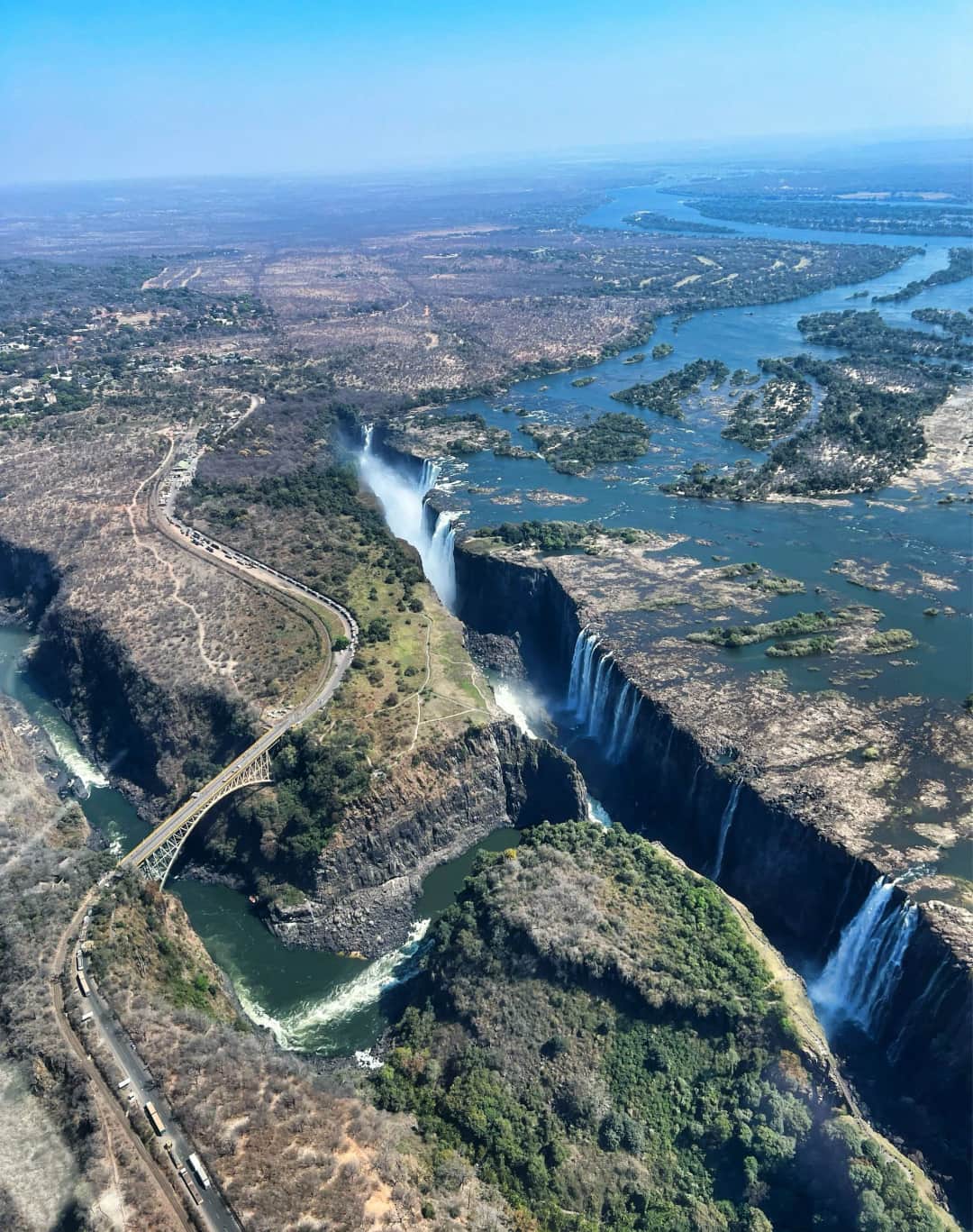
This is the walk that defines the Zambian side. From the entrance the path runs along the gorge past the Eastern Cataract, then drops to a narrow footbridge slung across a chasm onto a spur of rock directly opposite the falling water. What you get from it is not the wide panorama but the sense of being inside the event: the Eastern Cataract to one side, Rainbow Falls and the tallest section of the whole waterfall across the gap, the Boiling Pot far below where the river turns through ninety degrees, and the bridge in the distance. In high water the crossing is a soaking and the view may be a whiteout. In low water it is a dry, clear walk with the entire rock architecture exposed. Take the branch paths as well as the main one, including the path down towards the water at the western end where you look back at the whole eastern face. Allow at least ninety minutes if you intend to stand still and look rather than march through.
Livingstone Island and the Devil's Pool
The island sits in the middle of the river on the very lip of the falls, and it is where Livingstone was rowed out in 1855 to look over the edge. It is reached only by boat from the Zambian bank, only through the licensed operator that runs it, and only in low water, typically from around the middle of August into January depending on the year. Trips are sold as breakfast, lunch or high tea slots and the meal is genuinely good, but the reason people book is the water. The Devil's Pool is a natural rock basin right at the brink, with a lip of rock just below the surface acting as a barrier, and guides swim you across the current and hold your ankles while you lean out over a hundred metres of drop. Angel's Pool nearby is calmer and opens at slightly higher water for those who want the position without the edge. Book this months ahead, because slots are limited every day and it is the single most oversubscribed thing on either side of the river. Never attempt to reach the pool without the operator, and take the guides' instructions literally.
The Boiling Pot walk into the gorge
A steep path leaves the main route and switchbacks down through the trees to the floor of the gorge, where the Zambezi comes out of the falls, turns sharply and churns in a deep whirlpool that gives the place its name. The descent takes twenty to thirty minutes and the climb back out takes longer and hurts more, which is the reason most visitors never do it. Those who do get the perspective almost nobody has: standing at river level, looking up at the bridge arch far above and at the water pouring out of the chasm, with baboons on the rocks and rafts occasionally launching nearby. It is at its best in low water when the path is dry and the pot is a readable whirlpool rather than a torrent. In the flood months the lower sections can be under water or closed. Take a bottle of water, wear shoes with grip and give yourself a clear ninety minutes for the round trip.
Walking with white rhino in Mosi-oa-Tunya National Park
The park runs along the Zambezi upstream of the falls and it is small, easy and worth half a day. The main event is tracking white rhino on foot with the armed scouts who protect them, an activity that exists here because the absence of lion makes walking safe and because the animals are monitored constantly. You drive in, meet the scouts, then walk quietly through the bush until they locate the group, and you finish standing close enough to hear the animals breathe. It is a rare thing to be able to do on a waterfall holiday. Beyond the rhino the park offers relaxed game drives for giraffe, zebra, buffalo and elephant along a beautiful stretch of river, plus the Old Drift cemetery, the graves of the first European settlement here, abandoned after malaria drove the town inland to where Livingstone now stands. Go early. By mid-morning the heat has flattened everything.
Microlight flights over the falls
The microlight is the Zambian side's aviation speciality and it is a genuinely different experience from a helicopter. You sit in an open cockpit behind the pilot, strapped into what amounts to a powered hang glider, and fly a loop over the falls, the gorges and sometimes the national park at a few hundred feet, with the air and the noise and the smell of the river all directly on you. Nothing loose is permitted on board for obvious reasons, cameras included, so the aircraft carries a wing-mounted camera and you buy the images afterwards. Flights are short, typically around fifteen minutes for the falls circuit and longer for the extended route, and they run in the early morning and late afternoon when the air is stable. In flood season the flight is arguably the best purchase of your trip, because from above the spray reveals the shape of the falls rather than hiding it. Helicopters also operate from this side for anyone who wants doors, seatbelts and their own camera.
The Victoria Falls Bridge, the bungee and the gorge swing
The bridge is shared, the border runs across it, and the Zambian end is a short walk or drive from the falls entrance. It was completed in 1905 as part of the Cape to Cairo railway scheme and still carries road, rail and pedestrians over the gorge. You can walk out onto it and stand above the river without formally entering Zimbabwe, though you pass through border control to do so. From the middle you get a straight view down the Batoka Gorge and back at the falls that no viewpoint on either bank can give you. The commercial jumps operate off the same span: a bungee of around a hundred and eleven metres, a gorge swing that drops you into an arc under the bridge, and a zip line across. On the Zambian side of the gorge there are also abseiling and flying fox operations run from the cliff edge, which sell a half day of repeated jumps rather than a single one. For the non-jumpers, the guided bridge tour walks you along the maintenance catwalk under the deck with the engineering history, and it is far more interesting than that description makes it sound.
Livingstone town, the museum and Mukuni village
This is where the Zambian side earns its keep against the more polished town opposite. Livingstone is a real town with a long main street of colonial-era buildings, and it has the country's oldest and largest museum, holding Livingstone's own letters and possessions, archaeology from the region and a strong ethnographic collection covering Zambia's peoples. It is a proper museum rather than a gift shop with captions, and an hour there will reframe everything you have been looking at. The railway museum nearby holds the locomotives and rolling stock that built this corner of the country. Maramba market is the ordinary daily market, loud and unpolished and not designed for visitors, which is precisely the point. Mukuni village, out towards the falls, is the seat of the Leya chieftaincy and offers guided visits and one of the largest craft markets in the area, where the selling is persistent and the carving is good. A restored steam train also runs dinner services out of Livingstone for anyone who wants the period version of the evening.
The upper Zambezi and rafting the Batoka Gorge
Above the falls the Zambezi is a wide, slow, island-studded river that gives no hint of what it does a few kilometres downstream, and getting onto it is the standard way to spend a late afternoon. Sunset cruises leave from jetties upriver and deliver hippo in numbers, crocodiles on the sandbanks, elephant coming down to drink and fish eagles calling overhead. The large boats are loud and heavily focused on the bar, the smaller ones cost more and are much better for photographs and birds, and canoe trips on the quieter upper channels are the option for anyone who wants to hear the river. Downstream is the opposite proposition. The Batoka Gorge below the falls carries a sequence of numbered rapids, several of them grade five, and it is rated among the great one-day commercial white water runs anywhere. It runs properly in low water, roughly August to December, and shortens or shuts during the flood. The climb out of the gorge at the end, several hundred steps in afternoon heat, defeats more people than the river does.
Site
Victoria Falls (Livingstone)
Take it with you
Everything on this page in one document you can keep, print, or send to whoever you are travelling with. No email required.
Both, if your trip runs more than two nights, because they are not competing versions of the same thing. Zimbabwe holds most of the frontage and gives you the wide head-on panoramas, and it keeps strong flow in the driest months. Zambia gives you proximity, the walk down into the gorge, and the only access to Livingstone Island and the Devil's Pool. The two entrances are a few kilometres apart with the bridge between them, so a day crossing is routine rather than an expedition. If you genuinely can only do one, the deciding question is your month: in flood season the Zimbabwean bank is the safer bet for actually seeing the waterfall, and from around late August to December the Zambian side has more to offer because the island and the pool are open. Border formalities change from time to time, so confirm the current position with your lodge before the day rather than trusting anything written in advance.
Only in low water, which typically means from around the middle of August until some point in January, though the exact opening and closing dates move every year with the flow of the river and are never announced far ahead. Outside that window the current across the lip is lethal and the island simply does not run trips. The pool is reached only by boat from the Zambian bank through the single licensed operator, and it is sold in timed slots attached to breakfast, lunch or high tea on the island. Those slots sell out well in advance in the season, so book before you book your flights if it is the reason you are coming. Angel's Pool nearby is a calmer basin that opens at slightly higher water and is the better option for anyone who is uneasy but still wants to sit on the lip. Do not attempt to reach either without the operator and their guides, and follow instructions exactly. If the Devil's Pool is your goal, choose your month before you choose anything else about this trip.
Sometimes not, and it is important to understand this before booking February to May. At peak flow the spray coming out of the gorge is so dense that the Knife Edge Bridge and the eastern viewpoints can show you nothing but moving white, for hours at a time. What you get instead is the sound, the wind coming up out of the chasm, and rainbows sitting in the spray whenever the sun cuts through. It is an experience of raw scale rather than a view, and plenty of people rate it higher than the clear-water version. If you are travelling in those months and you want to see the shape of the falls, book a flight. From a microlight or a helicopter you are above the spray and the whole thing becomes visible in a way it never is from the ground. Bring a dry bag for anything electronic, because it is not a question of whether your phone gets wet on the path.
It depends on what you want from the day, and this is the one honest warning to give about this bank. By late October and November the Eastern Cataract, which is the section Zambia shows you, can slow to thin streams over bare black rock, and visitors who arrive expecting a wall of water are genuinely let down. At the same time, low water is when this side is at its most interesting in every other respect: the island and the Devil's Pool are open, the Boiling Pot path is dry, the Batoka rafting is running its full course, and you can walk out onto the exposed rock lip and look straight down the face. The sensible approach for a low water trip is to cross to Zimbabwe for the waterfall itself, which keeps flow year round, and spend your Zambian time on the island, in the gorge and in the park. Treated that way it is an excellent season rather than a poor one.
The town sits roughly ten kilometres back from the entrance, so unlike the town on the opposite bank you cannot generally walk to the falls from your room. Only a small number of properties sit immediately beside the entrance inside the park boundary, and their advantage is exactly that: you walk in, you go early, you go again in the evening light without arranging anything. Everywhere else means a taxi or a lodge transfer each time, which is cheap and easy but does discourage the second visit that most people end up wanting. There is also a cluster of lodges strung along the upper Zambezi upstream of town, which are quiet, riverside and well suited to anyone whose priority is the river rather than the falls, at the cost of being further from everything. Decide first whether you want to be able to walk to the water, because it changes the whole shape of your stay.
Three nights is the right number and two is the common mistake. One full day covers the falls properly on this side, including the Knife Edge, the eastern viewpoints and the descent to the Boiling Pot, which takes longer than people budget. A second day covers either the island and the Devil's Pool or a crossing to the Zimbabwean bank, and those are difficult to combine well because the island slots eat the middle of the day. A third gives you the national park and the rhino on foot in the morning and a river cruise in the evening, and leaves slack for a cancelled flight or a washed-out morning. If rafting is on your list, add a day for it on its own, because the run plus the climb out of the gorge finishes you for the afternoon. Anyone arriving off a safari and treating Livingstone as an overnight stop almost always regrets it.
From roughly February to June, assume you will be as wet as if you had stood in a heavy shower for an hour, with water arriving sideways and upwards as well as down. Ponchos can be hired at the gate and they keep the worst off without keeping you dry. Sandals or shoes you do not mind soaking beat trainers that will stay wet for the rest of the day, and a dry bag or at the very minimum a sealed plastic bag for phone and camera is not optional in those months. Grip matters more than anything, because the wet paving and the bare basalt are slippery and the drops on either side of the path are serious. From September to December you need almost none of this and a hat, sunglasses and plenty of water matter far more. If you are doing the Boiling Pot descent, that is a proper walk in heat rather than a stroll, so treat your footwear and your water accordingly.
Livingstone is a relaxed town by regional standards and visitors move around it without difficulty. Taxis are plentiful and cheap and are the standard way to reach the falls, the bridge and the park, and agreeing the fare before you get in is normal practice rather than a sign of mistrust. Walking the main street in daylight is fine, walking unlit stretches after dark is not advisable, and the usual care with valuables applies at the markets. Around the falls entrance and at Mukuni village you will meet persistent curio sellers, and a firm friendly no repeated a few times is the whole technique. The genuine hazards here are natural rather than human: hippo and crocodile in the river, the unfenced drops along the gorge path, and the heat between September and November, which is severe enough that dehydration ruins more days here than anything else.
The geography is unusually generous. Kasane in Botswana, and therefore Chobe National Park with the best elephant viewing in the region, is a couple of hours away by road, and a day trip combining a game drive with a boat cruise on the Chobe river is one of the strongest excursions available from here. Inside Zambia, Livingstone is the natural bookend for a South Luangwa or Lower Zambezi safari, both reached by internal flights, and Kafue National Park lies to the north. Hwange in Zimbabwe is a few hours by road from the other bank. The usual sequencing advice applies: put the safari first and Livingstone second, because the activity menu here is deep and it is a better place to spend energy than to arrive already tired. Flights come into the airport just outside town, with the wider regional schedule generally available from the Zimbabwean airport across the border, which is worth checking when you price the trip.