Eastern Africa
Uganda earns the nickname 'Pearl of Africa' by packing an unusual range of landscape into a small footprint: the source of the Nile at Jinja, the glaciated Rwenzori peaks on the DR Congo border, savanna parks with tree-climbing lions, and the montane forests of the southwest where roughly half the world's remaining mountain gorillas live. It is the most reliable place on the planet to trek gorillas, in Bwindi Impenetrable Forest and Mgahinga, and one of very few where chimpanzee tracking (Kibale Forest) is an equally serious draw rather than an add-on. Distances between parks are real and the roads are mixed, so most itineraries move by a combination of driving and short domestic flights rather than the tight loop possible in Tanzania. Tourism infrastructure is smaller and more specialized than in Kenya or Tanzania - permits are the organizing cost of a trip, guiding is excellent, and lodges skew toward mid-range and boutique rather than large-scale luxury chains.
Where is Uganda?
Best time to visit
Uganda sits on the equator, so temperatures barely shift through the year; what changes is rainfall and, with it, trail conditions for gorilla and chimp trekking. The two dry windows, December to February and June to September, give firmer forest floors, easier trekking, and better road conditions, and they're also when gorilla permits sell out furthest in advance. The 'green seasons' (March-May and October-November) bring heavier rain and muddier trails but thin out crowds, drop lodge rates, and are still entirely workable for trekking since the primates don't stop moving for weather. Birders often prefer the wetter months, when migrants are present and forest birding is at its best despite the mud.
High season
July through September is Uganda's busiest and most sought-after stretch, coinciding with the long dry season, school holidays in Europe and North America, and the best trekking conditions in Bwindi and Kibale. Gorilla permits for this window are the first to sell out, often months ahead, and lodges near Bwindi's trailheads fill early. The shorter December-February dry spell is nearly as popular, particularly around the Christmas and New Year holidays.
Uganda's headline wildlife is primate, not just Africa's Big Five: mountain gorillas in Bwindi and Mgahinga, chimpanzees in Kibale (the continent's best habituated tracking) and Kyambura Gorge, and golden monkeys in Mgahinga's bamboo zones, alongside eleven other primate species. Savanna game is concentrated in Murchison Falls National Park, where the Nile funnels through a narrow gorge before opening into a park with elephant, giraffe, buffalo, and healthy lion and leopard numbers, and Queen Elizabeth National Park, known for the Kazinga Channel's hippo and elephant congregations and the Ishasha sector's tree-climbing lions. Kidepo Valley, in the remote northeast, is Uganda's wildest and least-visited savanna park, with cheetah and ostrich found nowhere else in the country. Birders rate Uganda among Africa's top destinations, with over 1,000 recorded species including the prehistoric-looking shoebill stork, most reliably seen in the Mabamba wetlands or Murchison's delta.
Trek mountain gorillas in Bwindi Impenetrable Forest
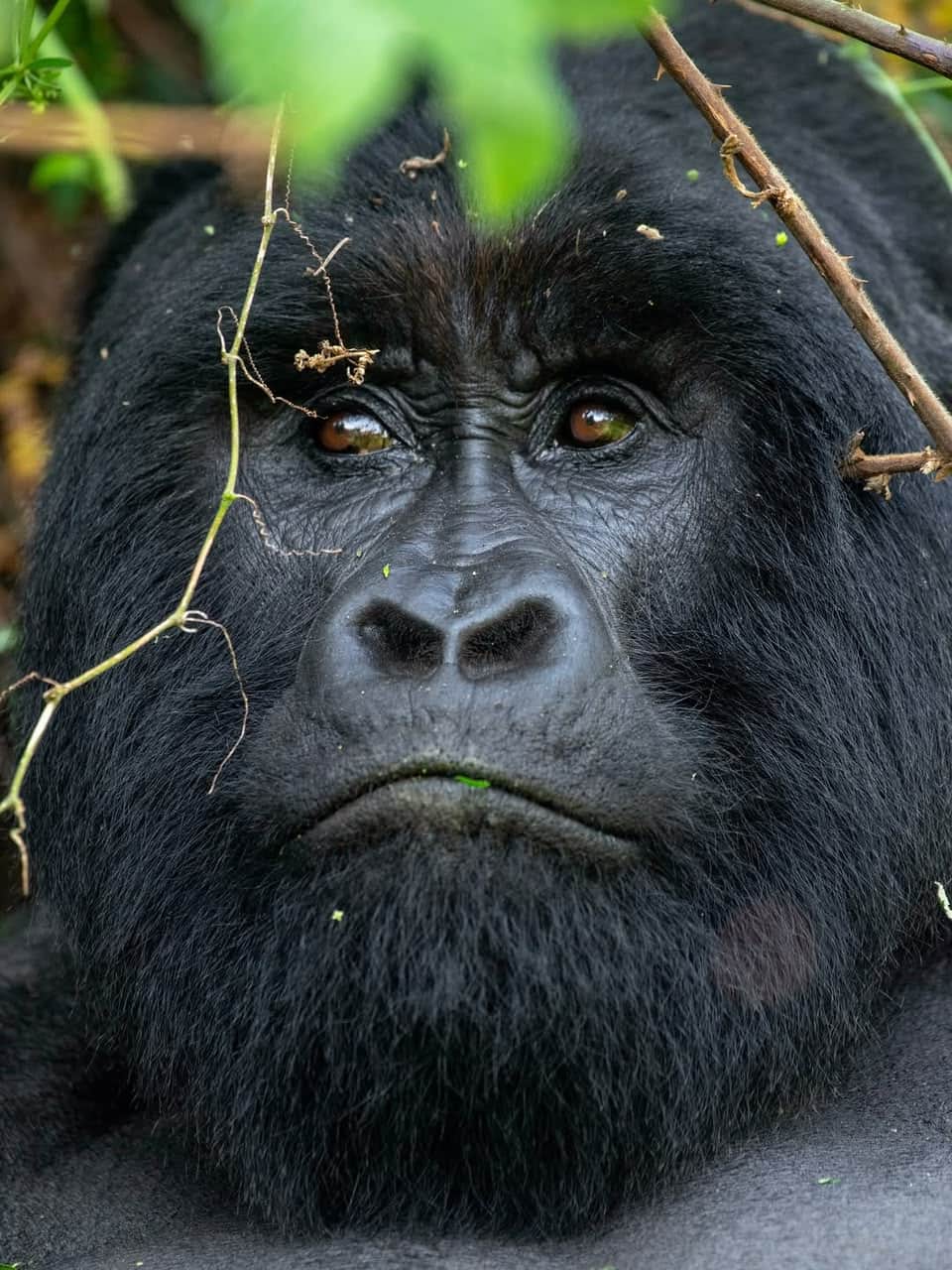
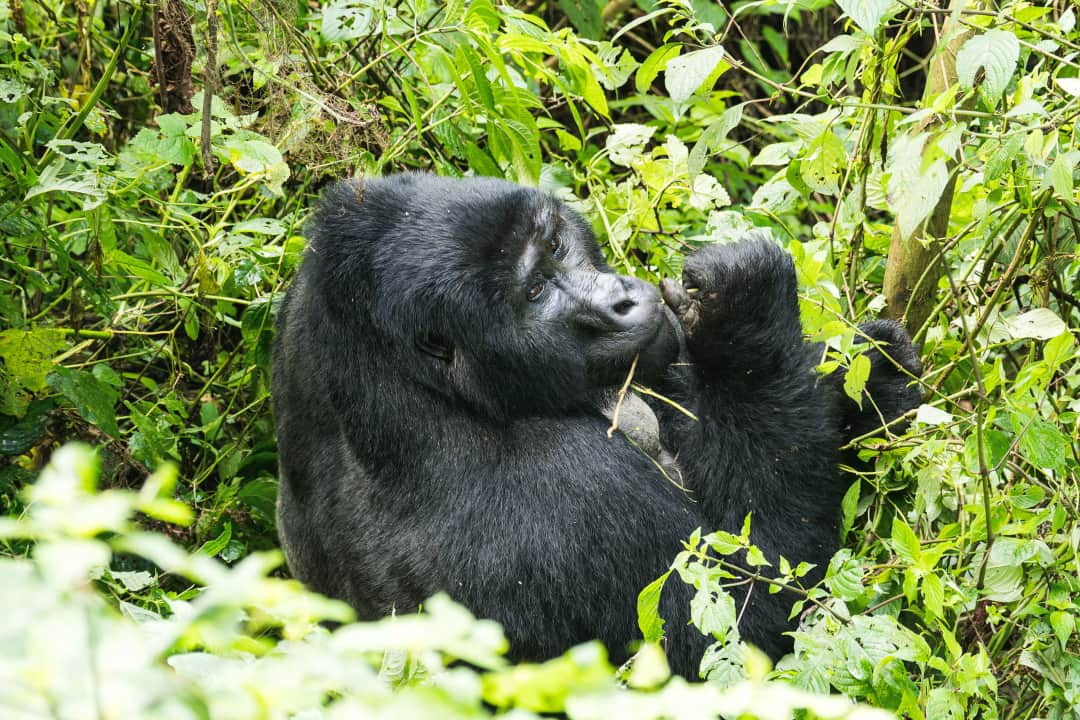
Bwindi holds the largest population of the roughly 1,000 remaining mountain gorillas, spread across habituated families reached from four trailheads (Buhoma, Ruhija, Rushaga, Nkuringo). Treks run a few hours to most of a day through dense, steep rainforest, and the hour spent with a gorilla family at the end is unregulated by a clock - guides keep watching until the group naturally moves on. It's physically demanding and permits are limited by design to keep pressure on the gorillas low, which is exactly why sightings feel earned rather than staged.
Track chimpanzees in Kibale Forest
Kibale has the highest primate density in Africa and the continent's best-habituated chimp community, making sightings on standard treks close to guaranteed. The forest also holds red colobus, L'Hoest's and blue monkeys, and grey-cheeked mangabeys, so even the walk between chimp encounters is active. A pre-dawn 'habituation experience' permit, following researchers rather than tourist groups, gets trackers closer and for longer than the standard two-hour visit.
Cruise the Nile and hike below Murchison Falls
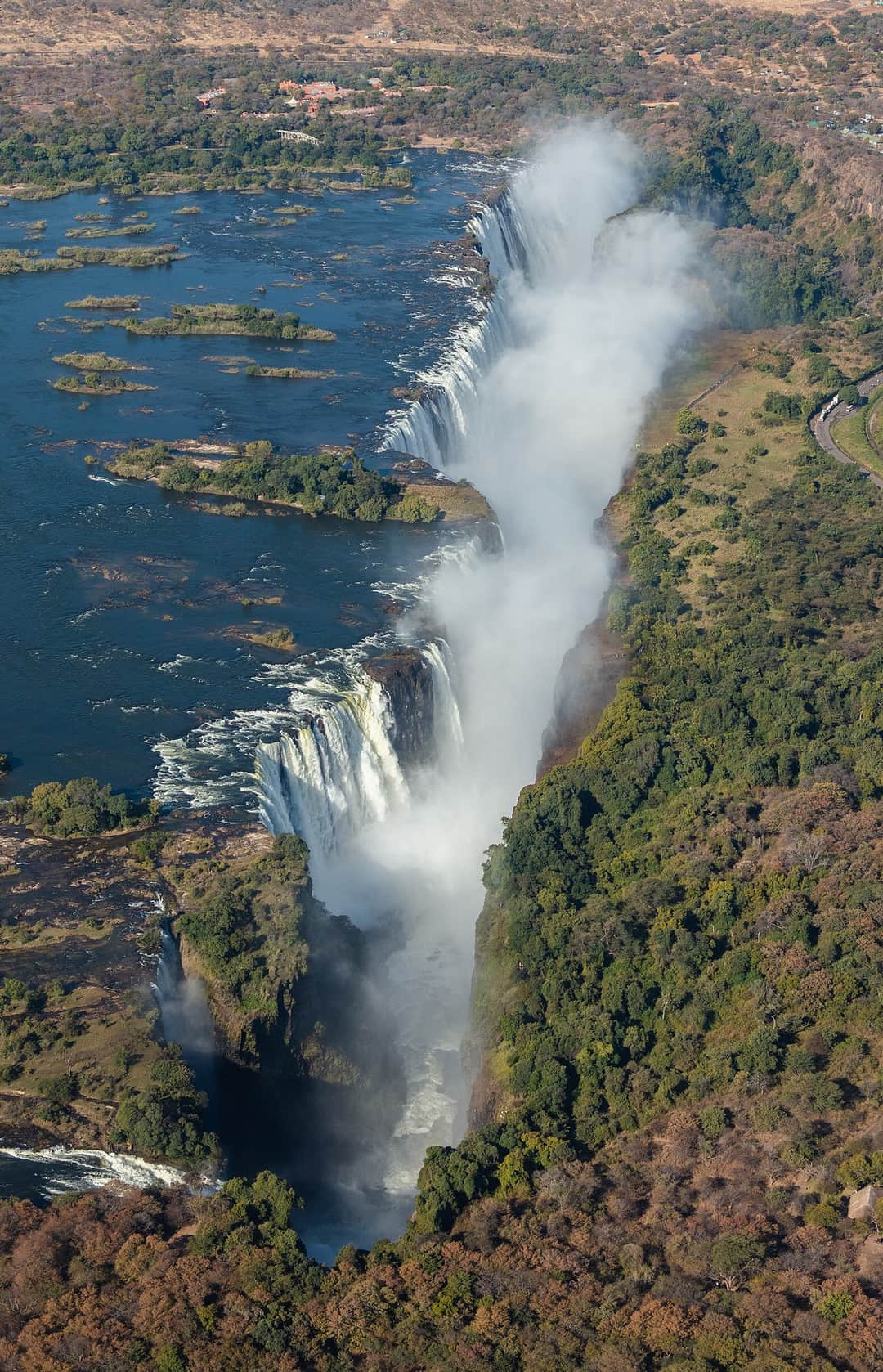
The entire Victoria Nile is squeezed through an 8-meter gap in the escarpment at Murchison Falls, dropping with a force that's loud from a distance and startling up close. A boat cruise from the base gets close to the plunge pool and passes hippo pods, crocodile, and elephant along the banks, while a short hike to the top of the falls gives the view down into the gorge that the boat can't.
Raft or kayak the Nile at Jinja
Jinja, at the point where the Nile leaves Lake Victoria, is East Africa's white-water capital, with commercial rafting outfits running grade 3-5 rapids a short drive from town. Calmer options - stand-up paddleboarding, sunset boat cruises to the source itself, quad biking through nearby villages - make it a legitimate multi-day stop rather than a single rafting morning.
Drive the Kazinga Channel and Ishasha sector, Queen Elizabeth National Park
The Kazinga Channel, linking Lakes Edward and George, draws one of Africa's densest concentrations of hippo alongside buffalo, elephant, and a long list of waterbirds, best seen on a launch cruise along the shoreline. South of the main park, Ishasha's fig trees hold lions that climb into the branches during the heat of the day, a behavior seen reliably in only a couple of places on the continent.
Hike the Rwenzori Mountains
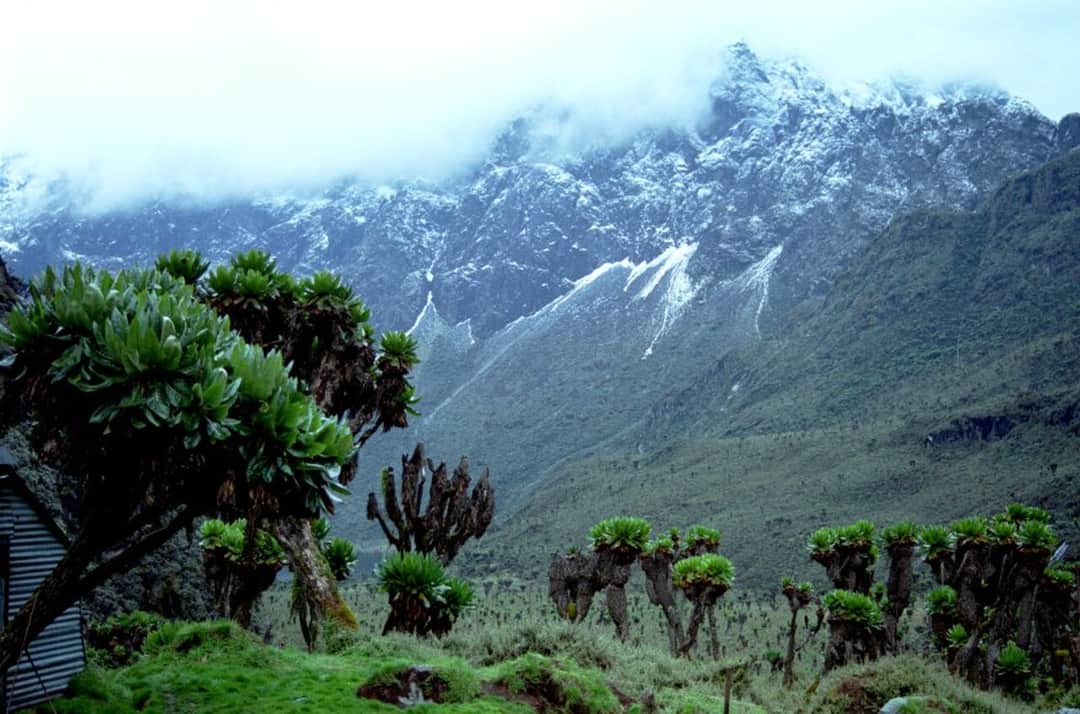
The 'Mountains of the Moon' are a glaciated range on the DR Congo border, geologically unrelated to Kilimanjaro or Kenya's volcanic peaks, with a multi-day trekking circuit through bog, bamboo, and heather zones up to Margherita Peak. It's a serious, technical trek for experienced hikers rather than a casual add-on, and far less crowded than East Africa's other high mountains.
Visit Kidepo Valley National Park
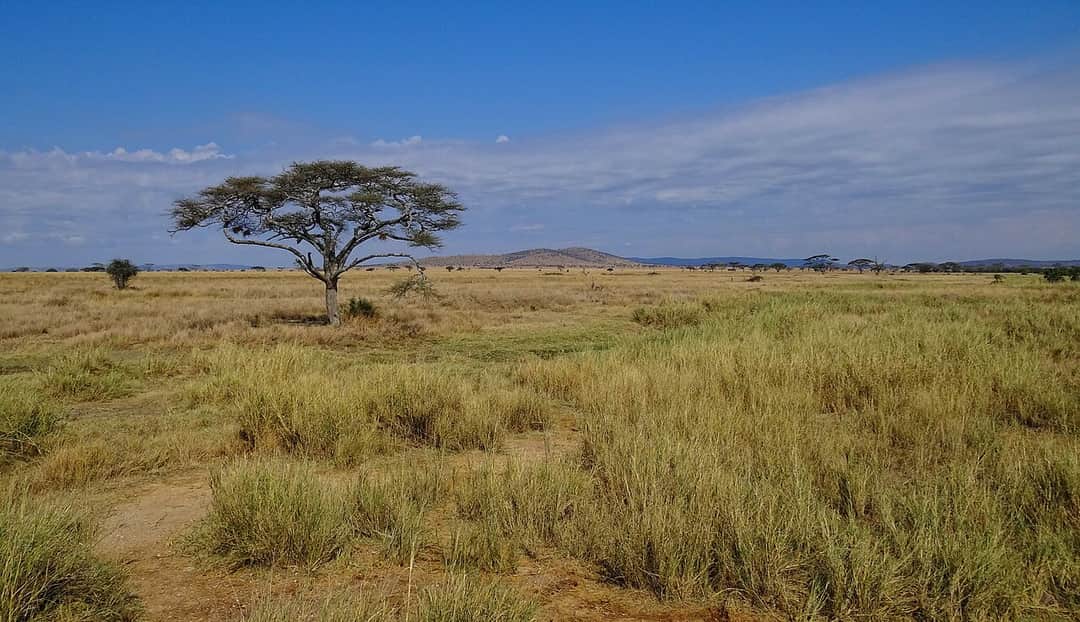
Tucked into Uganda's remote northeastern corner against the Kenyan and South Sudanese borders, Kidepo is the country's most rugged and least-visited park, with a savanna and mountain backdrop that draws comparisons to the Serengeti without the crowds. It's home to species found nowhere else in Uganda, including cheetah and ostrich, and the surrounding Karamojong communities retain a distinct pastoralist culture rarely folded into standard safari itineraries.
Search for the shoebill in the Mabamba wetlands
The shoebill stork, an ungainly, prehistoric-looking bird that can stand over a meter tall, draws dedicated birders to Uganda on its own. Mabamba Bay, a short boat trip from Entebbe, is one of the most reliable places on the continent to find one, usually by canoe through the papyrus at a slow, deliberate pace.
Reasonable fitness helps but treks are graded by family and difficulty, and guides set the pace and provide walking poles. Terrain in Bwindi is steep, uneven, and often muddy, and a trek can last anywhere from one to six hours each way depending on where the gorilla family is that morning. Porters are available to carry packs and offer a hand on steep sections, and hiring one also puts income directly into the local community.
Yes, and many itineraries combine them: Kibale for chimps and Bwindi for gorillas are a comfortable few hours' drive apart in the southwest, often linked via Queen Elizabeth National Park for a savanna game drive in between. It's one of the reasons Uganda works well as a single-country primate-focused trip rather than needing to be paired with Rwanda.
Both countries trek the same Virunga-Bwindi gorilla population and the experience itself is comparable. Uganda's forest terrain in Bwindi is generally considered more physically demanding than Rwanda's Volcanoes National Park, but Uganda pairs gorillas with chimpanzee tracking and a wider range of savanna parks within one country, which Rwanda doesn't offer at the same scale.
Self-driving is possible but road conditions and distances make it slow, so most visitors use a private driver-guide for road sections and domestic flights to save time on longer legs, particularly to Kidepo or between the far southwest and Murchison Falls in the north. A driver-guide who stays with you for the trip is also the standard way most operators structure multi-park itineraries.
The heavier rains of March through May bring the muddiest trekking conditions and some lodges in remote areas close briefly for maintenance during this window. Trekking and game viewing are possible year-round, so it's less about avoiding a season entirely and more about deciding whether lower rates and thinner crowds are worth trading for wetter trails.
Most nationalities need a visa, commonly available online in advance; requirements change, so check current rules with an official source or your operator close to travel. Uganda's tourist areas and parks are generally safe and well set up for visitors, with the main practical precautions being the usual ones for East Africa: use a reputable operator, follow park ranger and guide instructions around wildlife, and get travel advice on the northeastern border areas near Kidepo, which are more remote.
Yes, this is a common pairing given the short flights between Entebbe, Kigali, and Nairobi. A frequent combination is Uganda for chimps and one gorilla trek, followed by a few days in Kenya or Tanzania for classic savanna volume, or a short hop to Rwanda for a second gorilla trek in a different family if permits allow.
Country
Uganda
Take it with you
Everything on this page in one document you can keep, print, or send to whoever you are travelling with. No email required.