National park in Uganda
Impenetrable is the word people skim past in the name, and it is the one that turns out to matter. Bwindi is not a forest you stroll through. Off the handful of cut trails it is a wall of vine, nettle, wild celery and root laid over ground that pitches up and down at angles which would count as a scramble anywhere else, and which are usually wet. Trackers go ahead of you with machetes and cut a way. You follow, sliding, grabbing at things that turn out to have thorns, and after two hours you check your watch and discover you have covered perhaps three kilometres. That is the trip. People come for the gorillas and go home talking about the forest.
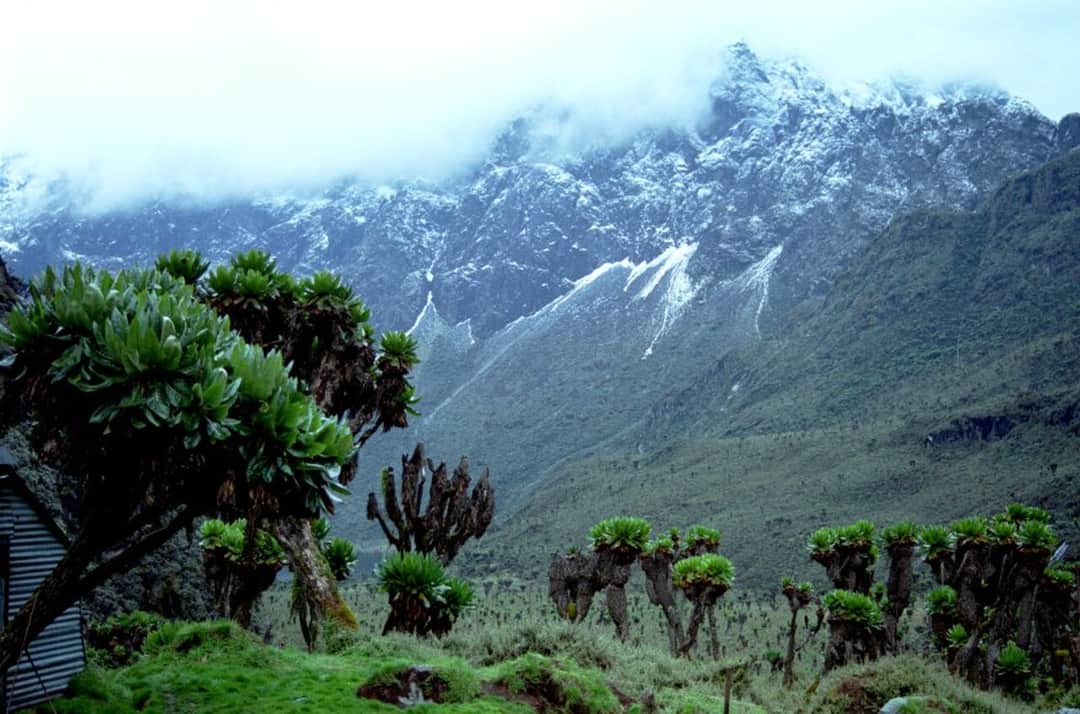
The park covers a little over three hundred square kilometres of southwestern Uganda, pressed hard against the Congolese border, and it climbs from roughly 1,160 metres in the north to around 2,600 metres on the Rukiga ridges in the southeast. Holding low altitude tropical forest and cool montane forest inside one continuous block is unusual, and it is why the species lists here run so long. The forest is also very old. It is understood to have survived the cold dry swings of the Pleistocene when most African forest retreated to fragments, which left it as a refuge where things accumulated and then simply stayed. It shows in the numbers: more than 350 bird species, around ten primates, over 200 butterflies, and trees carrying ferns, mosses and orchids in every fork.
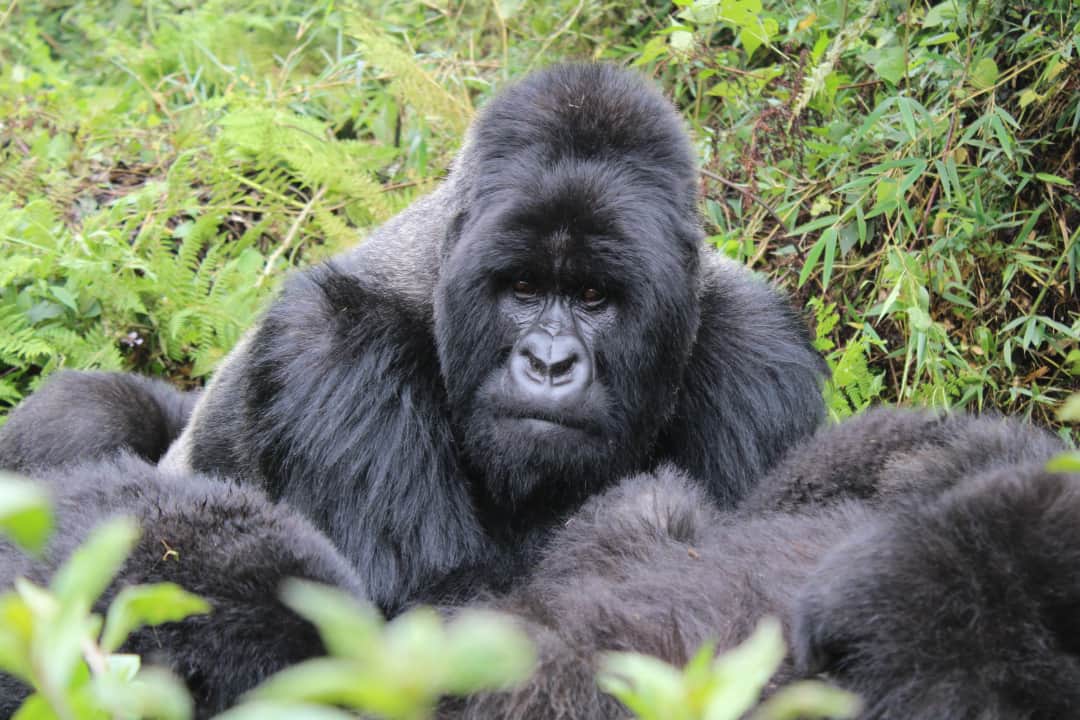
Roughly half of the world's remaining mountain gorillas live in this one forest, in families spread across all four corners of the park, a good number of them habituated to human visitors. A trek gives you one hour with them once they are found. Finding them is the variable, and it is a wide one. Trackers leave at first light from wherever a family built its nests the night before and radio their position back. Sometimes that is twenty minutes uphill of the trailhead. Sometimes the family walked overnight and you climb for four or five hours before anyone tells you to put the bag down. Nobody can tell you which it will be when you set off, which is why the standard advice, that you should be fitter than you think you need to be, is repeated most often by people who wish they had taken it.
The single decision that shapes a Bwindi trip is which sector you trek from. There are four: Buhoma in the north, Ruhija high on the eastern side, and Rushaga and Nkuringo along the southern edge. On a map they sit close together. On the ground they are separated by hours of steep, rutted, frequently greasy road that goes around the forest rather than through it, so the sector printed on your permit dictates where you sleep, which lodges are even usable, and how your driving days fall. Booking a lodge in Buhoma and a permit in Rushaga is a well known mistake and an expensive one to unpick at the last minute.
None of this is cheap or convenient, and it is better to know that now. Permits are strictly limited, sold per gorilla family per day, and for the busy months they are taken many months ahead, so Bwindi is a trip you commit to early rather than slot in. Reaching it from Entebbe or Kampala means eight to ten hours of driving, a serious share of it on murram, or a light aircraft to the Kihihi or Kisoro airstrips and a transfer at the far end. What you get back is a forest almost nobody leaves indifferent, an hour that people describe afterwards in language they do not normally use, and, for anyone who cares about birds, the finest Albertine Rift birding in Uganda.
Best time to visit
Start from the honest position: this is equatorial rainforest at altitude and it can rain in any month. Nobody should book Bwindi expecting dry feet. What changes through the year is how often it rains, how badly the access roads suffer, and how slippery the trekking ground is, and those three things are enough to make the seasons genuinely different from one another.
June to August and December to February are the drier windows and the reason most itineraries land there. Trails are firmer, though firmer in Bwindi still means mud in the gullies, and the approach roads to Ruhija, Rushaga and Nkuringo are far less of a lottery. Mornings are often clear with mist burning off the ridges by nine, afternoons can still turn heavy, and it stays cool because you are between 1,500 and 2,300 metres for most of the trip. Nights are properly cold in Ruhija, which surprises people who packed for equatorial Africa.
March to May and September to November are the wetter months, and this is where the honest advice diverges from the obvious. The forest is at its most beautiful when it is wet, the light is soft, the birds are in breeding plumage and calling, fruiting is heavier which often means the gorilla families are feeding at lower altitude and closer to the trailheads, and there are far fewer people at the briefing. The cost is real: the climbs are considerably harder underfoot, some steep sections turn into slides, unsurfaced roads between the sectors can take half again as long, and a full day of rain in the forest is a miserable thing without decent kit. Several lodges either close or run skeleton operations in April and May.
So the choice comes down to what you are optimising. If you want the best odds of a manageable walk and a straightforward drive, take the dry months and book early because everyone else has reached the same conclusion. If you are reasonably fit, properly equipped and would rather have the forest quieter and the trek shorter, the shoulder edges of the wet seasons, early March or late November, are the sweet spot most repeat visitors quietly choose. Birders should ignore all of the above and come between March and May, when the migrants are in and the endemics are singing.
High season
June to September and mid December to February are the peak, and the constraint is permits rather than road space. Each gorilla family takes a small fixed number of visitors per day, so the popular sectors sell out months ahead for those windows, and Rushaga habituation places, which are scarcer still, go earlier again. April, May and November are the quietest months by a distance, with permits often available at short notice.
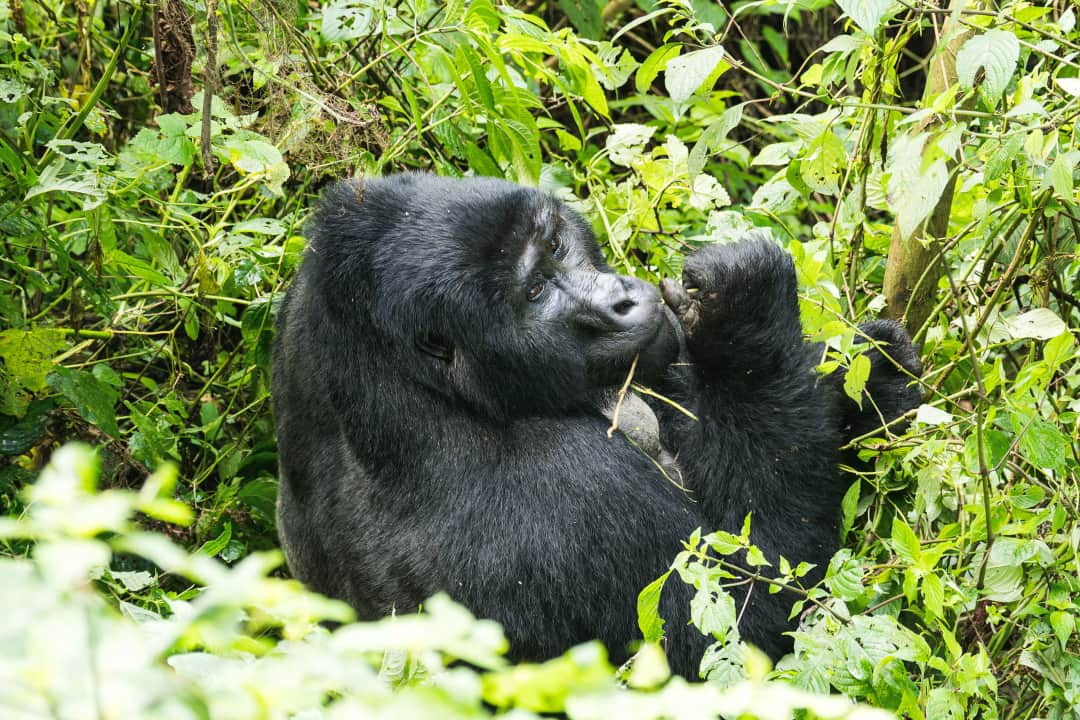
The gorillas are the reason you came and they do not disappoint, but it is worth knowing what an hour with them actually looks like. You will usually find a family feeding or resting in thick vegetation, so this is not the open, clean sightline of a plains safari. A silverback lying on his back a few metres away with a leg crossed over the other, juveniles wrestling and falling out of saplings, a female pulling wild celery apart with her teeth, a blackback pushing past you close enough that you step back into a nettle. They know precisely where you are and mostly do not care. The hour goes faster than any hour you have spent, and the most common complaint afterwards is that people spent too much of it looking through a viewfinder.
Bwindi holds around ten primate species besides them. Chimpanzees live here but are not habituated, so hearing them is realistic and seeing them is luck. L'Hoest's monkeys with their white bibs walk the forest roads at dusk, black and white colobus drape themselves along high branches, and red tailed and blue monkeys move through the canopy in mixed parties. Olive baboons work the forest edges near cultivation. At night the forest belongs to pottos and bushbabies, though you need a spotlight walk and patience to turn either into a sighting.
Bwindi is one of the finest birding forests in Africa and this is badly undersold to general visitors. More than 350 species are recorded, including around two dozen Albertine Rift endemics found nowhere outside this narrow band of mountains. The Mubwindi Swamp trail out of Ruhija is the classic morning, and the bird people come for is the African green broadbill, a small dull green thing that birders will spend two days in mud to see. Rwenzori turaco, handsome francolin, regal and blue headed sunbirds, Rwenzori batis, dwarf honeyguide, black billed turaco and the almost mythical Shelley's crimsonwing are all on the Bwindi list. Even indifferent visitors tend to come round once a guide starts pulling calls out of the wall of noise.
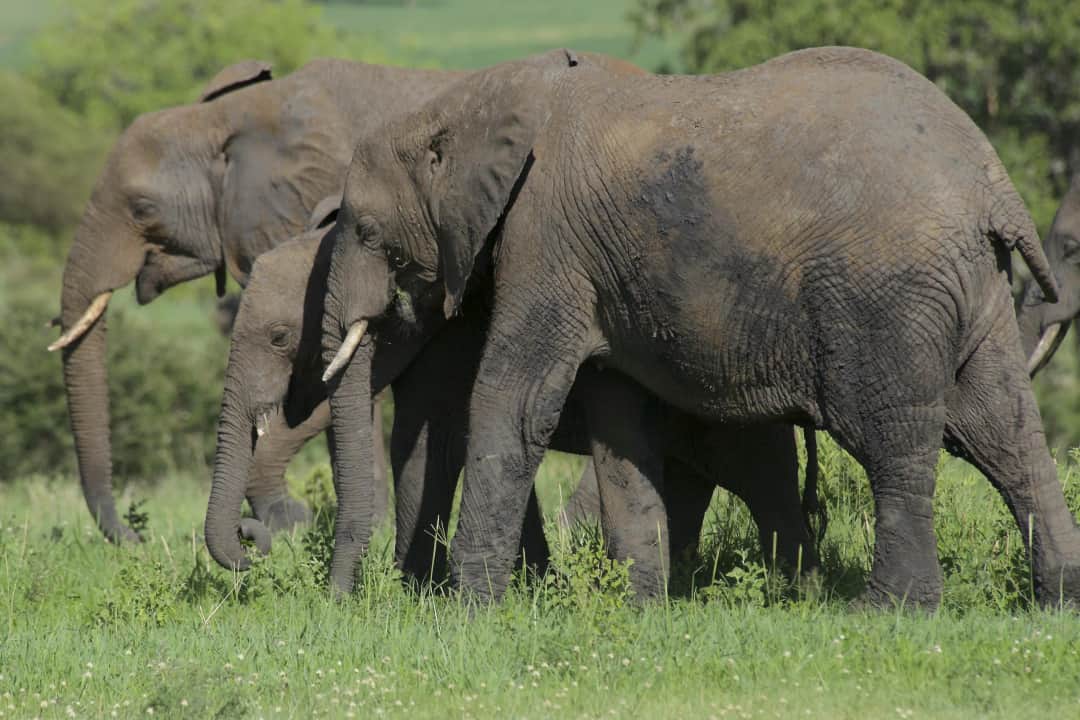
Beyond primates and birds, expect a forest rather than a game park. Forest elephants are present in small numbers and are rarely seen, though their damage and dung show up on trails often enough to keep you alert. Black fronted and yellow backed duikers cross paths ahead of you and vanish. Bushpig, giant forest hog and various squirrels are around. Butterflies are the quiet delight, over 200 species, and on a hot afternoon they gather in clouds on damp ground by the streams. What you will not see here is antelope on open plains or predators in the road. Bwindi rewards a different kind of attention entirely.
The gorilla trek itself, from briefing to the hour
The day starts early and formally. You report to the sector headquarters at around half past seven for a briefing, where rangers explain the rules, ask about your fitness honestly, and allocate visitors to gorilla families accordingly, which is the moment to speak up rather than be brave. Groups are capped at a small number of people per family per day. You are given a walking stick, you meet your guide and armed escort, and you set off, usually through cultivation and tea before the tree line closes over you. Then it is walking, climbing, ducking under and stepping over, on ground that is almost never level, until the radio says the trackers have them. You leave your bags with the porters, take a camera and nothing else, and the hour begins. Rules matter: keep the stated distance, no flash, no eating or drinking near the family, and do not come if you are ill, because a human cold can be lethal to a gorilla. Masks are commonly required. Nobody enjoys this rule until they understand it.
Buhoma, the original sector in the north
Buhoma is where gorilla tourism in Bwindi started and it remains the most developed corner of the park, with the widest range of accommodation from basic bandas to serious lodges, a park headquarters that runs smoothly, and a small village economy built around visitors. The Mubare family here was the first in Bwindi to be habituated, in the early nineties, and several groups now range in the surrounding hills. Terrain is generally kinder than the southern sectors, with lower starting altitude and more moderate gradients, which makes Buhoma the sensible default for older travellers, first timers and anyone genuinely unsure about their fitness. It also sits closest to Queen Elizabeth National Park, so it slots naturally into a wider Uganda circuit coming down through the Ishasha sector. The trade off is that it is the busiest and most visibly touristed part of the park, and it feels it in July and August.
Ruhija, the high sector and the birder's base
Ruhija sits on the eastern edge at around 2,300 metres, the highest of the four sectors, and it feels like a different park. It is colder, mistier and far quieter, the accommodation is simpler and thinner on the ground, and the views east across the Rukiga hills on a clear morning are the best in Bwindi. Several gorilla families range here and treks tend to involve real climbing given where you start. What sets Ruhija apart is the birding. The trail down to Mubwindi Swamp is the single most productive walk in the park and the reason serious birders build entire Uganda trips around this one village. If you are combining gorillas with birds, or you want the sector with the fewest vehicles and the most atmosphere, Ruhija earns the extra hours of road. Bring warm clothing that you would not normally pack for Uganda, because evenings here are genuinely cold.
Rushaga and the gorilla habituation experience
Rushaga in the south holds more habituated gorilla families than any other sector, which means more permits and slightly better last minute availability, and it is the base for something you cannot do anywhere else in Uganda. The gorilla habituation experience puts a very small number of visitors alongside a family that is still being made comfortable with people, in the company of the researchers and trackers doing that work. Instead of one hour you get four, and the tone is entirely different: less orchestrated, more waiting, more explanation of who is who and why a particular female keeps moving away, and a family that is not yet fully relaxed about you. It is a longer, harder and more expensive day than a standard trek and it is not the right first gorilla encounter for everyone. For photographers, returning visitors and anyone who found one hour frustratingly short, it is the best thing Bwindi offers. Places are very limited and go a long way ahead.
Nkuringo, the steepest ground and the biggest views
Nkuringo has a reputation among guides as the hardest sector in the park, and it is deserved. The lodges sit high on the Nteko ridge with an enormous view south over the forest to the Virunga volcanoes strung along the horizon, which is the best outlook of any accommodation in Bwindi. The catch is geometry: you start on top of the ridge, and the gorillas are usually somewhere down in the valley, which means the easy half of the walk comes first and the climb back out arrives when your legs are finished. Porters matter more here than anywhere. In return you get small numbers of visitors, a very strong community tourism setup around the village, and the closest access to Kisoro, Lake Mutanda and the Rwandan border, which makes Nkuringo the natural sector if you are combining Bwindi with Mgahinga or crossing into Rwanda afterwards. Do not book it if you have doubts about steep descents on wet ground.
Hiring a porter, which you should treat as compulsory
Porters wait at every trailhead, they carry your daypack, and more usefully they take your hand and haul you up the greasy bits, plant themselves below you on descents, and generally halve the difficulty of the day for a fee that is small relative to everything else you have already spent. People decline out of pride and regret it within the hour. There is a second reason that matters more. Many porters are drawn from the communities living around the forest, including former poachers and members of the Batwa community, and portering is a deliberate mechanism for turning the presence of gorillas into local household income rather than a cost imposed on neighbours. Hiring a porter is the cheapest genuinely useful thing you can do for the conservation of this forest, and it also makes your trek considerably more pleasant. Take one even if you are strong. Take two if you are carrying camera gear.
Forest walks, waterfalls and the community trails
A gorilla permit occupies one morning and most people build in two or three nights, so the rest of the time is worth planning rather than defaulting to the lodge terrace. From Buhoma the waterfall trail follows the Munyaga river through tree ferns and epiphytes to a set of falls, and it gives you the forest at walking pace with time to look at things. The river trail, the Rushura hill walk with views into the Congo, and the Muzabajiro loop all run from the same base. The Buhoma community walk takes you through the village, a banana beer still, a traditional healer and a women's craft group, run by local guides and funded straight back into the village. Around Nkuringo and Buhoma, Batwa cultural experiences are offered by communities who lived in this forest until it was gazetted as a national park and who were moved out of it. That history is uncomfortable and worth engaging with honestly rather than treating as a floor show.
Combining Bwindi with Queen Elizabeth, Mgahinga and Lake Bunyonyi
Because getting here costs you two long travel days, almost nobody sensible visits Bwindi alone. Coming from the north, Queen Elizabeth National Park sits directly on the route and its Ishasha sector, famous for lions that lie along the branches of fig trees, is a three or four hour drive from Buhoma on a reasonable day. To the south, Mgahinga Gorilla National Park in the Virungas adds golden monkey trekking and volcano hikes and is close to Nkuringo and Kisoro. Lake Bunyonyi, terraced hills dropping into deep still water with no bilharzia and no crocodiles, is the standard decompression stop after a trek and is worth two nights rather than one. Lake Mutanda offers the same idea with volcano views and fewer visitors. Any of these turn a punishing there and back drive into an actual itinerary, which is how Bwindi should be planned.
National park
Bwindi Impenetrable Forest
Take it with you
Everything on this page in one document you can keep, print, or send to whoever you are travelling with. No email required.
Harder than the brochures suggest and harder than most people prepare for. The distance is rarely the problem. The problem is gradient, mud and vegetation: you are climbing and descending steep forested slopes, often on ground with no path until a tracker cuts one, sometimes hauling yourself up by roots, at altitudes between roughly 1,500 and 2,500 metres. A short trek can be ninety minutes each way. A long one can be four hours out, an hour with the gorillas and four hours back, and both are normal outcomes on the same morning from the same trailhead. If you can walk uphill for several hours on rough ground without misery, you will be fine. If you cannot, say so at the briefing, because rangers deliberately assign visitors to families based on the reported difficulty of reaching them, and they can only do that with honest information.
It matters more than anything else you decide. Buhoma in the north is the most developed, has the broadest lodge choice, generally gentler terrain, and slots best into a circuit coming down from Queen Elizabeth, so it is the safe default. Ruhija is high, cold, quiet and the best base for birding. Rushaga has the most gorilla families, the most permits, and is the only place in Uganda running the four hour habituation experience. Nkuringo is the steepest, has the finest views, and is closest to Kisoro, Lake Mutanda and Rwanda. The sectors are hours apart on rough road that goes around the park rather than through it, so your permit must be issued for the sector you are sleeping in. Fix the sector first, then find the lodge, never the other way round.
One hour from the moment the guide says the visit has started, on a standard trek. That limit is not negotiable and it exists for the animals rather than for logistics, because these are wild families and prolonged human contact carries stress and disease risk. It goes remarkably quickly. The most useful advice from people who have done it several times is to put the camera down for at least twenty minutes of it and simply watch, because phone and camera footage of gorillas in dense shade is rarely as good as you hope and the memory of watching a silverback watch you back is worth more. If one hour sounds short, the habituation experience in Rushaga extends it to four with a family still being habituated, which is a different and more demanding day.
For the right person, yes, and for the wrong person it is an expensive way to spend a hard day in wet undergrowth. You spend four hours with a family that is not yet fully at ease with humans, alongside the researchers and trackers doing the habituation work, which means more explanation, more time and a much less choreographed encounter. It also means more walking, more waiting and gorillas that may keep moving away from you rather than settling. It suits photographers, people on a second visit, and anyone who suspects one hour will feel abrupt. It suits first timers with limited fitness far less well. It runs only from Rushaga, places per day are very few, and it needs to be booked well in advance.
Yes, without hesitation, and this is one of the few pieces of advice in gorilla trekking that essentially everyone agrees on. A porter carries your bag, but the real value is the hand on the steep muddy sections, the body planted below you on a descent and the steadying pull when a root gives way. People who declined a porter tend to spend the walk back wishing they had not. Beyond your own comfort, portering is one of the main routes by which money from gorilla tourism reaches the households living closest to the forest, including former poachers and members of the Batwa community displaced when the park was created. Agree the fee at the trailhead, pay it, and tip on top if the day was long.
Nothing wild is guaranteed, but the success rate on Bwindi treks is very high and closer to certainty than to a gamble. Trackers follow each habituated family daily and start from the previous night's nesting site, so they usually have a location before your group even leaves the briefing. What is not predictable is how long it takes to reach them, whether the light and vegetation give you a clear view or a partly obscured one, and how the family behaves once you are there. Treks are occasionally cut short by weather or by a family moving across the Congolese border. Sightings are the norm, comfort is not, and the sensible expectation is that you will find them and that the walk to do so may take most of your day.
Long trousers and a long sleeved shirt in neutral colours, tucked in, because nettles and safari ants are constant and neither respects bare skin. Sturdy waterproof boots with proper ankle support and grip are the single most important item, gaiters are genuinely useful, and gardening gloves are the cheap trick that stops you shredding your palms on thorny stems you grab while sliding. Bring a light waterproof jacket regardless of the month, at least two litres of water, energy snacks, and a dry bag or plastic liner for the camera. Do not bring a large pack, since the porter will carry it anyway and you want your hands free. Rain is possible on any day in any season, so a poncho that covers you and your bag together is worth its weight.
They give you genuinely different trips and money is only part of it. Uganda permits cost meaningfully less than Rwanda's, and Bwindi delivers a wilder, denser, older forest with more gorilla families, four sectors to choose from, far better birding and the only four hour habituation option. What you pay for that is time and comfort: a very long drive from Entebbe, rough roads between sectors, and generally harder terrain underfoot. Rwanda's Volcanoes National Park is two hours on tarmac from Kigali, which makes a three day gorilla trip realistic, and its lodges are more polished. Choose Bwindi if you have a week or more, want the forest as well as the gorillas, and are happy with an expedition. Choose Rwanda if your days are few and you want it simple.
There is a minimum age for gorilla trekking in Uganda and it is enforced strictly, so families travelling with younger children need to plan around it, and most lodges near the sectors can arrange alternative activities for those who cannot trek. Health rules are taken equally seriously in the other direction. Gorillas share enough of our biology that a human respiratory infection can pass to them and kill, so anyone showing symptoms of a cold, flu or stomach illness will be asked not to trek. Rangers will tell you this at the briefing and they mean it. Declare illness honestly rather than dosing yourself and going anyway, and speak to your operator in advance about what happens in that situation, because permit terms vary and it is a conversation better had before you fly than at a trailhead.