Island in Mozambique
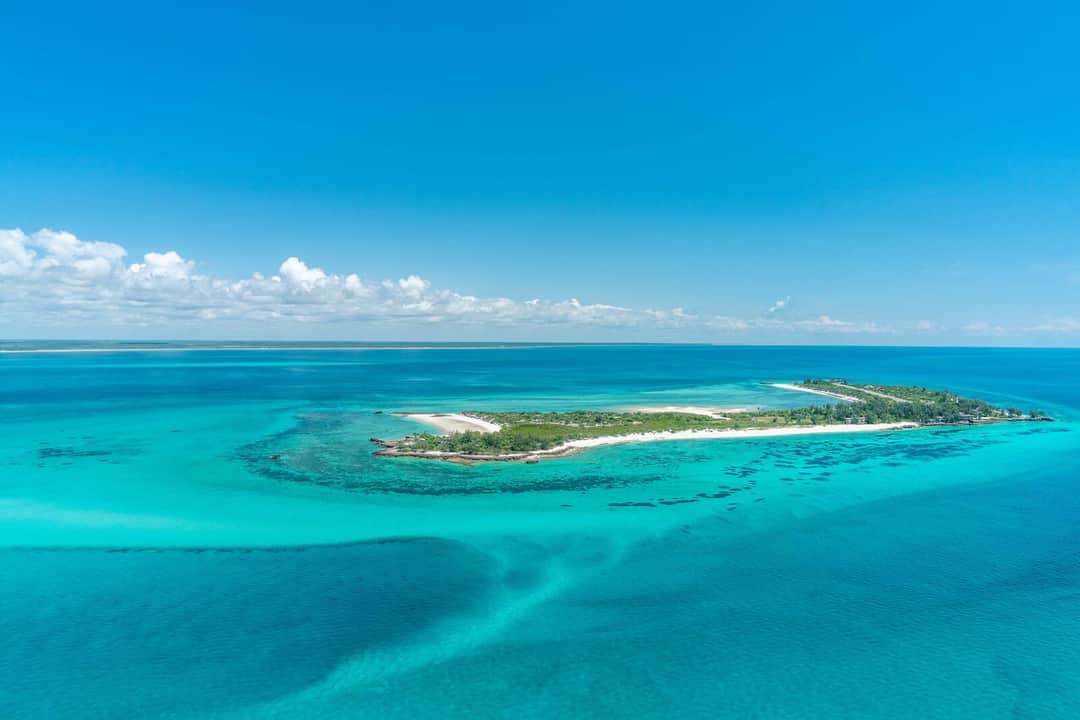
The approach tells you most of what you need to know. A light aircraft lifts off from Vilanculos, crosses ten minutes of open channel, and the archipelago arrives all at once: long pale islands lying north to south, dunes standing up out of them like a second landscape laid on top of the first, and water shading from white through jade into a blue that looks retouched. Almost nothing is built on them. That emptiness is not neglect or bad luck. It is the product of a marine national park, an awkward location and a very short list of lodges, and it is the whole reason to come.
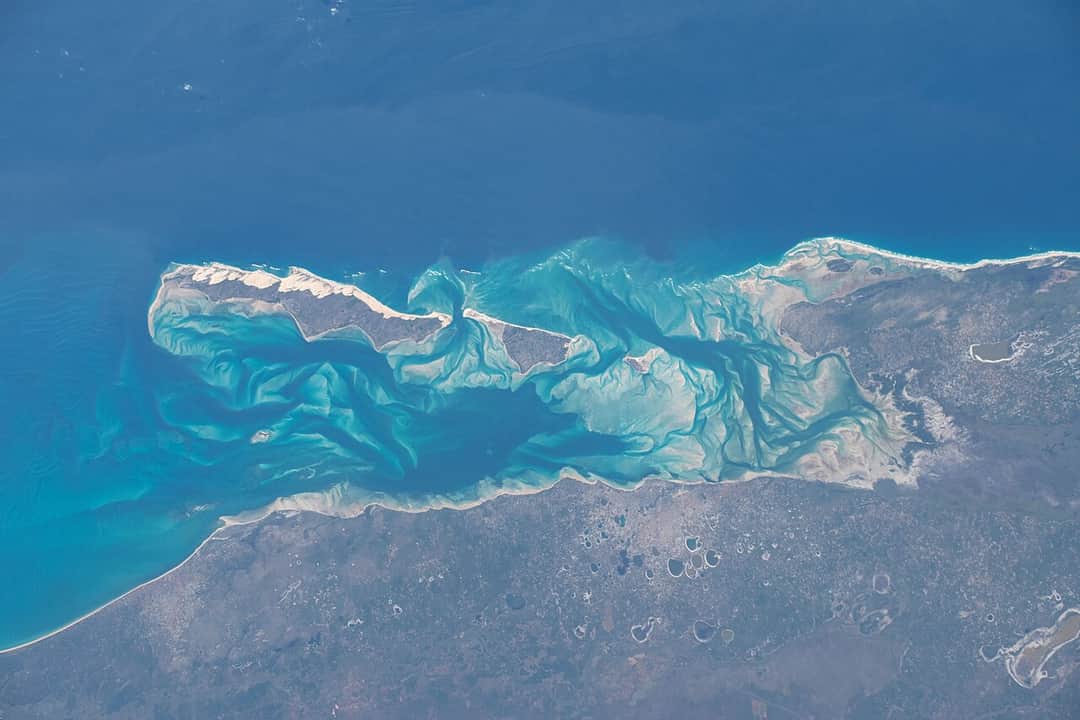
The Bazaruto Archipelago lies off Inhambane province in southern Mozambique, five islands strung across the mouth of a wide bay. Bazaruto is the largest at roughly thirty kilometres end to end, then Benguerra, then the smaller Magaruque, Santa Carolina and Bangue. These are sand islands rather than coral or volcanic ones. They were part of a mainland peninsula until rising seas cut them off, and the sand has never stopped moving since. The interior of Bazaruto is a live dune field: bare white faces on the windward side, thick green scrub and grassland on the sheltered side, and freshwater lakes sitting in the hollows between them, which is a genuinely strange thing to walk up to a kilometre from the Indian Ocean.
The islands and the water around them are protected as a marine national park, which is the second reason the place feels the way it does. Commercial trawling is kept out, the reefs have not been stripped, and the seagrass meadows in the shallow bay behind the islands are still extensive enough to feed something that has disappeared almost everywhere else. Bazaruto holds what is widely regarded as the last viable dugong population in the western Indian Ocean. They are shy, they surface briefly, and most visitors never see one, but the meadows they graze are also why the turtles, the rays and the reef fish are here in the numbers they are.
Days run on the tide rather than the clock. The bay behind the islands empties and fills across an enormous flat, so a boat trip to the reef, a sandbank picnic or a walk to a particular beach all get scheduled around water depth, and your guide will tell you the plan the night before rather than you choosing it. In between there is very little structure. You swim, you walk a beach with no footprints on it, you sit out the hot middle of the day, and at some point somebody suggests taking a dhow out for the last two hours of light because the wind has come round.
Be clear about what you are buying. This is not Zanzibar, where you can wander into a town and find dinner, and it is not the Seychelles, where the beaches come with a road and a bus. Bazaruto is a small number of expensive lodges on empty islands, reached almost entirely by air, with water and sand and not much else on the menu. For a certain kind of traveller that is a thin holiday. For everyone else it is precisely the point, and the honest question to ask yourself before booking is which of those two people you are.
Best time to visit
The coast has two clear seasons and they trade different things against each other. Roughly April to October is the dry, cooler half of the year: comfortable daytime heat, cold-ish evenings by tropical standards, very little rain, and the most settled conditions overall. Roughly November to March is hot and humid with real rain, warmer water, and the cyclone window. Neither half is unusable, but they suit different trips.
May, June and again September, October and early November are the sweet spots. Air and water are both pleasant, the light is clean, and the sea is generally workable. The one thing to know about the middle of the dry season is wind. August and September can blow hard for days at a stretch, and wind is the single factor most likely to interfere with your holiday here, because it decides whether the boat goes out to the reef at all. A windy week on an island where the activities are all on the water is a long week. Ask your lodge directly how often trips are cancelled in the month you are considering, and take the answer seriously.
For divers and snorkellers the calmer, warmer months from around November into March usually bring the better water temperatures and often the better visibility, at the cost of humidity, afternoon storms and the risk of a tropical system. Mozambique sits in the cyclone belt and the coast has been hit hard within living memory. The risk in any given week is low, but January to March is when it exists, and travel insurance that actually covers weather disruption matters more here than it does in most places.
Seasonal wildlife pulls in a different direction again. Humpback whales pass along this coast on their migration through the middle of the year, broadly June to October, and are regularly seen from boats and sometimes from the dunes. Turtles come ashore to nest on the ocean-facing beaches in the warm months at the other end of the calendar. Dugong sightings are not really seasonal at all: they depend on calm, clear water over the seagrass, which is more about the wind that week than the month on the ticket. If you want one season that does most things well, take late October into early November, when the wind has usually dropped, the water has warmed and the rains have not properly started.
High season
The busiest stretch runs through the southern African winter holidays and again over Christmas and New Year, when South African and Zimbabwean families drive or fly up in numbers and Vilanculos fills. Because the archipelago has only a handful of lodges with very few rooms between them, high season shows up as unavailability rather than crowds: the islands never feel busy, but the beds are gone months ahead and the rates rise sharply. Easter is a smaller third peak.
The dugong deserves to be first because it is the reason this park exists in the form it does. They are large, slow, entirely herbivorous marine mammals that graze seagrass in the shallow bay behind the islands, and they are extremely sensitive to boat traffic, netting and habitat damage, which is why they have vanished from most of their old range along this coast. Populations elsewhere in the western Indian Ocean are down to scattered individuals. Bazaruto still has a breeding group. Sightings happen from the air and from boats working the flats in calm, clear conditions, and they usually amount to a broad grey back and a tail, not the encounter people imagine. Nobody should book this trip on the promise of a dugong sighting, and any operator who guarantees one is selling you something they cannot deliver.
The rest of the water is more obliging. Two Mile Reef, between Bazaruto and Benguerra, is the archipelago's main snorkelling and diving ground and holds hard and soft corals, potato bass, moray eels, kingfish, and clouds of reef fish over a structure shallow enough that snorkellers get a genuine view rather than a distant one. Green and loggerhead turtles are common and nest on the islands. Bottlenose and humpback dolphins work the channels. Manta rays and whale sharks both occur here, though the honest position is that the coast further south around Tofo is the more reliable address for both, and if either is your main objective you should build the trip around that coast instead. Humpback whales pass offshore through the middle of the year and are one of the more dependable spectacles on the calendar.
On land the interest is in the strangeness of the islands themselves rather than in big animals. Bazaruto's dune field carries grassland, thicket and small groves, and there are small antelope in the cover, though you will hear them more often than you see them. The interdunal lakes are the real curiosity: freshwater sitting in hollows between dunes within earshot of the ocean, fringed with reeds, holding crocodiles, which is why nobody swims in them. Flamingos and pelicans use them at times, and the tidal flats behind the islands are excellent for waders, with the whole archipelago recognised as an important site for birds. Bee-eaters nest in the sand banks, fish eagles work the channels, and the beaches produce crab plover and terns in numbers.
One piece of context worth carrying with you: several thousand people live on Bazaruto and Benguerra in fishing villages that predate every lodge here, and the park is managed with them rather than around them. Small-scale fishing continues under rules that keep the destructive gear out. When your boat passes a sailing dhow with a net over the side, you are not looking at a picture arranged for tourists.
Two Mile Reef
The reef sits in the channel between Bazaruto and Benguerra and it is the single best reason to get in the water here. It runs for several kilometres and comes up shallow enough in places that snorkellers float directly over the coral rather than squinting down at it, which is unusual and makes it worth doing even if you have never snorkelled before. Expect hard corals, soft corals moving in the current, moray eels wedged into the structure, potato bass that come to look at you, and reef fish in the density that only turns up where nobody has been fishing hard. The catch is that the reef is entirely at the mercy of the tide and the wind. Trips go when conditions allow, not when you would like them to, and the same reef can be flat, clear and lit on one day and a green, surging mess two days later. Give yourself several days on the islands so that you get at least one good window.
Looking for dugong, and doing it properly
Most lodges will take you out over the seagrass flats behind the islands in calm conditions, and this is as close as tourism here comes to a marquee activity. Manage the expectation before you go: dugong surface briefly, dive on any disturbance, and are usually seen as a grey back and a broad tail forty metres off, if at all. A boat that chases them or drops swimmers on top of them is doing damage to the exact animals you came to see, and the good operators will not do it. What makes the trip worthwhile even without a sighting is the flats themselves: enormous, glassy, waist-deep water over pale sand and dark meadow, with rays lifting off the bottom, turtles surfacing to breathe and the dunes standing up behind you. Treat a dugong as a bonus on a good morning out rather than as the purpose of it.
Sailing on a dhow
Dhows have worked this coast for centuries and they are still the local boat, not a heritage exercise. A sail across the channel in one is completely different from a transfer in a fast rigid inflatable: no engine noise, a long slow lean, and a crew reading wind and tide that they have known since childhood. Most lodges run a sunset dhow, and some will do a full crossing or a lunch trip to a sandbank under sail if the wind cooperates. The practical notes are worth knowing. Dhows sail when there is wind and not otherwise, they are wet in any chop, and there is no shade unless someone rigs a sheet. Take a hat, take a dry bag, and accept that the boat goes where the wind allows rather than to a fixed itinerary. It is the most memorable two hours most people have here.
The dunes and the freshwater lakes of Bazaruto island
The interior of the largest island is the part of the archipelago nobody expects. A walk or a short drive inland takes you into a live dune field, where bare white sand faces rise steeply enough that climbing one is genuine work, half an hour of two steps up and one back with no shade at any point. The top pays for it: ocean on one side, the shallow jade bay on the other, and the whole chain of islands laid out. Between the dunes lie freshwater lakes fringed with reeds, which hold crocodiles, so admire them from a distance and take your guide's word on where to stand. Go at first light or in the last hour of the day. The middle of the day on open sand is punishing, and the low sun is what makes the dune faces read as sculpture rather than as a beach that got out of hand.
Benguerra
The second largest island is the one many visitors actually stay on, and it is the most rounded of the group: forest and grassland inland, small freshwater lakes, working villages, and long beaches on both the ocean and the bay side. Walking is genuinely good here in a way that is rare on tropical islands, whether that is a beach walk that runs for kilometres without meeting anybody or a guided route through the interior past crops, cashew and palm. The bay side has calm, shallow water for swimming and sailing, the ocean side gets the surf and the wind. Benguerra also sits closest to Two Mile Reef, which matters more than it sounds, because a shorter boat ride means the trip is more likely to run on a marginal day. If you can only stay on one island and you want more than a beach chair, this is the one to choose.
Santa Carolina and the island-hopping day
Santa Carolina, still widely called Paradise Island, is the archipelago's ghost story. It carried a smart colonial-era hotel that drew honeymooners by seaplane, and the war and the decades since left it as a shell: empty room blocks, a chapel, terraces with trees growing through them, all of it slowly going back to the sea air. It is a strange and rather moving hour, and the surrounding water is some of the clearest in the chain. Magaruque, closer to the mainland, is smaller and simpler, a low island with sandbanks that surface at low tide and good shallow snorkelling. Most lodges and Vilanculos operators combine two or three islands and a sandbank into a single boat day with lunch on the sand. It is the most efficient way to understand how different these islands are from each other, and it is the one day here with a proper itinerary.
Diving and the big fish on the drop-off
Beyond the sheltered reef the seabed falls away, and the diving out there is a different proposition: bigger structure, more current, and the chance of manta rays, large game fish, sharks and, in the warmer months, whale sharks. Sites are dived from boats out of the island lodges and from Vilanculos, and conditions decide everything, so a diving trip here needs slack in the schedule rather than a fixed plan. The archipelago is also long established as a serious game-fishing destination, particularly for billfish, and boats run out of Vilanculos and the lodges for sailfish and marlin, largely on a tag-and-release basis. Fishing inside the marine park is regulated and some of it is not permitted at all, so this is one thing to confirm with the operator rather than assume. If you want reliably heavy diving action rather than beauty, the coast around Tofo further south does that job better.
Vilanculos and staying on the mainland
Vilanculos is the gateway town and it is also the budget answer to this destination. It has an airport with connections from Johannesburg and Maputo, a beach of its own, a market, a spread of guesthouses, small hotels and restaurants at prices that bear no relation to the island lodges, and a fleet of operators who run day trips out to the archipelago and back. You lose the thing that makes the islands special, which is having them to yourself at either end of the day, and you spend a couple of hours on boats each way. What you gain is that a trip here becomes possible at all for most travellers rather than only for the few. Vilanculos is also worth a day in its own right for the dhow beach at low tide, which is one of the better small scenes on this coast, and for eating grilled prawns and peri-peri chicken somewhere that is not a lodge dining room.
Island
Bazaruto Archipelago
Take it with you
Everything on this page in one document you can keep, print, or send to whoever you are travelling with. No email required.
Nearly everyone flies. Vilanculos on the mainland is the gateway, with scheduled flights from Johannesburg and from Maputo, and from there you transfer to the islands by light aircraft, helicopter or boat, usually arranged by the lodge and usually taking well under half an hour. Driving is possible: Vilanculos is a long day north of Maputo on the main coastal road, and overland travellers coming up from South Africa do it, but you should treat it as two days rather than one and expect variable road conditions. Note that boat transfers depend on tide and wind, which is why lodges quote arrival times around the water rather than around your flight. Build a night in Vilanculos or Johannesburg into either end of the trip if your international connections are tight, because a missed light aircraft here is not a case of catching the next one.
It is emptier and less developed than any of them, and that is the entire trade. Zanzibar gives you Stone Town, restaurants, a wide range of prices and a whole island of things to do off the beach. Mauritius gives you mountains, a real interior and a country with cities in it. The Seychelles gives you granite scenery and public roads and buses. Bazaruto gives you a marine park, a handful of lodges, and sand. If you want variety, culture, choice of restaurants or a budget option, one of the others will serve you better. If what you want is to walk a long beach without meeting anybody, to be somewhere that has not been built out, and to be in water that has not been fished flat, Bazaruto does that better than all three. It also pairs particularly well as the quiet end of a trip that started with something busy.
Probably not, and you should plan the trip as though you will not. Dugong here are shy, low in number and easily disturbed, and they surface for a few seconds at a time in water that has to be calm and clear for you to spot anything at all. Some visitors get a sighting on their first morning out over the flats, others spend a week here and never see one. What you can reasonably expect is time on the seagrass beds where they feed, which is beautiful in itself and reliably produces rays, turtles and small sharks. Be wary of any operator who advertises guaranteed dugong encounters or offers to put swimmers in the water with them. Pursuit is exactly the pressure that has removed this animal from the rest of its range, and the lodges that take conservation seriously will keep their distance and cut the engine.
Yes, but from the mainland rather than the islands. Staying in Vilanculos in a guesthouse or small hotel and taking day trips out to the archipelago costs a fraction of a night in an island lodge, and the boat operators there run island-hopping days, snorkelling trips to Two Mile Reef and dhow sailing at ordinary prices. The park has an entry charge for visitors, which is worth confirming when you book so it does not arrive as a surprise. What you cannot get cheaply is the thing the islands are actually best at, which is early morning and late evening on an empty beach with no boats in sight. If your budget only stretches to day trips, go anyway. Just be honest with yourself that you are seeing the archipelago rather than living on it.
Four nights on an island is the sensible minimum and five or six is better. The reason is weather rather than sightseeing. Everything worth doing here happens on the water, wind and tide decide whether a boat goes out, and a two-night stay can easily be two blown-out days with nothing to show for a large amount of money. With four or five nights you will almost certainly get one good reef window, one calm morning on the flats and one useful sunset sail. If you are day-tripping from Vilanculos, three or four nights in town gives you the same buffer at much lower cost. There is no case for a one-night stop here: the transfers alone would take most of it, and the place needs you to slow down before it works.
Conditions here are governed by wind first, tide second and season third, which is why any single best month is a simplification. Broadly, the warmer months from November into March give the warmest water and often the best visibility, at the cost of humidity, afternoon storms and cyclone risk at the peak of it. The cooler dry months from May to October are more comfortable on land and more settled overall, but August and September in particular can blow hard for days and shut the boats down. Late October into early November is the most reliable compromise. Whichever month you choose, plan around tides rather than clock time, because Two Mile Reef and the sandbanks are only accessible in certain states of the water, and ask your lodge for the tide table for your dates before you fix anything else.
Less than at any other well-known Indian Ocean destination, and you should decide in advance whether that is a problem. On the islands there is snorkelling, diving, dhow sailing, fishing, kayaking, walking the beaches and the dunes, visiting the interdunal lakes, and guided walks through the island villages with your lodge. There is no town, no restaurant scene, no shopping, no nightlife and no cultural circuit. Days without a boat trip are genuinely unstructured, which is restorative for some people and slow for others. If you travel with someone who needs a programme, either build in a mainland leg through Vilanculos or plan this as the short quiet stretch at the end of a longer trip rather than as a two-week holiday in itself.
The archipelago itself is a quiet, low-crime environment and the lodges are small and closely staffed. Ordinary sense applies in Vilanculos as it would in any coastal town: keep valuables out of sight, take licensed transport at night, and use a guide you have booked through your accommodation rather than someone approaching you on the beach. The bigger practical risks here are natural rather than criminal. This coast lies within the cyclone belt and the season runs roughly November to April with the peak in the first months of the year, so travel insurance that covers weather disruption is worth having. Sun and dehydration catch people out on the dunes and on open boats far more often than anything else. Mozambique is a tropical destination on a mainland coast, so take current medical advice from a travel clinic before you go rather than relying on anything you read in a guide.
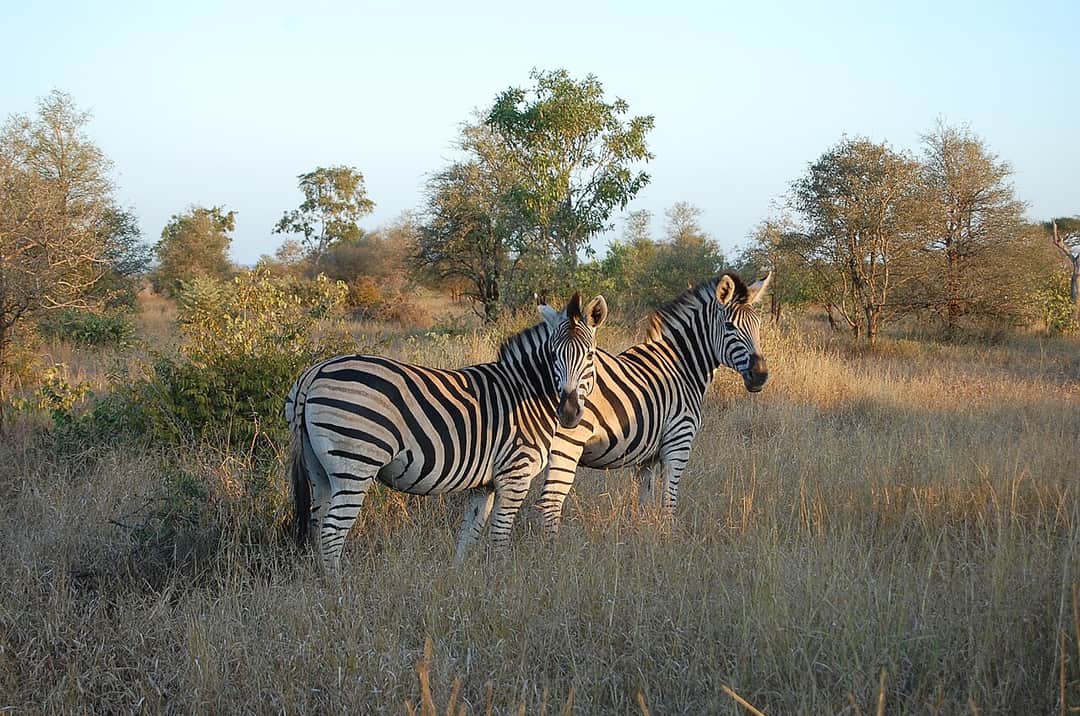
It works well and it is how a lot of people reach it. Because Vilanculos connects through Johannesburg, the archipelago slots neatly onto the end of a South African trip, whether that is Kruger and the private reserves alongside it, or the Kalahari, or Cape Town and the Garden Route. Zimbabwean and Botswanan itineraries built around Victoria Falls, Hwange or the Okavango Delta also route back through Johannesburg without difficulty. The order is worth thinking about. Safari days start before dawn and involve a great deal of driving, so putting the islands second gives you somewhere to recover rather than somewhere to leave early. Allow a full connecting day between the two halves, since light aircraft schedules on both ends rarely line up neatly, and a missed transfer costs you a night here rather than an hour.