Duration
8 days
The Lemosho Route begins on the quieter western side of Kilimanjaro, ascending from lush rainforest through heath and moorland before opening onto the vast Shira Plateau. Few other routes offer this kind of visual variety across the mountain's different ecological zones. What sets Lemosho apart is its gradual altitude gain combined with the "climb high, sleep low" technique — spending time at higher elevations during the day before descending to sleep. This approach gives the body more time to adjust, making summit success considerably more likely. With its combination of scenic diversity, manageable gradient, and strong completion rates, the Lemosho Route is one of the best all-round choices on Kilimanjaro for trekkers of various backgrounds.
Your adventure begins after breakfast, when your guide collects you from your hotel for the drive (approximately 113 km / 70.5 miles) to Lemosho Gate on the western side of the mountain. After registration and lunch at the gate, the trek begins through dense rainforest. This section is rich in wildlife - keep an eye out for colobus monkeys moving through the canopy. The trail is short and gentle, leading to Mti Mkubwa (Big Tree Camp), where your tents will already be set up and dinner prepared. After a hot meal, you will settle in for the night.
$2,310Per person
The day begins with another scenic walk beneath the forest canopy, although this section is brief as you soon transition into the heath and moorland zone. A steady ascent through the forest brings you onto the northern slopes of the Shira Plateau. As you emerge above the treeline, the landscape opens up, offering expansive views across the plateau. If you are feeling strong and have extra energy, an optional hike to the Cathedral Area can be arranged. This adds approximately 4 km to the day's trek and provides a deeper exploration of the plateau. Please discuss this option with your guide.
Kibo Peak remains in view ahead as you continue eastward. The trail climbs steadily toward Lava Tower (4,530m), where you will stop for lunch and acclimatisation. After reaching this high point, you descend to Barranco Camp. This "climb high, sleep low" strategy is essential for proper acclimatisation and significantly improves your chances of summit success. Dinner is served in the evening at camp.
Today begins with the ascent of the iconic Barranco Wall - a rewarding scramble that offers spectacular views. After reaching the top, the trail descends into the Karanga Valley before a short but steep climb leads to Karanga Camp. This shorter trekking day allows for a more relaxed pace and continued acclimatisation.
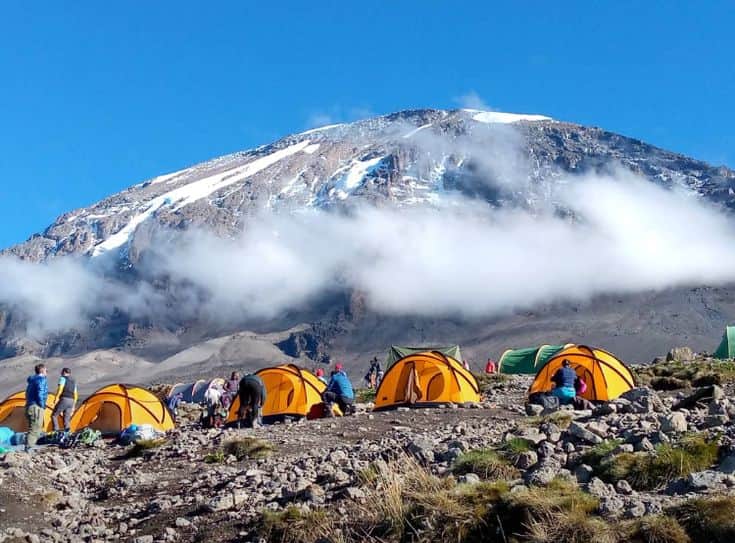
The trail traverses the southern slopes of Kibo through a dry, lunar-like landscape on the way to Barafu Camp, located on the south-eastern shoulder of the mountain. The climb to Barafu is short but steep. Upon arrival, you will rest, hydrate, and enjoy an early dinner before attempting to sleep ahead of the summit push. This shorter day is designed to conserve energy for the demanding night ahead.
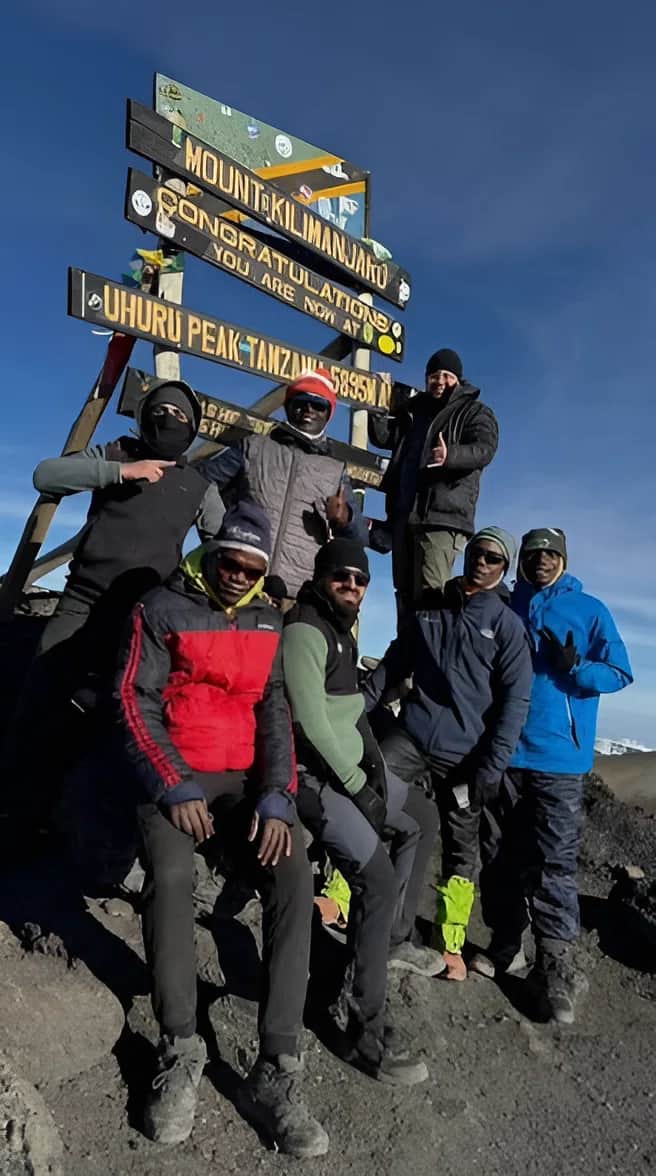
Your summit attempt begins around midnight. The climb is steep, slow, and physically demanding, requiring both determination and endurance. After 5-6 hours, you will reach Stella Point (5,745m) on the crater rim, often at sunrise. From here, you continue along the rim to Uhuru Peak (5,895m) - the highest point in Africa.
After celebrating at the summit and taking a short rest, you descend back to Barafu Camp - a demanding section following the long ascent. At Barafu, you will have breakfast and rest briefly before continuing down the Mweka Trail to Mweka Camp. Depending on your condition, your guide may adjust the final stopping point between Millennium Camp and Mweka Camp.
The final day is a gentle descent through lush rainforest to Mweka Gate. Upon arrival, you will receive your summit certificate and enjoy a well-deserved rest. A vehicle will then transfer you for a celebratory lunch before returning to your hotel - marking the end of your Kilimanjaro journey.
Starts in Arusha, Tanzania, ends in Arusha, Tanzania.
Other stops
What's arranged for you to sleep and eat each night of the trip.
Tent
Tent
No accommodation
Tent
No accommodation