Island in Mauritius
The drive from the airport is the honest introduction to Mauritius, and it looks nothing like the brochure. You leave the terminal in the south east and run north through sugar cane, past a Hindu temple with a painted tower, a mosque, a Catholic church and a Chinese shopfront within a few kilometres of each other, through towns that are busy in a completely ordinary way, with schoolchildren and bus stops and traffic. On the horizon are mountains that look wrong: not smooth cones but jagged, isolated stumps standing straight out of the plain, the eroded remnants of a volcano far bigger than the island that is left. Mauritius is a country first and a beach destination second, and that is the single most useful thing to understand before booking it.
Geographically it is a volcanic island with an almost continuous coral reef wrapped around it, and that reef does most of the work. Inside it lies a lagoon: shallow, pale, warm and flat, which is why the swimming here is so easy and why the water reads turquoise from any elevation. The exception is the far south around Gris Gris, where the reef gives out and the open ocean hits basalt cliffs directly, and the difference between the two is worth seeing in one day. Inland the ground rises to a central plateau of towns, cane and reservoirs, and then to the forested south west where the highest ground reaches a little over eight hundred metres and the gorges cut down towards the coast.
The society is the reason a lot of people come back. Mauritius was uninhabited until the Dutch arrived in the seventeenth century, killed off the dodo and gave up. The French built Port Louis and the sugar economy on enslaved African and Malagasy labour. The British took the island in 1810, kept French law and language largely intact, and after the abolition of slavery brought several hundred thousand indentured labourers from India through an immigration depot in Port Louis that still stands and is now a World Heritage Site. Add Chinese traders in the nineteenth century and you have modern Mauritius: Hindu, Muslim, Christian and Buddhist, speaking Creole at home, French in the media and English in government, without any of it feeling like a museum exhibit.
What that means on the ground is that the island rewards moving around. It is small, roughly sixty five kilometres by forty five, with a motorway running through the middle and a light rail line now linking Port Louis to the plateau towns, so almost nothing is more than a couple of hours from anywhere else. You can hike a mountain in the morning, eat dholl puri from a street stall at lunch, and be snorkelling in a marine park by three. Every beach in Mauritius is public by law, including the ones in front of the largest hotels, which quietly changes the character of the place: on a Sunday the public beaches fill with Mauritian families cooking on the sand, and that is the island at its best.
Set expectations honestly on one point. Mauritius is developed and densely populated, one of the most densely populated countries in Africa, and it is not an empty island. There is traffic, there is building, and the coast in the busiest areas is a more or less continuous run of hotels, villages and shops. If your image of the Indian Ocean is a deserted beach with nobody on it, Bazaruto or the outer Seychelles will serve you better. If you want an island with a real interior, a genuine culture, a proper food scene and enough to do for two weeks without repeating yourself, Mauritius has no serious competitor in this ocean.
Best time to visit
Mauritius has two seasons and they are more distinct than most tropical islands, because the island sits far enough south to feel a real winter. Summer runs roughly November to April: hot, humid, with heavy rain that arrives in bursts, warm sea, light winds on most days and the tropical cyclone season sitting inside it. Winter runs roughly May to October: noticeably cooler, especially on the central plateau where evenings can genuinely require a jumper, much drier, and windy, with the south east trades blowing steadily.
That wind is the practical planning tool. In winter the south and east coasts get the trades full on, which is why Le Morne and Anse La Raie are the kitesurfing and windsurfing centres and why those months are the season for both. It also means the east coast can be choppy and cool for lying about, while the north and west stay sheltered and calm. In summer the wind drops, the whole lagoon settles, and the east coast becomes lovely, at the cost of humidity and the risk of a storm system.
The consensus best months are the shoulders. Late September through to early December is the strongest single window: the trades have eased, the sea has warmed, the rain has not properly started and the cyclone season has not opened. May and June are the other good stretch, dry and fresh, with the sea still warm from summer. January to March is the peak of both the heat and the cyclone risk, and while a direct hit in any given week is unlikely, the season is real and this island sits in the track. February and March are also when the island is greenest and cheapest.
Divers should aim for the warmer half of the year, roughly November to April, when the water is at its clearest and calmest, though the sheltered west coast sites off Flic en Flac dive well most of the year. Humpback whales pass along the west coast during the winter months, broadly July into October, which is also the best stretch for hiking, since walking Le Morne or the Black River Gorges in February humidity is genuinely unpleasant work. One last piece of timing: Maha Shivaratri, in February or March, brings hundreds of thousands of pilgrims walking to the crater lake at Grand Bassin, many of them carrying decorated wooden structures on foot along the main roads. It is one of the largest Hindu festivals outside India and an extraordinary thing to witness. It also affects traffic across the island for days, so know it is happening rather than being caught out by it.
High season
The busiest periods are the European winter holidays from mid-December into early January, when rates peak hard, and the northern summer of July and August, which coincides with South African winter holidays. Easter is a third peak. Local school holidays fill the public beaches and Ile aux Cerfs at weekends year round, with Sunday the busiest day by a distance. February and March are the quietest and cheapest, being both the wettest and the cyclone-exposed months.
Mauritius is where the world learned the word extinction. The dodo lived only here, was gone within about a century of the first Dutch settlement, and its disappearance is why the island's conservation story matters out of all proportion to its size. What followed the dodo was worse: most of the native forest was cleared for sugar, and rats, monkeys, deer, mongoose and invasive plants did the rest. Only a small fraction of the original vegetation survives, almost all of it in the south west. Understanding that makes the surviving wildlife far more interesting than a list of species would suggest.
The recovery work here is among the most celebrated anywhere. The Mauritius kestrel was reduced to a handful of known wild birds in the 1970s and was, at that point, the rarest bird in the world. Captive breeding and nest management brought it back, and it now flies over the Black River Gorges. The pink pigeon and the echo parakeet, both similarly close to gone, came back the same way. Watching an echo parakeet cross a gorge in the national park is not a casual bird sighting: it is the visible result of decades of very hard work. The park also holds the Mauritius bulbul, the cuckooshrike, the olive white-eye and the fody, alongside native ebony, and it is the only place on the island where you can walk in something resembling original forest.
Ile aux Aigrettes, a small coral limestone island off the south east coast, is the best single place to see all of this in one visit. It has been cleared of introduced predators and replanted with native ebony, and guided walks there put you among pink pigeons, Telfair's skinks and Aldabra giant tortoises, which have been introduced as ecological stand-ins for the extinct Mauritian tortoises that once dispersed the forest's seeds. It is a working restoration project rather than an attraction, and the guides are conservation staff, which shows.
The lagoon is the other half. Inside the reef the water holds parrotfish, surgeonfish, angelfish, wrasse, moray eels, octopus and juvenile everything, with the best of it protected at Blue Bay Marine Park in the south east and around Trou aux Biches in the north west. Outside the reef the drop-offs off Flic en Flac and around the island of Coin de Mire in the north give divers larger structure, caves and pelagic fish. Spinner dolphins are resident off the west coast at Tamarin and are the basis of a large boat-trip industry, and this is the one wildlife activity here that needs a caution: on a busy morning a pod can be surrounded by a great many boats, and if that matters to you, choose an operator carefully or go with a smaller, later trip. Humpback whales pass through in the winter months and sperm whales are present in the deep water off the west coast, both of which are seen on specialist trips rather than the standard dolphin run.
Black River Gorges National Park
The largest surviving block of native forest in Mauritius covers the south west uplands, and it is the counterweight to everything about this island that feels developed. A road runs across the top with viewpoints at the gorges and at Alexandra Falls, which is the five-minute version, and a network of marked trails goes down into the forest, which is the real one. Routes range from an hour to a full day, including the climb to Piton de la Petite Riviere Noire, the highest point on the island at a little over eight hundred metres, which is a steady rather than technical walk with a view across the whole south west. This is also where the recovered endemic birds live, so a slow walk with binoculars is worth more than a fast one. Go in the drier winter months if you can, start early, and expect the trails to be muddy and slippery whenever it has rained, which on this side of the island is often.
Chamarel: coloured earths, waterfall and rum
The village of Chamarel sits in the hills above the south west coast and packs three separate reasons to drive up there into one afternoon. The Seven Coloured Earths are dunes of volcanic clay where iron and aluminium have weathered into distinct bands of red, brown, violet and blue that never mix back together, which is stranger to stand in front of than photographs suggest. A short distance away the Chamarel waterfall drops in a single fall into a wooded bowl, viewed from a platform rather than reached on foot. Then the Rhumerie de Chamarel distils rum from fresh cane juice rather than molasses, in the agricole style, and runs tours with a tasting and a well-regarded restaurant attached. The site charges an entry fee and gets busy in the middle of the day with coach groups, so come early or late. The road up from the coast is one of the better drives on the island in its own right.
Le Morne Brabant
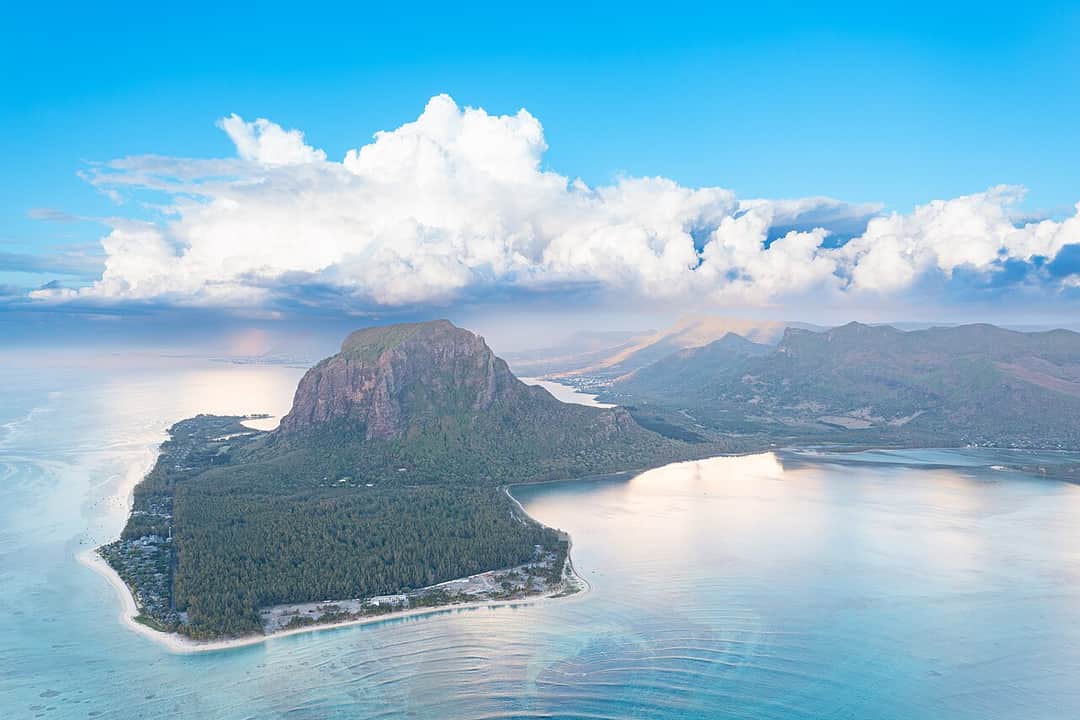
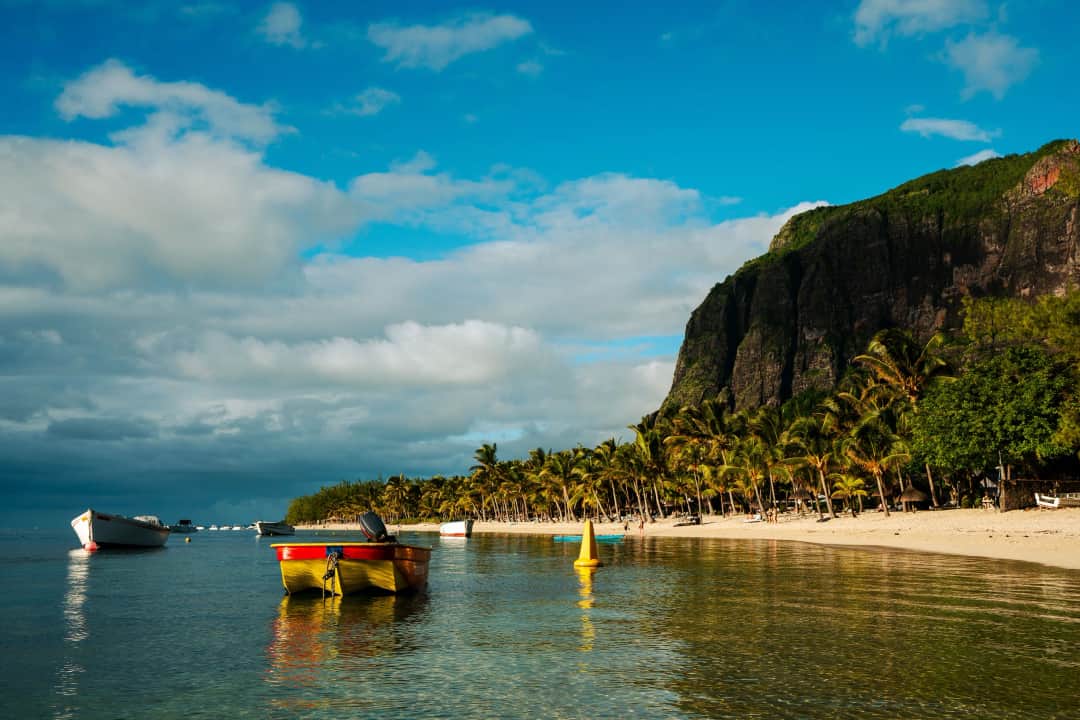
The basalt monolith at the south west corner of the island is the image on half the postcards, and its history is the reason it is a World Heritage Site rather than simply a good-looking mountain. Its cliffs and caves sheltered maroons, people who had escaped slavery, and the mountain became a symbol of that resistance and of the island's history of slavery generally. The hike to the summit area takes roughly three to four hours return, is steep, and the upper section is a scramble that must be done with a guide, which is enforced. Start at first light: the sun on the exposed rock later in the morning is punishing. At the base, the lagoon on either side is the best kitesurfing water in the Indian Ocean, with a serious wave break offshore, and the season runs through the windy winter months. This is also where the much-photographed underwater waterfall illusion is seen from the air, an effect of sand pouring off the shelf.
Port Louis
The capital is loud, hot, crowded and worth a full day. The Central Market is the anchor: fruit and vegetable halls, a herbalist section where people still buy remedies by the handful, food stalls doing dholl puri and gateaux piments, and an upper craft floor where bargaining is expected. From there, Aapravasi Ghat is the immigration depot where indentured labourers from India first set foot on the island, now a World Heritage Site and the single most important historical place in the country. The Blue Penny Museum holds the island's famous nineteenth-century postage stamps, the Natural History Museum has a reconstructed dodo, the Jummah Mosque and Chinatown sit within a few streets of each other, and Champ de Mars, one of the oldest racecourses anywhere, still runs meetings that half the island attends. Go on a weekday, wear light clothes, and accept that the traffic getting in is part of the experience.
The lagoon, and choosing your coast
The reef makes the water here easy, but the coasts are not interchangeable and picking wrongly is the commonest planning mistake. The north around Trou aux Biches, Mont Choisy and Pereybere gives calm, shallow, sheltered water, the best snorkelling straight off the beach, and Grand Baie as the island's busiest hub for boat trips, restaurants and nightlife. The west from Flic en Flac to Le Morne is calm and gets the sunsets, with the best diving off Flic en Flac and dolphin trips out of Tamarin. The east around Belle Mare and Trou d'Eau Douce has the finest sand and the most spectacular lagoon, and is windy and cooler through the winter trades. The south around Blue Bay has a marine park with genuinely good coral and glass-bottom boat trips from Mahebourg. Ile aux Cerfs off the east coast is the standard boat-trip destination and is extremely busy at midday, so go early or skip it.
Grand Bassin and the temples
Grand Bassin, known as Ganga Talao, is a crater lake high on the plateau and the most sacred Hindu site in Mauritius, held to be connected to the Ganges. Enormous statues of Shiva and Durga stand at the entrance, visible from the road well before you arrive, and temples ring the water where families come to make offerings and monkeys work the edges of the car park. It is quiet and rather beautiful on an ordinary weekday. Around Maha Shivaratri, in February or March, it becomes something else entirely: hundreds of thousands of pilgrims walk here from across the island, many of them barefoot, carrying elaborate decorated wooden kanwars, and the roads fill with walking processions for days. If your visit coincides, treat it as the highlight rather than the inconvenience. Dress modestly, remove shoes where indicated, and ask before photographing people at prayer.
Sugar, tea and rum estates
The plantation economy shaped everything about this island and the estate visits are the most efficient way to understand it. L'Aventure du Sucre, in a converted sugar factory at Beau Plan in the north, is the standout: a large, genuinely well made museum that covers cane, machinery, slavery, indenture, rum and the island's whole economic history, and ends with a tasting of unrefined sugars. The Tea Route in the south links a colonial house at Curepipe, the Bois Cheri tea estate and factory with its plantations across the hills, and the Saint Aubin estate house with its rum distillery and vanilla, and works well as a full day. Add the botanical garden at Pamplemousses, laid out in the eighteenth century and holding giant water lilies, talipot palms and specimen trees from across the tropics, and you have three days of the island that have nothing to do with the beach.
Ile aux Aigrettes and the south east
A short boat ride from Pointe Jerome near Mahebourg lands you on a small coral limestone island that has been stripped of introduced predators and replanted with native ebony, and it is the best hour and a half of natural history in Mauritius. Guided walks put you among pink pigeons, Telfair's skinks, ornate day geckos and Aldabra giant tortoises brought in to do the seed-dispersal job that the extinct Mauritian tortoises once did. The guides work for the conservation organisation that runs the island, so the explanations are properly informed rather than scripted. Combine it with the rest of the south east: Mahebourg itself is an unpolished old town with a good Monday market and a naval museum, Blue Bay Marine Park is next door for snorkelling, and the fossil site where dodo bones were recovered lies nearby. Book the island visit ahead, since numbers on each boat are limited.
Island
Mauritius Island
Take it with you
Everything on this page in one document you can keep, print, or send to whoever you are travelling with. No email required.
They solve different problems. The Maldives is a set of coral atolls where most visitors stay on a single small island resort, and there is essentially nothing to do beyond the water and the resort itself. The Seychelles is granite, mountainous and beautiful, with the most striking beaches of the three, a small population and a limited range of things to do off the sand, at a consistently high price. Mauritius is a full country of over a million people with a real interior, a capital, a history you can visit, national parks, hiking, a serious food culture and accommodation at every price point from guesthouse to grand hotel. The trade is that Mauritius is far more built up and far less empty. If you want the most beautiful beach, go to the Seychelles. If you want two weeks that do not repeat themselves, go to Mauritius.
Decide by season and by what you want from the water. The north around Grand Baie, Trou aux Biches and Pereybere is the most sheltered, has the widest range of restaurants, boat trips and nightlife, and is the safest all-round choice, particularly in winter when the trades are blowing. The west from Flic en Flac to Le Morne is calm, gets the sunsets and has the best diving and the dolphin trips, and Le Morne is the base for kitesurfing. The east around Belle Mare has the most beautiful lagoon and the finest sand, but from roughly May to October it is windy and cooler, which catches out visitors who booked it on photographs alone. The south around Blue Bay and Mahebourg is quieter, closer to the airport and better for marine park snorkelling. The south coast proper, around Gris Gris, has no reef and is for looking at rather than swimming.
If you intend to see the island rather than a hotel, yes. Buses are cheap and go almost everywhere, but they are slow, they involve changes through the plateau towns, and they will not get you to a trailhead at seven in the morning. Taxis are widely available and reliable but add up quickly if you use them daily. A hire car is not expensive by the standards of the rest of your trip and it turns the interior from a set of day-tour bookings into somewhere you can wander. Know what you are taking on: driving is on the left, the motorway is straightforward, but secondary roads are narrow, busy, poorly lit at night and shared with pedestrians, cyclists and dogs. Traffic around Port Louis at rush hour is heavy. Many people compromise sensibly by hiring a car for three or four days of a two-week trip.
Comfortably, which is unusual for an Indian Ocean island and is the main argument for choosing this one. A fortnight fills easily with Black River Gorges and the mountain walks, Le Morne, Chamarel, Grand Bassin, Port Louis and its museums, the sugar and tea estates, Pamplemousses, Ile aux Aigrettes, Mahebourg and the south east, Blue Bay and the marine parks, diving off the west coast, dolphin and whale trips, kitesurfing at Le Morne, and a string of very different beaches. Add Rodrigues, which is part of Mauritius and about ninety minutes away by air, and you have a second, much quieter island for the last few days. The genuine risk to a two-week trip here is not boredom. It is booking an all-inclusive resort and then finding it hard to justify leaving it, which is how a lot of people come home having seen a swimming pool.
It is a real seasonal factor and it is worth planning around, but not worth abandoning the island for. The cyclone season runs roughly from November to May with the greatest risk in January, February and March. Most seasons pass without a direct hit, and what usually happens instead is a system passing at a distance, bringing several days of heavy rain and strong wind, closing boat trips and beaches and keeping you indoors. Mauritius has a well-established warning system with clearly defined classes, hotels are built to handle it, and instructions are issued in good time. The practical advice is straightforward: travel in the shoulder or winter months if you can, take insurance that actually covers weather disruption if you are travelling at the peak, and do not book a non-refundable January trip on the assumption that nothing will happen.
No, and this is one of the better things about Mauritius. Every beach on the island is public property by law, including the sand directly in front of the largest resorts. Hotels control their loungers and their frontage furniture, but you can walk the length of any beach, and public beaches with car parks, trees and picnic areas are dotted around the entire coast. On Sundays and public holidays these fill with Mauritian families cooking, playing music and swimming, which is a much better way to spend an afternoon than a resort pool. The practical consequences are minor: public beaches are busier at weekends, some have limited facilities, and beach vendors work the popular stretches. If you are staying in a hotel, walk out of the gate and along the sand at some point. It is a different island out there.
It is one of the most interesting food cultures in the Indian Ocean and it is the main reason to eat outside your hotel. The street food canon is Indian in origin and thoroughly Mauritian in execution: dholl puri, a soft flatbread filled with ground split peas and served with bean curry and chilli chutney, is the national dish and costs almost nothing; gateaux piments are fried lentil balls eaten by the bagful; boulettes are steamed dumplings from the Chinese tradition sold from stands and street kitchens. Creole cooking gives you rougaille, a tomato and thyme sauce with fish or sausage, vindaye with mustard and turmeric, and octopus curry. Chinese-Mauritian mine frite and bol renverse are everywhere. Wash it down with alouda, a milky basil-seed drink from the Port Louis market. The rum is agricole style and the local beer is decent and cold.
It is one of the better family destinations in this ocean. The reef-protected lagoon means shallow, calm, warm water at most beaches, which removes the main worry that comes with more exposed islands. Medical care is reasonable by regional standards, self-catering apartments and villas are widely available and much cheaper than resorts, and there is enough variety on land, from botanical gardens and tortoises to waterfalls and boat trips, to keep older children going for two weeks. Mauritius is generally safe, with crime mostly opportunistic: petty theft from beaches, cars and hotel rooms is the realistic risk rather than anything worse. Take the usual precautions with valuables on the sand, use hotel safes, and be careful walking unlit roads at night, where traffic is the bigger hazard. Sun and currents at the unprotected southern beaches deserve more respect than most visitors give them.
All three work. Rodrigues is part of Mauritius, about ninety minutes away by air, and is what Mauritius was several decades ago: hilly, quiet, thinly populated, with an enormous lagoon, good walking and a strong Creole identity. Three or four nights there is the best possible antidote to a busy Mauritius coast. Reunion is a short flight west, French, and dominated by an active volcano and some of the most dramatic mountain scenery in the ocean, so it pairs well if you want hiking on a completely different scale. For safari, Mauritius connects through Johannesburg and Nairobi, which puts South Africa, Kenya and Tanzania within one flight, and it is a natural second half to a trip that starts with early mornings and game drives. Do the safari first and the island second. Nobody has ever regretted that order.