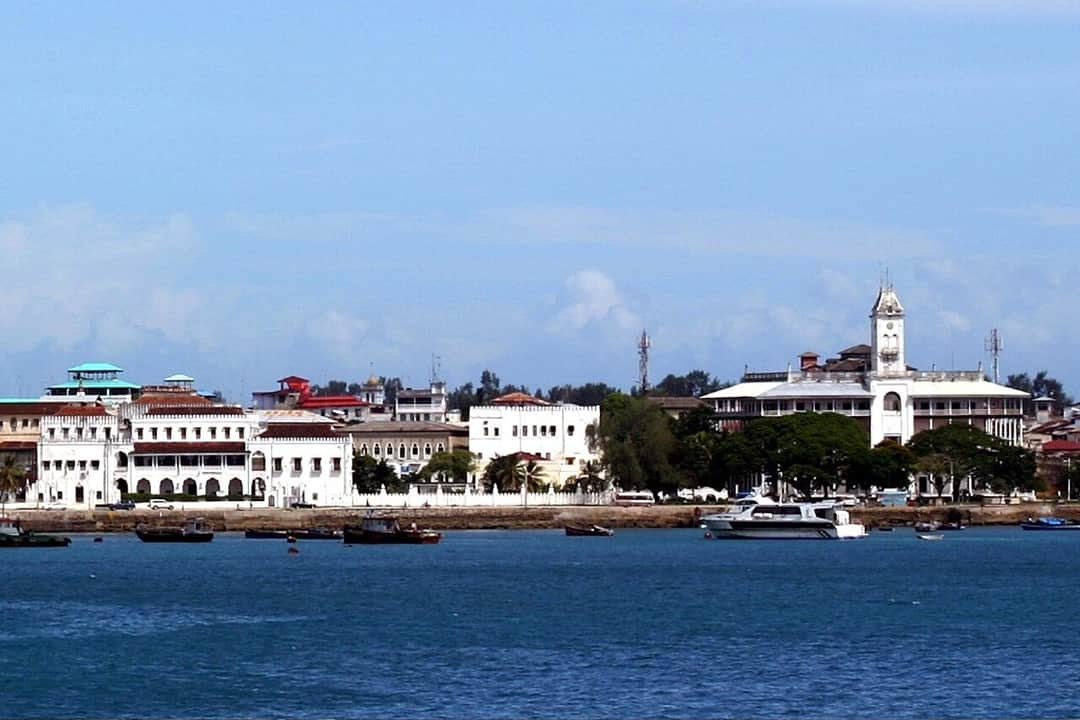
Zanzibar's beaches get all the marketing, and they earn it, but travelers who skip Stone Town or rush through it in an hour are missing the more interesting half of the island. Stone Town is a genuinely lived-in old city, not a museum piece, and a full day here rewards you with a much richer understanding of what Zanzibar actually is.
Start at the old fort and the waterfront, where dhows have launched for centuries carrying spices, and now carry day-trippers and fishermen instead. Walk into the alleys behind the seafront and you will find the carved wooden doors the town is famous for: Arab-influenced doors with geometric patterns and heavy brass studs, and Indian-influenced doors with more ornate floral carving, each style telling you something about the merchant family who originally built the house.
The House of Wonders, once the tallest building in East Africa and the first in Zanzibar to have electricity and an elevator, is worth a stop even from the outside for its scale alone. Nearby, the former slave market and the Anglican cathedral built on the site are heavier stops, but they are essential to understanding the island's history honestly, not just its postcard version.
Set aside time for the spice trade context too. Zanzibar was once the world's dominant clove producer, and a short trip to a spice farm outside town, easily combined with your Stone Town day, will change how you think about the food on your plate for the rest of your trip.
Practical notes: dress modestly when walking through residential alleys, shoulders and knees covered is respectful and also more comfortable in the heat than it sounds. Go to Forodhani Gardens right at sunset, when the night food market sets up and the whole waterfront turns into a communal dinner scene, grilled seafood, Zanzibar pizza, and fresh sugar cane juice all for a few dollars. It is, in our biased opinion, one of the best hours of any Zanzibar trip, beach included.